The Fool Who Waited Twenty-Five Years
On what he believed was a Good Friday morning, a composer glimpsed a whole drama in a flash of sunlight — then took roughly twenty-five years to finish it.
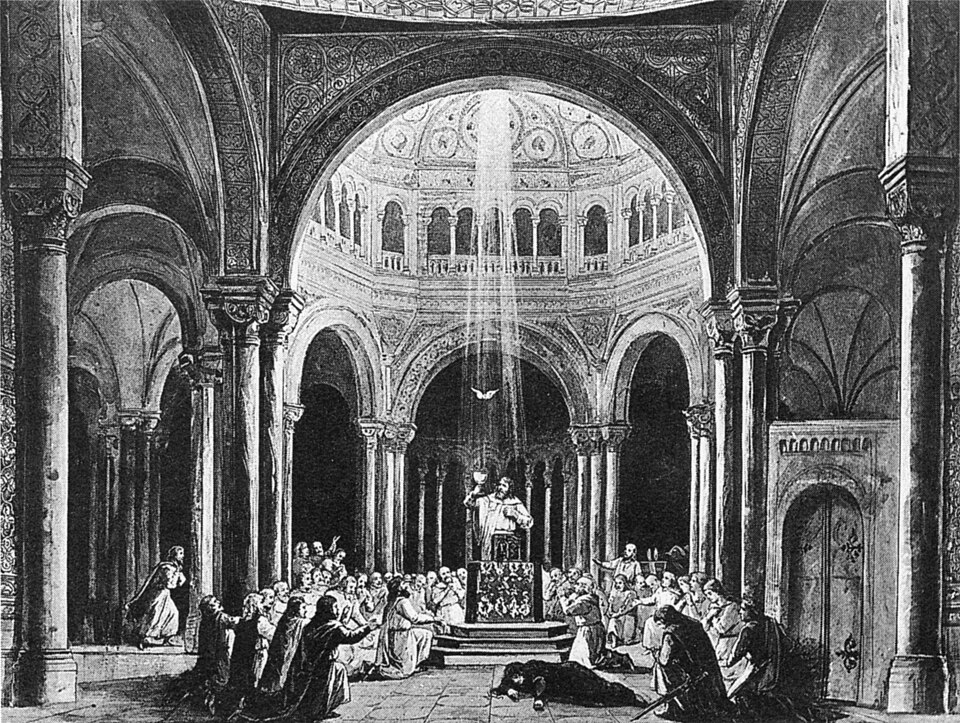
Richard Wagner first encountered the medieval poem Parzival, written by the Minnesänger Wolfram von Eschenbach, during a stay at Marienbad in 1845. More than a decade later, in April 1857, while living at the Asyl — a cottage on Otto Wesendonck's estate near Zürich, made available through the kindness of Wesendonck's wife Mathilde — Wagner awoke to bright sunshine and singing birds and suddenly felt the poem's possibilities strike him with overwhelming force. In his autobiography Mein Leben he claimed this happened on Good Friday itself, sketching the entire drama in three acts within moments. His second wife Cosima later noted a wrinkle in this story: Good Friday that year had actually fallen on 10 April, when the Wagners were still living elsewhere in Zürich. Wagner himself later laughed and admitted it was less a religious epiphany than a beautiful mood in nature that made him think 'this is how a Good Friday ought to be.'
Whatever the precise date, the initial spark did not translate into swift work. Wagner set the idea aside for eight years, during which he completed Tristan und Isolde and began Die Meistersinger von Nürnberg. He returned to Parsifal briefly between 27 and 30 August 1865, producing a prose draft with an outline of the plot and extensive notes on its characters and themes. Then the project was shelved again — this time for eleven and a half years — while Wagner poured his energy into completing the monumental Ring cycle, finally staged in full at Bayreuth in August 1876.
Only after the Ring was finished did Wagner turn his full attention back to Parsifal. By 23 February 1877 he had drafted a more extensive prose version, and by 19 April of that year he had shaped it into a verse libretto. That September he began composing the music in earnest, working through two complete drafts — first a pencil sketch on three staves, then a more detailed ink version with up to five staves — often switching between them to keep the words and music developing together.
The story itself draws on a legend of the Holy Grail — the cup, in this telling, used by Christ at the Last Supper and later filled with drops of his blood at the crucifixion. According to Wagner's version, an angel gave the Grail and the Holy Spear to Titurel, who built a temple at Monsalvat in the mountains of northern Spain and founded an order of Grail Knights. Titurel's successor, King Amfortas, fell victim to the sorceress Kundry, allowing the wizard Klingsor to seize the Holy Spear and wound him — a wound that never heals, kept from killing him only by the Grail's power. Prophecy held that a pure, innocent youth would one day arrive, gain wisdom through compassion, resist temptation, defeat Klingsor, reclaim the Spear, and heal Amfortas. That youth is Parsifal.
More from Mythology

The Doctor Who Sang a Nation Into Being
A country doctor rode into the forests of Karelia armed with nothing but a notebook — and rode out with the soul of a nation.

The Boat That Carried the Sun
Every sunset, the ancient Egyptians believed, the sun climbed into a boat and sailed straight into the realm of the dead — only to fight a monstrous serpent before dawn could return.

The Wild Man of the Snows
At 21,000 feet, a colonel found tracks in the snow that he blamed on a wolf — but his guides knew better, and gave the world a name that would echo for a century.

The Knight Who Went Mad for Love: Orlando Furioso
A hero so devoted to duty he was Charlemagne's greatest paladin loses his mind—not to a sword wound, but to heartbreak. To cure him, a friend must ride a flying horse to the Moon.

The Book That Turned the World Into Myth
A poet condemned to exile spent his final years in Rome finishing a poem that would outlive empires—a poem about nothing standing still, not gods, not lovers, not even the shape of a man.

Paradise Lost: Milton's Rebel Angel
A blind poet, dictating verses in the dark, dared to explain the ways of God to men — and in doing so, made Hell's ruler unforgettable.