The Golden Face That Stared Back After 3,000 Years
On an October night in 1925, a British archaeologist pried open the last of three nested coffins and looked into a face no living person had seen in over three millennia.
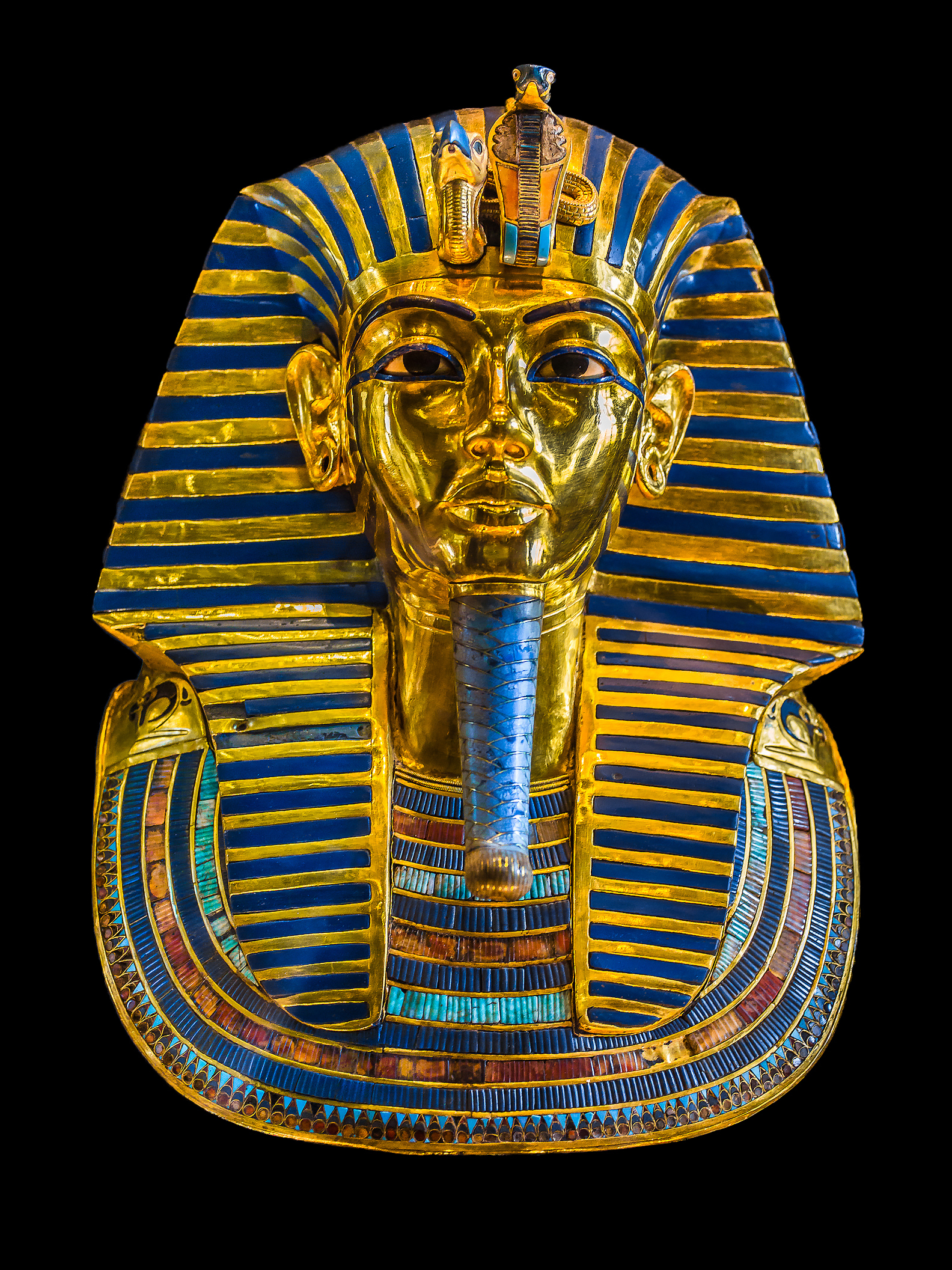
On 28 October 1925, deep in the Valley of the Kings, Howard Carter and his excavation team lifted the lid of the innermost of three coffins protecting the mummy of Tutankhamun, the boy pharaoh who had ruled Egypt's Eighteenth Dynasty from 1334 to 1325 BC. What emerged was a golden mask, unseen for roughly 3,250 years. Carter recorded the moment in his diary: the pins removed, the lid raised, revealing 'a very neatly wrapped mummy of the young king, with golden mask of sad but tranquil expression, symbolizing Osiris.' The mask had slipped slightly backward, he noted, so that its gaze pointed straight up toward the heavens.
The discovery capped three years of work. Carter had found Tutankhamun's tomb itself in 1922, three years before this moment, and the burial chamber was opened in 1923. It took two more years before the team could finally open the heavy sarcophagus and confront the innermost coffin. In December 1925, the mask was carefully removed from the tomb and carried 635 kilometres to the Egyptian Museum in Cairo, where it would remain a centerpiece for decades before its eventual move to the Grand Egyptian Museum.
The mask itself is a marvel of craftsmanship. Standing 54 centimetres tall, 39.3 centimetres wide, and 49 centimetres deep, it weighs just over 10 kilograms and is fashioned from two layers of gold ranging from 1.5 to 3 millimetres thick. X-ray crystallography conducted in 2007 showed the mask is primarily 23-karat gold alloyed with copper, a mixture chosen to make the metal easier to cold-work into shape. A microscopically thin surface layer — about 30 nanometres — uses two different gold alloys: a lighter 18.4-karat gold for the face and neck, and a richer 22.5-karat gold everywhere else.
The pharaoh is shown wearing the nemes headcloth, crowned with the royal cobra Wadjet and vulture Nekhbet, symbols of his rule over both Lower and Upper Egypt. The blue stripes on the headcloth are glass, and the face is inlaid with lapis lazuli around the eyes and brows, quartz and obsidian for the eyes and pupils, and carnelian, amazonite, turquoise, and faience elsewhere. The ears are pierced, a detail Egyptologist Zahi Hawass has pointed out was not unusual, since all Eighteenth Dynasty rulers wore earrings during their reigns, despite the feature typically being reserved for queens and children in surviving Egyptian art.
The mask's beard has its own turbulent history. Discovered separated from the mask in 1925, it was reattached with a wooden dowel in 1944. Then, in August 2014, museum workers removing the mask from its display case for cleaning accidentally knocked the 25-kilogram plaited beard loose. In their haste to fix it, they used quick-drying epoxy, leaving the beard visibly off-center. The damage went unnoticed until January 2015, when a German-Egyptian team properly restored it using beeswax, a material the ancient Egyptians themselves had used. The incident had consequences: in January 2016, eight museum employees, including a former museum director and a former director of restoration, were fined and disciplined for ignoring proper conservation methods.
More from Art

The Painting With No Foreground
A single robed figure stares out at an empty grey sea — and the emptiness itself became a scandal. When it was unveiled in Berlin in 1810, no one knew quite what to do with it.

The Painter Who Chased the Light
For a few purple minutes each evening, an American exile knelt in an English garden and raced the dying sun to paint two little girls lighting lanterns. It took him two years to finish.

When a President Became a God
Look straight up inside the U.S. Capitol dome and you will find George Washington enthroned among the clouds, surrounded by goddesses — the founding father transformed into myth.

Marble Brought Back to Life
A corpse asleep, a wing barely brushing her skin — and marble somehow learns to breathe. This is the moment Antonio Canova dared to carve.

The World Turned Upside Down
Look closely at a sixteenth-century Flemish village and you'll find a man biting a pillar, another carrying daylight in a basket, and a wife slipping a blue cloak over her husband's shoulders. Every gesture is a joke — if you know the language.

The Girl in the Glass Case
She stood two-thirds life size, dressed in a real tutu and human hair — and the critics who saw her in 1881 recoiled as if she were something obscene.