The Golden Hoard That Carried a Curse
In the dead of night, three treasure hunters dynamited a 2,600-year-old tomb to be the first to see a Lydian princess since her burial. What they unleashed would haunt museums, courts and their own lives for decades.
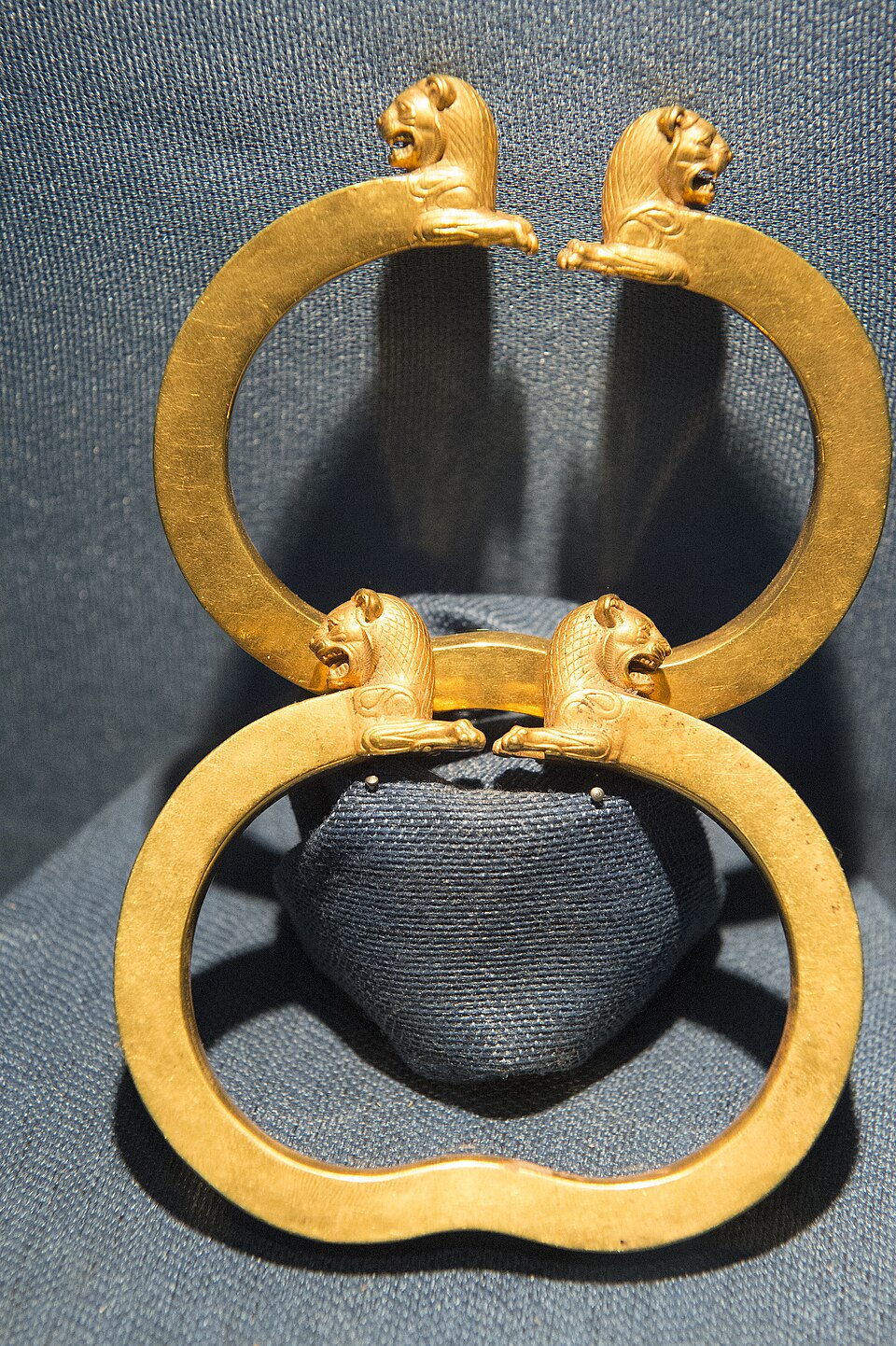
On the night of 6 June 1965, near the village of Güre in Uşak Province, western Turkey, three fortune-seekers gave up trying to pry open a marble tomb door. Instead, they dynamited the roof of the burial chamber at a site called Toptepe. Inside lay a Lydian noblewoman, undisturbed for roughly 2,600 years, surrounded by gold and silver objects of extraordinary craftsmanship.
The looters were not finished. Between 1966 and 1968, they and other groups plundered additional tumuli in the area — Toptepe, İkiztepe, and Aktepe among them — prying loose hundreds more pieces. The Turkish account records the İkiztepe robbery involving 11 people who extracted 150 pieces, later sold for 160,000 Turkish lira, while the Aktepe haul of painted and relief works fetched 40,000 lira. The objects were smuggled out of Turkey through İzmir and Amsterdam in separate shipments.
Between 1967 and 1968, the Metropolitan Museum of Art in New York acquired the collection, paying an invoiced $1.2 million for 200 of the pieces. The museum would eventually hold 363 Lydian artifacts from the group, dating to the 7th century BC. For years, the treasure sat quietly in storage and occasional display, its origins unquestioned by the public.
That changed in 1984, when journalist Özgen Acar spotted several pieces in a Met Museum catalogue and recognized their unmistakable Lydian provenance. He alerted Turkey's Ministry of Culture, wrote extensively on the case, and pushed the issue through Turkish bureaucracy with relentless persistence. In 1987, Turkey filed suit in New York. The legal battle dragged on for six years, at a cost of some $40 million, before concluding in 1993 when the Metropolitan Museum admitted it had known the artifacts were stolen at the time of purchase. The pieces were finally returned to Turkey.
The recovered treasure — later swelled by further seized and rediscovered pieces to around 450 items — was placed in the small Uşak Museum of Archaeology, a facility better suited to storing local carpets than safeguarding priceless antiquities. Space was tight: of 35,573 historical artifacts in the museum's holdings, only about ten percent were ever on display, and pieces were reportedly stacked atop one another for lack of room.
More from Art

The Painting With No Foreground
A single robed figure stares out at an empty grey sea — and the emptiness itself became a scandal. When it was unveiled in Berlin in 1810, no one knew quite what to do with it.

The Painter Who Chased the Light
For a few purple minutes each evening, an American exile knelt in an English garden and raced the dying sun to paint two little girls lighting lanterns. It took him two years to finish.

When a President Became a God
Look straight up inside the U.S. Capitol dome and you will find George Washington enthroned among the clouds, surrounded by goddesses — the founding father transformed into myth.

Marble Brought Back to Life
A corpse asleep, a wing barely brushing her skin — and marble somehow learns to breathe. This is the moment Antonio Canova dared to carve.

The World Turned Upside Down
Look closely at a sixteenth-century Flemish village and you'll find a man biting a pillar, another carrying daylight in a basket, and a wife slipping a blue cloak over her husband's shoulders. Every gesture is a joke — if you know the language.

The Girl in the Glass Case
She stood two-thirds life size, dressed in a real tutu and human hair — and the critics who saw her in 1881 recoiled as if she were something obscene.