The House That Ruled Behind Closed Doors
For 264 years, one family kept an entire nation locked, isolated, and astonishingly peaceful — until a fleet of foreign ships forced the doors open.
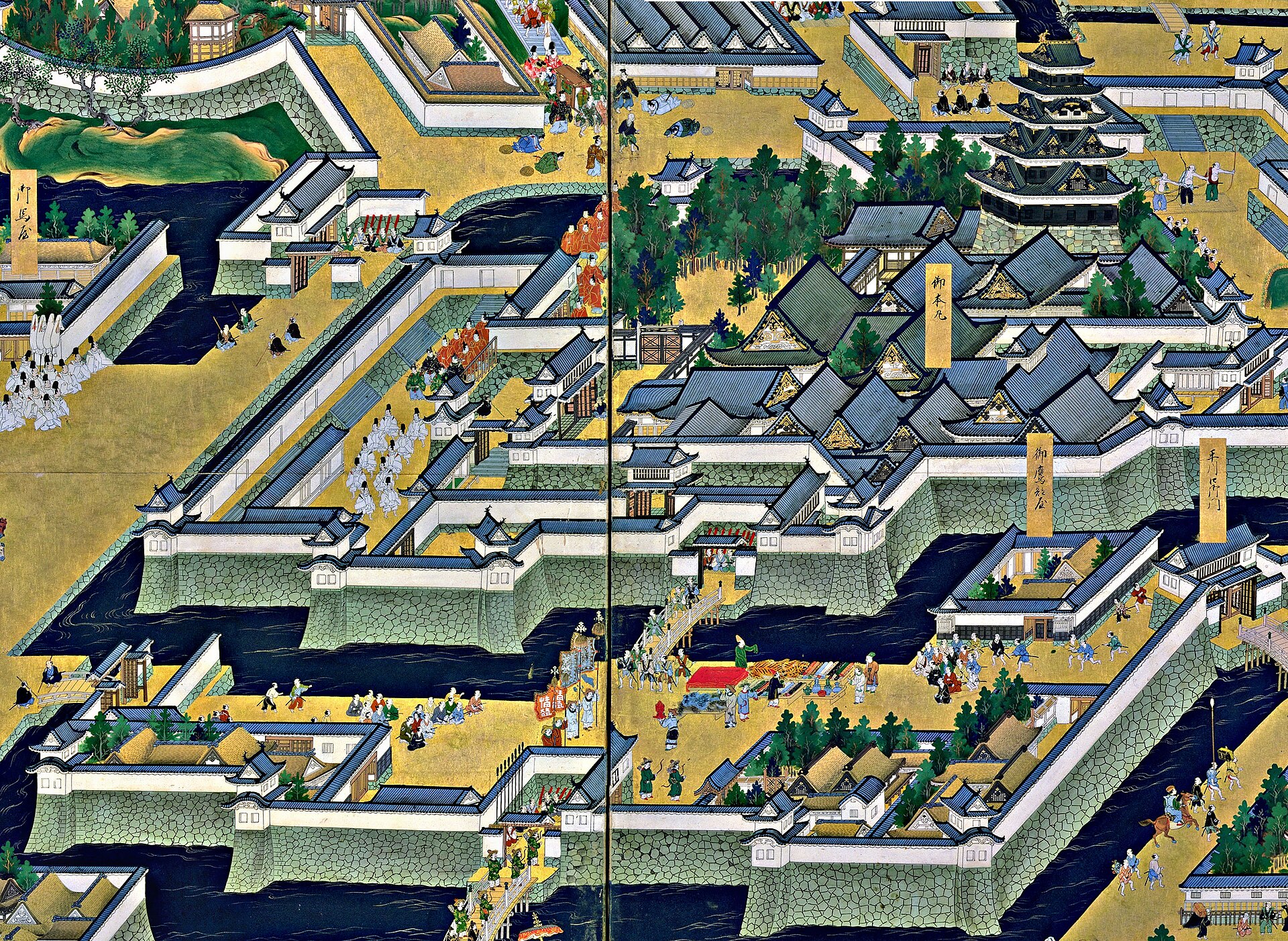
In 1600, at the Battle of Sekigahara, a hardened warlord named Tokugawa Ieyasu crushed his rivals and seized control of a country exhausted by more than a century of civil war. Three years later, in 1603, he was named shōgun, and from Edo Castle in the eastern city that would become Tokyo, the Tokugawa clan began a rule that would last nearly two hundred and sixty-four years.
Ieyasu had not risen from nothing. Born Matsudaira Takechiyo in 1543, the son of a minor daimyō in Mikawa Province, he spent his early life as a hostage — first of the Oda clan, then of the Imagawa — before forging an alliance with Oda Nobunaga that let him carve out his own territory. He fought at Anegawa, Mikatagahara, Nagashino, and Temmokuzan, outlasting Nobunaga's assassination in 1582 and the rise and death of the great unifier Toyotomi Hideyoshi. When Hideyoshi died in 1598, leaving behind a child heir and a fractured council of regents, Ieyasu moved decisively. Sekigahara made him master of Japan.
Once in power, Ieyasu did not annihilate the old order — he reorganized it. Daimyō who had opposed him lost land or were destroyed outright, but the han, or feudal domains, survived as the backbone of his new state. Loyal vassals were placed strategically across the country, and a policy called sankin-kotai forced daimyō families to live part-time in Edo, their wives and children effectively held as hostages to guarantee obedience.
After the Siege of Osaka in 1615 and until the Keian Uprising of 1651, Japan settled into an unusual peace. Trade, mining, and manufacturing flourished, drawing people from the countryside into growing cities. By the Genroku era, from 1688 to 1704, Japan was enjoying real material prosperity, and new art forms — including the early ukiyo-e prints of Moronobu — blossomed alongside it. By 1800, Edo had grown so large it was likely the most populous city on Earth, home to over a million people, one of only three cities in the world with more than 300,000 residents at the time, alongside four other Japanese cities over 100,000.
But the rigid class system Ieyasu had inherited from Hideyoshi — daimyō, then samurai, then farmers, artisans, and merchants — began to crack under its own weight. Peasant taxes were fixed and never adjusted for inflation, so as prices rose, the wealth quietly drained from the samurai class into the hands of merchants. Between 1590 and 1871, historians count roughly 3,000 outbreaks of peasant unrest and violence against authority. Reformers like Tokugawa Yoshimune in the 1720s and Matsudaira Sadanobu in the Kansei era of the late 1780s tried to shore up the shogunate's finances and grain reserves, but the underlying strain never fully eased.
More from Treasures

The Legend of the Nazi Gold Train
Somewhere beneath the hills of Poland, rumor insists, a train loaded with looted treasure vanished into a tunnel and was never seen again. The story survives because the plunder behind it was terrifyingly real.

The Treasure List Carved in Copper
While every other Dead Sea Scroll was written on parchment or papyrus, one was hammered into metal — a list of buried gold and silver that no one has ever found.

The Diamond That Vanished for a Century
For decades, treasure hunters and novelists spun theories about a lost 137-carat gem — sold, recut, melted into legend. It was sitting in a Quebec bank vault the entire time.

Gold, Ghosts, and the Mountain That Keeps Its Secret
For over a century, treasure hunters have vanished into a jagged Arizona range chasing a fortune that may never have existed at all. What they left behind was not gold, but one of America's most enduring legends.

The King Who Buried a River
When Rome finally cornered the Dacian king, it wasn't a sword that gave up his secret — it was a traitor's whisper about a riverbed.

The Fortune Dutch Schultz Took to His Grave
He asked New York's mob bosses for permission to kill a federal prosecutor — and when they said no, he disobeyed them anyway. It was a decision that would end his life and leave behind a fortune that has never been found.