The House Where Goya Painted His Nightmares
A near-deaf old man bought a farmhouse by a river and, alone with his fears, covered its walls in visions no one was ever meant to see.
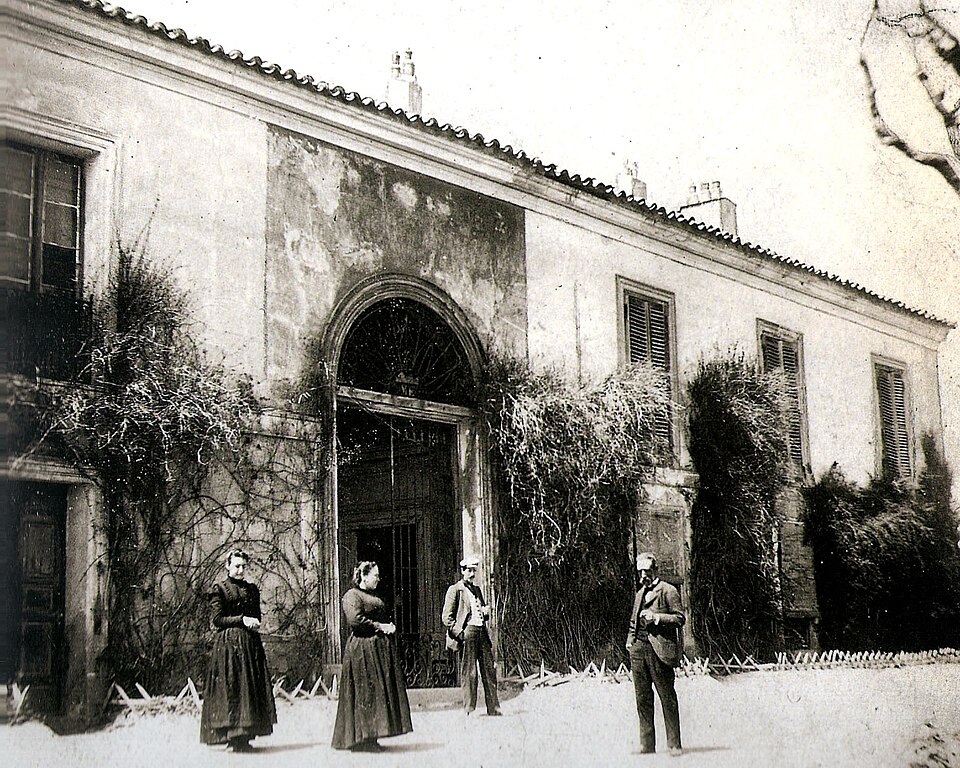
In February 1819, at the age of seventy-two, Francisco de Goya bought a two-storey villa on the banks of the River Manzanares, outside Madrid. It was called Quinta del Sordo — the Deaf Man's Villa — named for a previous owner, though the name suited Goya too, who had been left nearly deaf decades earlier by an unknown illness at forty-six. He moved in with his companion Leocadia Weiss, still legally married to another man, and it is thought Goya may have been the father of her daughter Rosario. He seems to have chosen the isolated house partly to escape public scrutiny.
Goya had survived two near-fatal illnesses and lived through the chaos of the Napoleonic Wars and Spain's turbulent politics, and by his own account he had grown embittered toward humanity. Sometime after September 1819, on the plastered walls of his dining and sitting rooms, he began painting directly in oil — not for a patron, not for sale, but seemingly for no one but himself. The murals may have started as light, rural scenes with small figures, the kind of bucolic imagery Goya had painted before, but they darkened, likely between 1820 and 1823, into something else entirely.
The result was fourteen paintings so unsettling that one description calls them 'as close to being hermetically private as any that have ever been produced in the history of Western art.' Goya never titled them, and if he had names in mind, he kept them to himself. It fell to his friend Antonio Brugada to catalogue the works after Goya's death, giving them the names we use today: Atropos, Two Old Men, Two Old Ones Eating Soup, Fight with Cudgels, Witches' Sabbath, Men Reading, Judith and Holofernes, A Pilgrimage to San Isidro, Man Mocked by Two Women, Pilgrimage to the Fountain of San Isidro, The Dog, Saturn Devouring His Son, La Leocadia, and Asmodea.
Brugada's inventory placed seven murals on the ground floor and eight on the upper floor, though only fourteen ever reached the Prado — one, likely a work now called Heads in a Landscape, had already been removed by 1867 when critic Charles Yriarte visited and found it relocated to the Marquis of Salamanca's palace. On the ground floor, two large landscape murals, A Pilgrimage to San Isidro and Witches' Sabbath, faced each other across the room, flanked by windows. Opposite the entrance, Judith and Holofernes and Saturn Devouring His Son shared the back wall around a central window, while La Leocadia and Two Old Men stood beside the door.
Goya seems to have left the villa in 1823, likely fearing reprisals after the fall of the liberal general Rafael Riego and the return of King Fernando VII's absolute rule, which brought harsh treatment of those who had opposed him. He handed the house to his grandson Mariano, who transferred ownership to his father, Javier de Goya, in 1830. Goya himself departed for Bordeaux, and the paintings remained hidden on the villa's walls, unseen by the wider world, known only vaguely through the accounts of a handful of visiting critics.
More from Art

The Painting With No Foreground
A single robed figure stares out at an empty grey sea — and the emptiness itself became a scandal. When it was unveiled in Berlin in 1810, no one knew quite what to do with it.

The Painter Who Chased the Light
For a few purple minutes each evening, an American exile knelt in an English garden and raced the dying sun to paint two little girls lighting lanterns. It took him two years to finish.

When a President Became a God
Look straight up inside the U.S. Capitol dome and you will find George Washington enthroned among the clouds, surrounded by goddesses — the founding father transformed into myth.

Marble Brought Back to Life
A corpse asleep, a wing barely brushing her skin — and marble somehow learns to breathe. This is the moment Antonio Canova dared to carve.

The World Turned Upside Down
Look closely at a sixteenth-century Flemish village and you'll find a man biting a pillar, another carrying daylight in a basket, and a wife slipping a blue cloak over her husband's shoulders. Every gesture is a joke — if you know the language.

The Girl in the Glass Case
She stood two-thirds life size, dressed in a real tutu and human hair — and the critics who saw her in 1881 recoiled as if she were something obscene.