The Jackal Who Weighed the Human Heart
Long before any court of law existed, the ancient Egyptians imagined a courtroom in the underworld — presided over by a black jackal-headed god holding the scales of your fate.
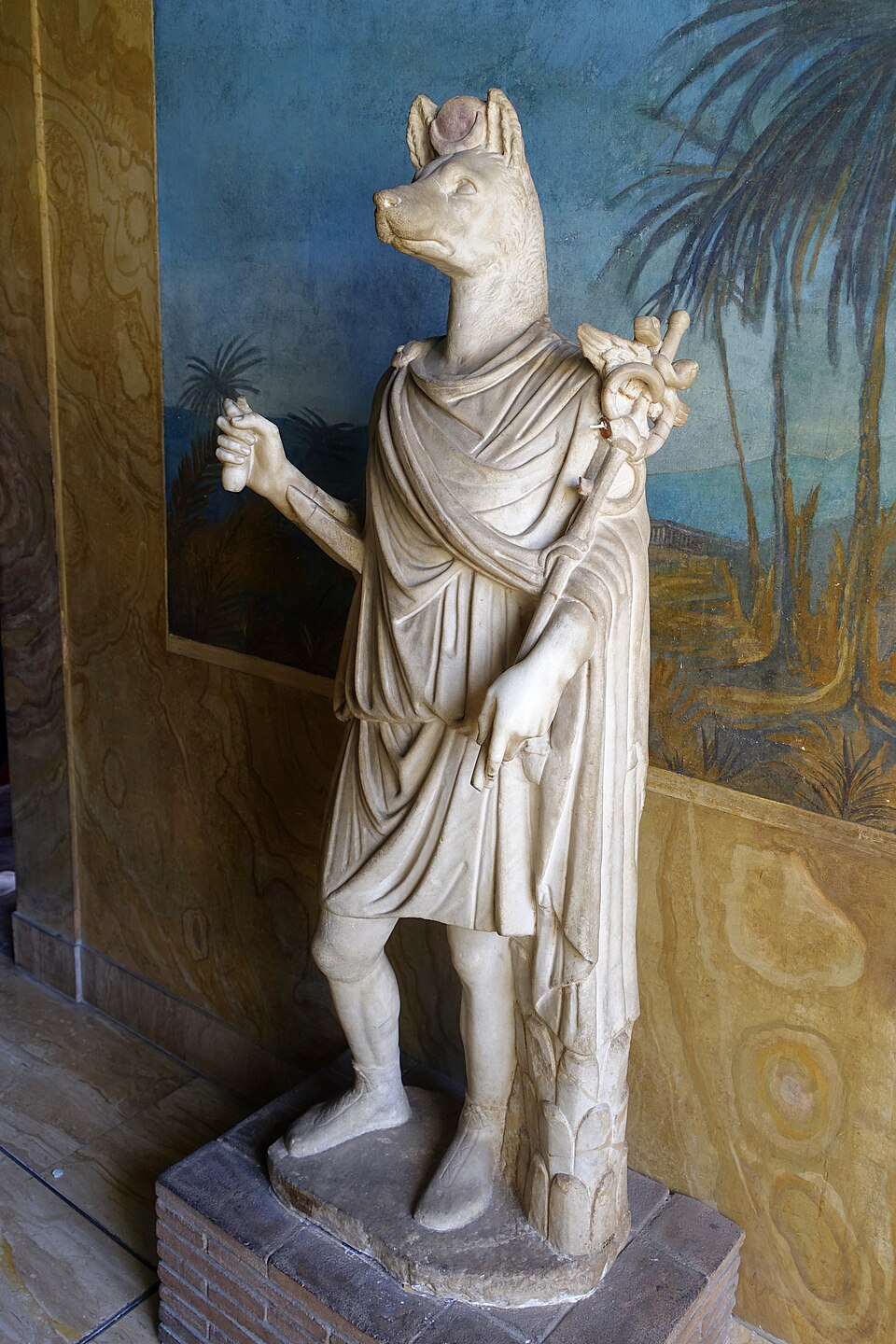
In the shifting sands of Predynastic Egypt, jackals prowled the edges of shallow cemeteries, drawn by the scent of the recently buried. To the people who lived along the Nile, this was a terror worth confronting head-on: if a creature threatened to dig up and devour the dead, then let that same creature be transformed into their fiercest guardian. This was the origin of Anubis, a god depicted first in full animal form and later as a man with the head of a jackal, whose name in Egyptian carried echoes of both 'royal child' and the unsettling word for decay itself.
By the First Dynasty, around 3100 to 2890 BC, stone inscriptions from the reigns of pharaohs like Hor-Aha and Djer already showed a jackal god believed to be Anubis. In the Old Kingdom that followed, he held the most important position among the gods of the dead — protector of graves, master of embalming, the deity whose black coloring symbolized not morbidity but regeneration, the fertile soil of the Nile, and the very discoloration embalmers saw on the corpses they prepared for eternity.
Anubis's family tree shifted with the centuries and the storytellers. Early myths named him a son of Ra. The Coffin Texts, composed in the First Intermediate Period, gave him the cow goddess Hesat or the cat-headed Bastet as a mother. Still another tradition made him the son of Ra and Nephthys. Most enduringly, though, Egyptians came to know him as the child of Osiris and Isis — a lineage that tied him directly to the great myth of death and resurrection at the heart of their religion. The Greek writer Plutarch even preserved a version in which Anubis was born of a secret union between Osiris and Nephthys, only to be found among protective dogs and raised by Isis herself, who made him her guard and ally.
It was in his role at the Weighing of the Heart that Anubis became unforgettable. When a soul arrived in the underworld, its heart was placed on one side of a great scale, weighed against the feather of Ma'at, goddess of truth and order, on the other. Anubis himself attended the scale during this reckoning. A heart burdened by wrongdoing sank heavy; a heart light with a life well lived balanced evenly, or even rose above the feather. This was no minor bureaucratic formality — it was the verdict that decided whether a person's soul continued into eternal life or faced destruction.
Those whose hearts failed the test faced a fate sealed by devouring beasts and endless punishment, while the justified dead were presented to Osiris, lord of the underworld, to begin their afterlife. Anubis's task did not end with the verdict; Roman-era tomb paintings show him taking the hand of the deceased, physically guiding them toward Osiris's presence — a guide as much as a judge's officer.
More from Mythology

The Doctor Who Sang a Nation Into Being
A country doctor rode into the forests of Karelia armed with nothing but a notebook — and rode out with the soul of a nation.

The Boat That Carried the Sun
Every sunset, the ancient Egyptians believed, the sun climbed into a boat and sailed straight into the realm of the dead — only to fight a monstrous serpent before dawn could return.

The Wild Man of the Snows
At 21,000 feet, a colonel found tracks in the snow that he blamed on a wolf — but his guides knew better, and gave the world a name that would echo for a century.

The Knight Who Went Mad for Love: Orlando Furioso
A hero so devoted to duty he was Charlemagne's greatest paladin loses his mind—not to a sword wound, but to heartbreak. To cure him, a friend must ride a flying horse to the Moon.

The Book That Turned the World Into Myth
A poet condemned to exile spent his final years in Rome finishing a poem that would outlive empires—a poem about nothing standing still, not gods, not lovers, not even the shape of a man.

Paradise Lost: Milton's Rebel Angel
A blind poet, dictating verses in the dark, dared to explain the ways of God to men — and in doing so, made Hell's ruler unforgettable.