The King Whose Touch Turned Wishes to Gold
He asked the gods for endless wealth — and got a curse that turned bread to stone in his mouth. This is the true and tangled story of King Midas, buried under his own myth.
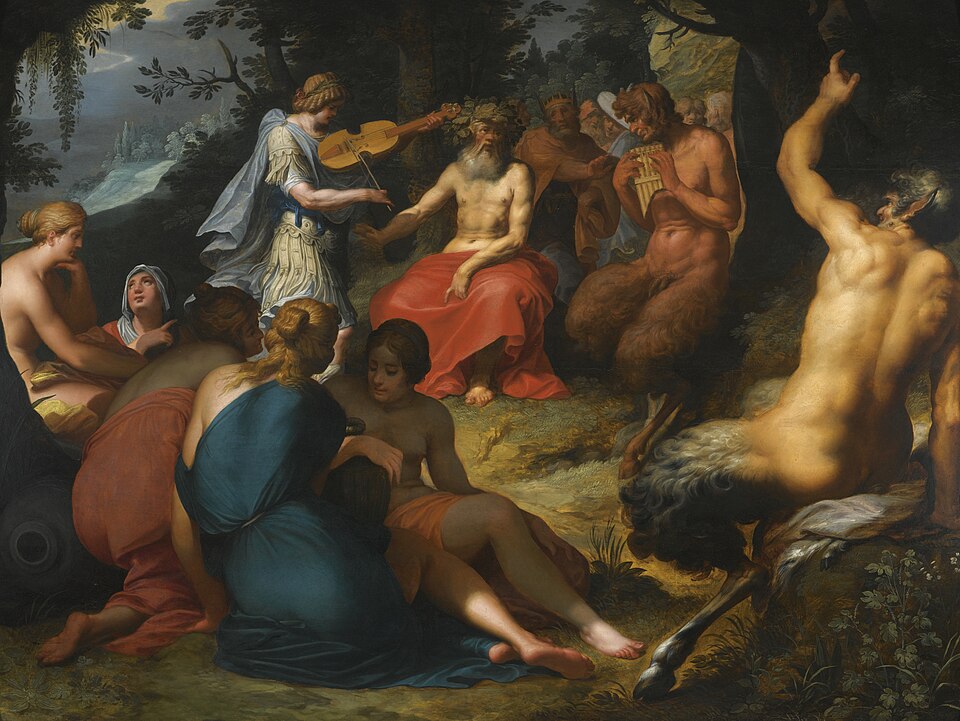
Long before Alexander the Great cut the Gordian Knot in the Phrygian capital, a wagon rolled into Gordium carrying a poor peasant family. According to legend recorded by Arrian, an oracle had told the disunited Phrygians that a wagon would bring them the king who would end their strife. That wagon belonged to Gordias, and the boy riding with him was Midas, son of Gordias and, in some accounts, the goddess Cybele. The Phrygians took the omen literally and made Midas king, who dedicated his father's wagon to Zeus on the citadel — the same wagon whose knotted yoke would centuries later tempt conquerors with the promise of ruling Asia.
Historians believe this legendary Midas may be entangled with a very real king who ruled Phrygia from 738 to 696 BCE, identified in Assyrian records as Mita, king of the Mushki, who warred against Assyria's Anatolian provinces. Herodotus adds another layer, describing a Midas, son of Gordias, who dedicated a royal throne at the Oracle of Delphi — the first foreigner to do so before the Lydian king Gyges. Whether this was the mythical Midas or the historical one, the throne linked Phrygia's wealth to the sanctuaries of Greece.
The most famous story about Midas begins with wine. Dionysus's old companion, the satyr Silenus, wandered off drunk. In one telling, Phrygian peasants found him and carried him to Midas; in another, he simply passed out in Midas's own rose garden. Either way, Midas recognized him, treated him as an honored guest for ten days and nights, and returned him safely to Dionysus. In gratitude, the god offered Midas any reward he wished. Midas, dazzled by the thought of endless riches, asked that everything he touched turn to gold.
At first it was a marvel. An oak twig, a stone, every rose in his garden — all became gleaming metal beneath his fingers. But when he sat down to eat, his bread and wine hardened into gold before he could taste them. The gift that promised limitless wealth became a curse of starvation. In one retelling by Nathaniel Hawthorne, the horror deepened further: reaching out to comfort his daughter, Midas turned her to gold as well.
Midas begged Dionysus to undo the gift, and the god relented, teaching him to wash the curse away in a river — a river later associated with the gold-bearing Pactolus, whose sands were said to carry traces of that vanished touch. It's a detail historians connect to the later Lydian king who used electrum from that very river to mint some of the world's first coins.
More from Mythology

The Doctor Who Sang a Nation Into Being
A country doctor rode into the forests of Karelia armed with nothing but a notebook — and rode out with the soul of a nation.

The Boat That Carried the Sun
Every sunset, the ancient Egyptians believed, the sun climbed into a boat and sailed straight into the realm of the dead — only to fight a monstrous serpent before dawn could return.

The Wild Man of the Snows
At 21,000 feet, a colonel found tracks in the snow that he blamed on a wolf — but his guides knew better, and gave the world a name that would echo for a century.

The Knight Who Went Mad for Love: Orlando Furioso
A hero so devoted to duty he was Charlemagne's greatest paladin loses his mind—not to a sword wound, but to heartbreak. To cure him, a friend must ride a flying horse to the Moon.

The Book That Turned the World Into Myth
A poet condemned to exile spent his final years in Rome finishing a poem that would outlive empires—a poem about nothing standing still, not gods, not lovers, not even the shape of a man.

Paradise Lost: Milton's Rebel Angel
A blind poet, dictating verses in the dark, dared to explain the ways of God to men — and in doing so, made Hell's ruler unforgettable.