The Lamp, the Dagger, and the God Who Fled
A bride is married to darkness itself — forbidden ever to look upon her husband's face. One night, curiosity lights a lamp, and love flies out the window.
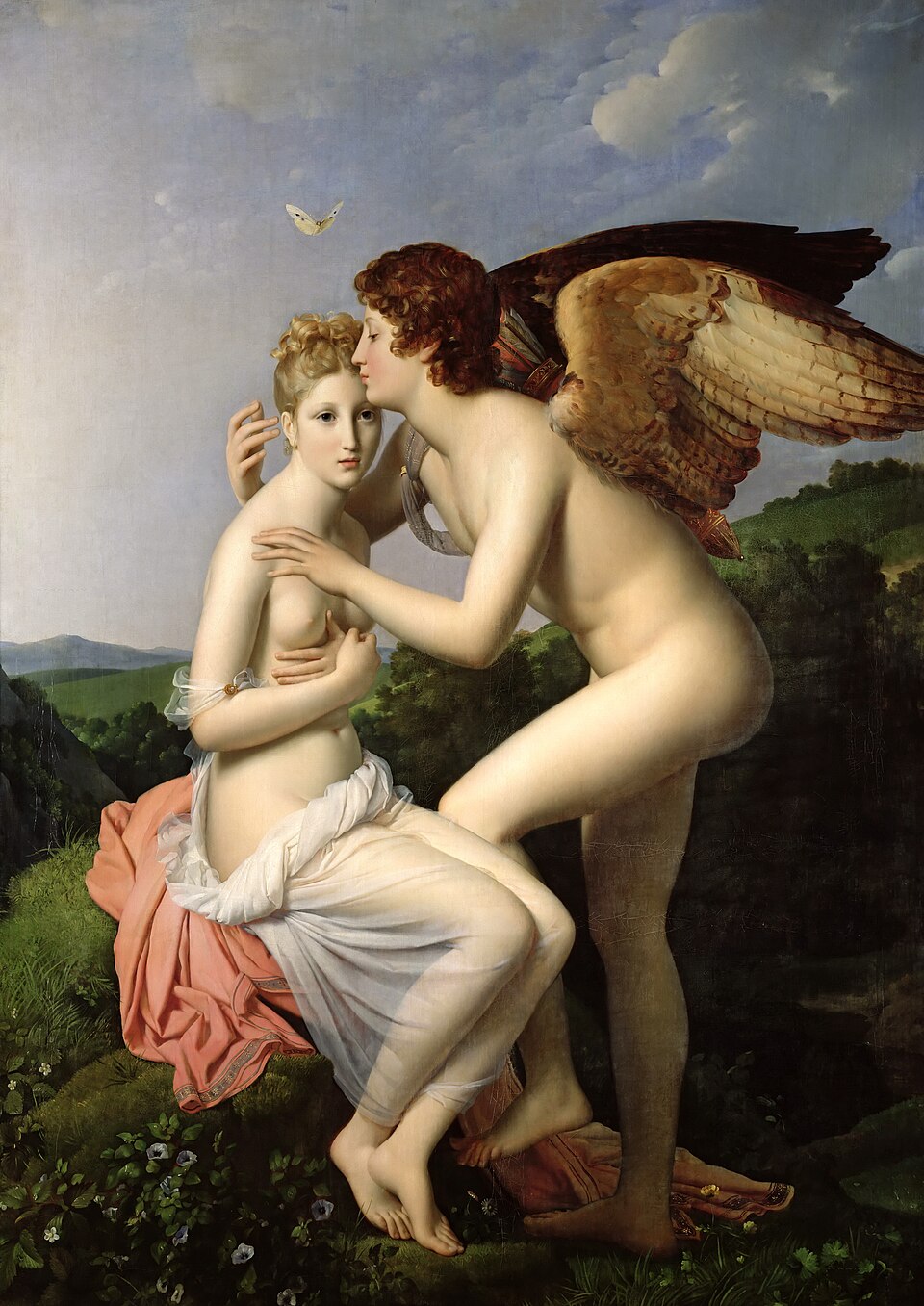
In an unnamed city, a king and queen raised three daughters of great beauty, but the youngest, Psyche, was so admired that people began worshipping her in place of Venus herself, some whispering she was the goddess's own daughter born of a scandalous union. Venus, furious at this theft of her honors, summoned her son Cupid and ordered him to make Psyche fall in love with something vile and hideous, a fitting punishment for her stolen glory.
Cupid, however, scratched himself with his own arrow while carrying out his mission, and the weapon that forces any living thing to love the first face it sees turned on its wielder. He fell hopelessly in love with Psyche and defied his mother's command. Meanwhile, Psyche's sisters married, but she remained alone, prompting her father to consult the oracle of Apollo. The answer was terrifying: no mortal husband awaited her, but a dragon-like creature so fearsome that even Jupiter and the powers of the underworld dreaded it.
Dressed as though for her own funeral, Psyche was led in procession to a rocky crag and left exposed to her fate, marriage and death fused into a single passage into the unknown. But instead of a monster, the West Wind, Zephyrus, lifted her gently and carried her to a beautiful meadow, where she fell asleep. Waking beside a cultivated grove, she discovered a magnificent palace with golden columns, ceilings of citrus wood and ivory, and silver walls embossed with animals. A disembodied voice welcomed her, invisible hands served her a feast, and an unseen lyre played for her alone.
That night, in total darkness, an unseen being came to her bed and became her husband. He warned her never to look upon him, and always left before dawn. Fearful at first, Psyche came to cherish his visits, and soon she was pregnant. But her family longed for news of her, and after much pleading, Cupid allowed Zephyrus to bring her sisters for a visit.
Seeing the splendor of Psyche's hidden life, the sisters were consumed with envy. They convinced her that her husband must be the monstrous serpent the oracle had prophesied, and that he intended to devour her and her unborn child. Terrified, Psyche resolved to see him for herself. She hid a dagger and an oil lamp in the bedroom, and one night, once Cupid had fallen asleep, she lit the lamp and raised the blade.
More from Mythology

The Doctor Who Sang a Nation Into Being
A country doctor rode into the forests of Karelia armed with nothing but a notebook — and rode out with the soul of a nation.

The Boat That Carried the Sun
Every sunset, the ancient Egyptians believed, the sun climbed into a boat and sailed straight into the realm of the dead — only to fight a monstrous serpent before dawn could return.

The Wild Man of the Snows
At 21,000 feet, a colonel found tracks in the snow that he blamed on a wolf — but his guides knew better, and gave the world a name that would echo for a century.

The Knight Who Went Mad for Love: Orlando Furioso
A hero so devoted to duty he was Charlemagne's greatest paladin loses his mind—not to a sword wound, but to heartbreak. To cure him, a friend must ride a flying horse to the Moon.

The Book That Turned the World Into Myth
A poet condemned to exile spent his final years in Rome finishing a poem that would outlive empires—a poem about nothing standing still, not gods, not lovers, not even the shape of a man.

Paradise Lost: Milton's Rebel Angel
A blind poet, dictating verses in the dark, dared to explain the ways of God to men — and in doing so, made Hell's ruler unforgettable.