The Last Supper: Drama Frozen on a Wall
One meal, one betrayal foretold, one piece of bread dipped in a dish — and a scene that has haunted art and faith for two thousand years.
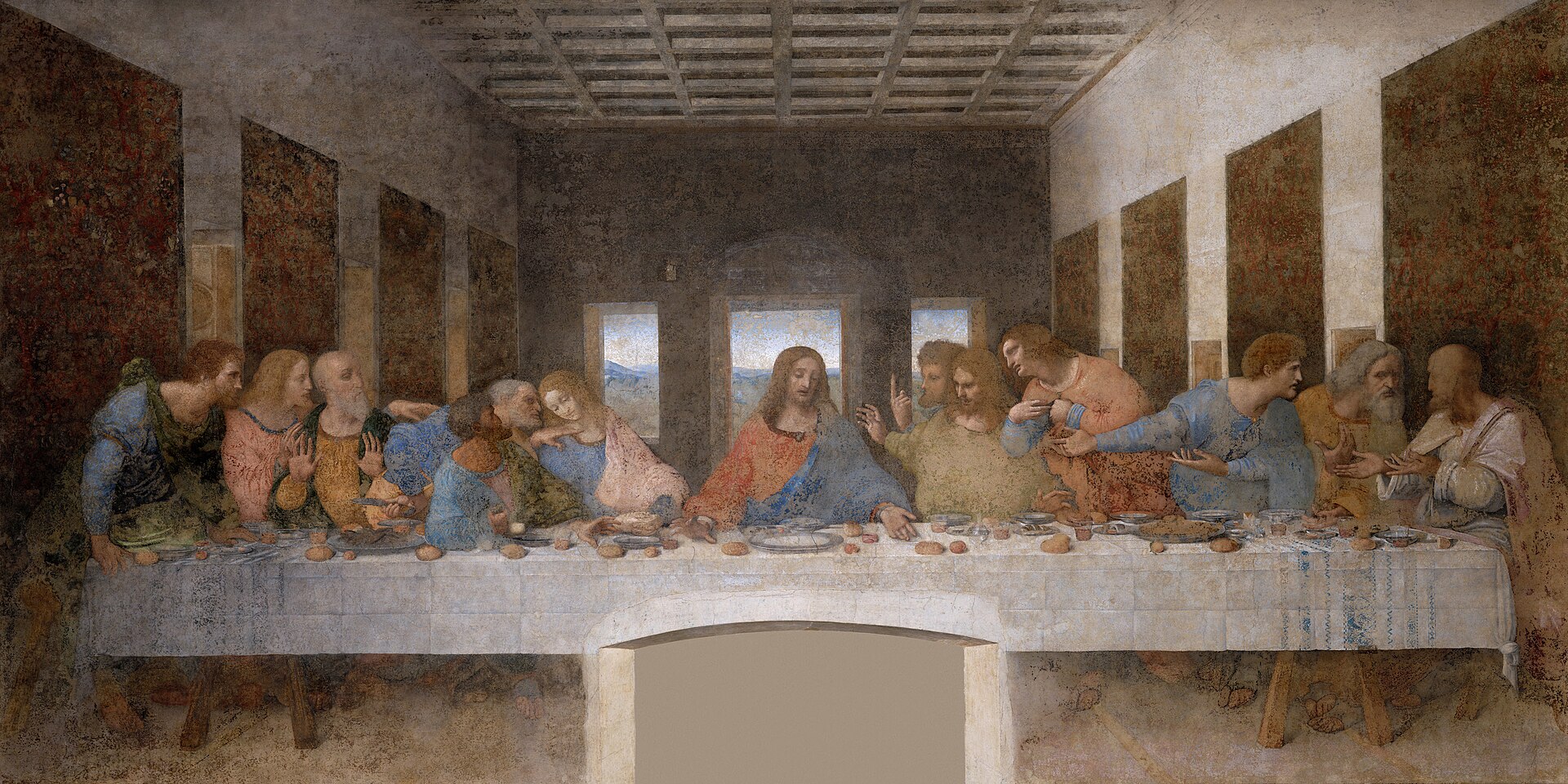
In the week of Passover, days after entering Jerusalem to crowds hailing him, Jesus gathered his apostles for a final meal. It was an ordinary act — men reclining together to eat — yet the four gospels agree it was anything but ordinary. Before the night ended, Jesus would be betrayed, arrested, tried, and crucified. The meal itself became the hinge on which the entire narrative of his final days turned.
The earliest written trace of this meal is not even in the gospels. Paul's First Epistle to the Corinthians, likely composed before any gospel was written, already speaks of it — though Paul cared less about narrating the scene than about explaining its theological meaning. The gospels, coming later, filled in the setting: a room in Jerusalem, apostles at table, and a series of unsettling predictions.
During the meal, Jesus said one among them would betray him. Each apostle, according to the accounts, insisted it would not be him. Jesus responded only that woe awaited the betrayer — that it would have been better for that man never to have been born. In John's account, when pressed to reveal who it was, Jesus dipped a piece of bread and gave it to Judas, son of Simon Iscariot. The gospel notes starkly that as soon as Judas took the bread, Satan entered him.
Jesus also foretold that Peter, before morning, would deny knowing him three times — a prophecy that would prove painfully accurate in the hours following the arrest.
Amid the tension, Jesus performed the acts that would define Christian worship for millennia. He took bread, gave thanks, broke it, and gave it to his disciples, saying it was his body given to them. He took a cup of wine and said it was his blood, poured out for the forgiveness of sins, vowing not to drink wine again until he did so anew in his Father's kingdom. Luke and Paul record him instructing them to do this in remembrance of him — words that became the foundation of the Eucharist, called Holy Communion or the Lord's Supper across Christian traditions, and the Mystical or Secret Supper in Eastern Orthodox practice.
More from Art

The Painting With No Foreground
A single robed figure stares out at an empty grey sea — and the emptiness itself became a scandal. When it was unveiled in Berlin in 1810, no one knew quite what to do with it.

The Painter Who Chased the Light
For a few purple minutes each evening, an American exile knelt in an English garden and raced the dying sun to paint two little girls lighting lanterns. It took him two years to finish.

When a President Became a God
Look straight up inside the U.S. Capitol dome and you will find George Washington enthroned among the clouds, surrounded by goddesses — the founding father transformed into myth.

Marble Brought Back to Life
A corpse asleep, a wing barely brushing her skin — and marble somehow learns to breathe. This is the moment Antonio Canova dared to carve.

The World Turned Upside Down
Look closely at a sixteenth-century Flemish village and you'll find a man biting a pillar, another carrying daylight in a basket, and a wife slipping a blue cloak over her husband's shoulders. Every gesture is a joke — if you know the language.

The Girl in the Glass Case
She stood two-thirds life size, dressed in a real tutu and human hair — and the critics who saw her in 1881 recoiled as if she were something obscene.