The Making of a Legend: El Cid on Screen
In 1961, a Castilian knight who died nine centuries earlier rode again — resurrected on a Spanish soundstage to flatter a dictator and dazzle the world.
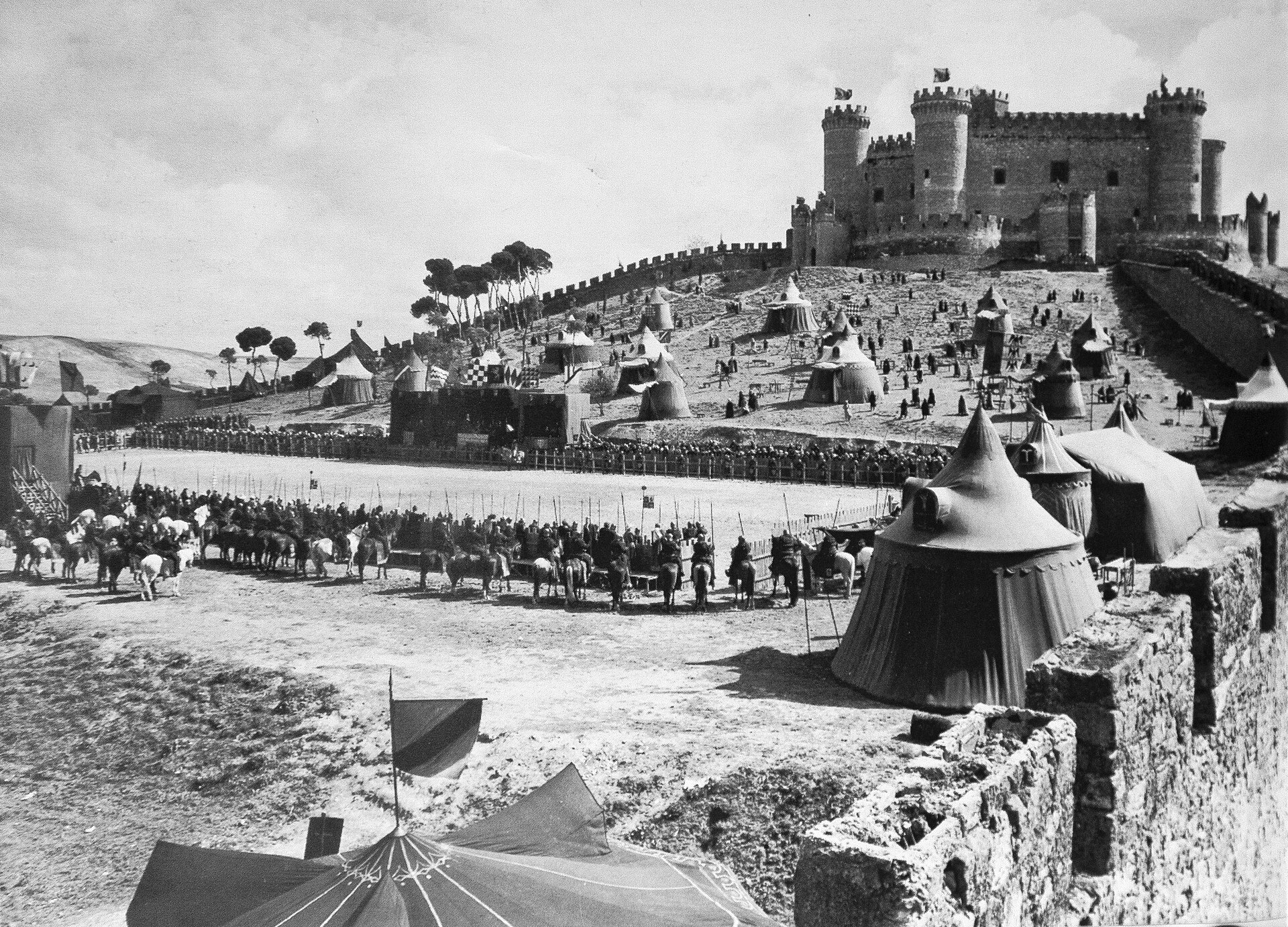
In the late 1950s, the American producer Samuel Bronston set up his own film studio in Madrid, forging close ties with Francisco Franco's government. Franco, who admired the medieval knight Rodrigo Díaz de Vivar and privately compared himself to him, made fertile ground for a lavish biographical epic. Bronston saw the opportunity, and in 1960 he bought a script by Fredric M. Frank about the legendary warrior known as El Cid — from the Arabic as-Sayyed, 'the Lord.'
Bronston hired Anthony Mann to direct, then brought in Philip Yordan to rework the screenplay, and finally Ben Barzman to shape the version that would reach the screen, with uncredited help from Bernard Gordon. Before filming began, Bronston also bought the rights to a rival Cid biopic being developed by Cesáreo González's Aspa Films, folding it into his own production and turning the film into an Italian co-production. Charlton Heston was cast as Rodrigo, and Sophia Loren as his wife, Doña Jimena — rendered 'Chimene' in the script and pronounced 'shim-ain' onscreen. Loren was paid $200,000 for ten weeks of work, with Bronston also covering her hairdressing costs at $200 a week.
Filming ran from September 1960 to April 1961 on a $7 million budget — an enormous sum for the era, befitting a story about the reconquest of Spain. The plot, loosely drawn from Rodrigo's life, follows him from his betrothal to Chimene through his mercy toward captured Moorish emirs al-Mu'tamin and al-Kadir, who in gratitude proclaim him 'El Cid' and swear him allegiance. That act of clemency instead brings him accusations of treason from Count Ordóñez, backed by Chimene's own father, Count Gormaz.
The story spirals through duels and betrayals: Rodrigo kills Gormaz in combat defending his father Don Diego's honor, and Chimene, having witnessed her father's death, renounces him and vows revenge. Still, Rodrigo wins Calahorra for Castile in single combat and asks King Ferdinand that Chimene be given to him in marriage. Their union, though legal, remains unconsummated until she comes to him freely — and when she instead retreats to a convent, exile eventually reunites them, and they raise twin daughters together far from Spain.
Meanwhile, political catastrophe unfolds in Castile. King Ferdinand's death splits his kingdom among his children — Sancho, Alfonso, and Urraca — igniting a fraternal power struggle. Rodrigo, sworn to protect all of Ferdinand's heirs equally, is caught between them, especially after Sancho imprisons Alfonso and Rodrigo frees him. When the North African general Ben Yusuf of the Almoravids — determined to crush the peaceful coexistence between Muslims and Christians in Al-Andalus — has Sancho assassinated to clear Alfonso's path to the throne, El Cid demands Alfonso swear innocence on the Bible. Offended, the new king banishes him.
More from Mythology

The Doctor Who Sang a Nation Into Being
A country doctor rode into the forests of Karelia armed with nothing but a notebook — and rode out with the soul of a nation.

The Boat That Carried the Sun
Every sunset, the ancient Egyptians believed, the sun climbed into a boat and sailed straight into the realm of the dead — only to fight a monstrous serpent before dawn could return.

The Wild Man of the Snows
At 21,000 feet, a colonel found tracks in the snow that he blamed on a wolf — but his guides knew better, and gave the world a name that would echo for a century.

The Knight Who Went Mad for Love: Orlando Furioso
A hero so devoted to duty he was Charlemagne's greatest paladin loses his mind—not to a sword wound, but to heartbreak. To cure him, a friend must ride a flying horse to the Moon.

The Book That Turned the World Into Myth
A poet condemned to exile spent his final years in Rome finishing a poem that would outlive empires—a poem about nothing standing still, not gods, not lovers, not even the shape of a man.

Paradise Lost: Milton's Rebel Angel
A blind poet, dictating verses in the dark, dared to explain the ways of God to men — and in doing so, made Hell's ruler unforgettable.