The Marbles That Won't Come Home
In 1801, a Scottish diplomat began carving a temple in half — and touched off a quarrel that has outlasted empires.
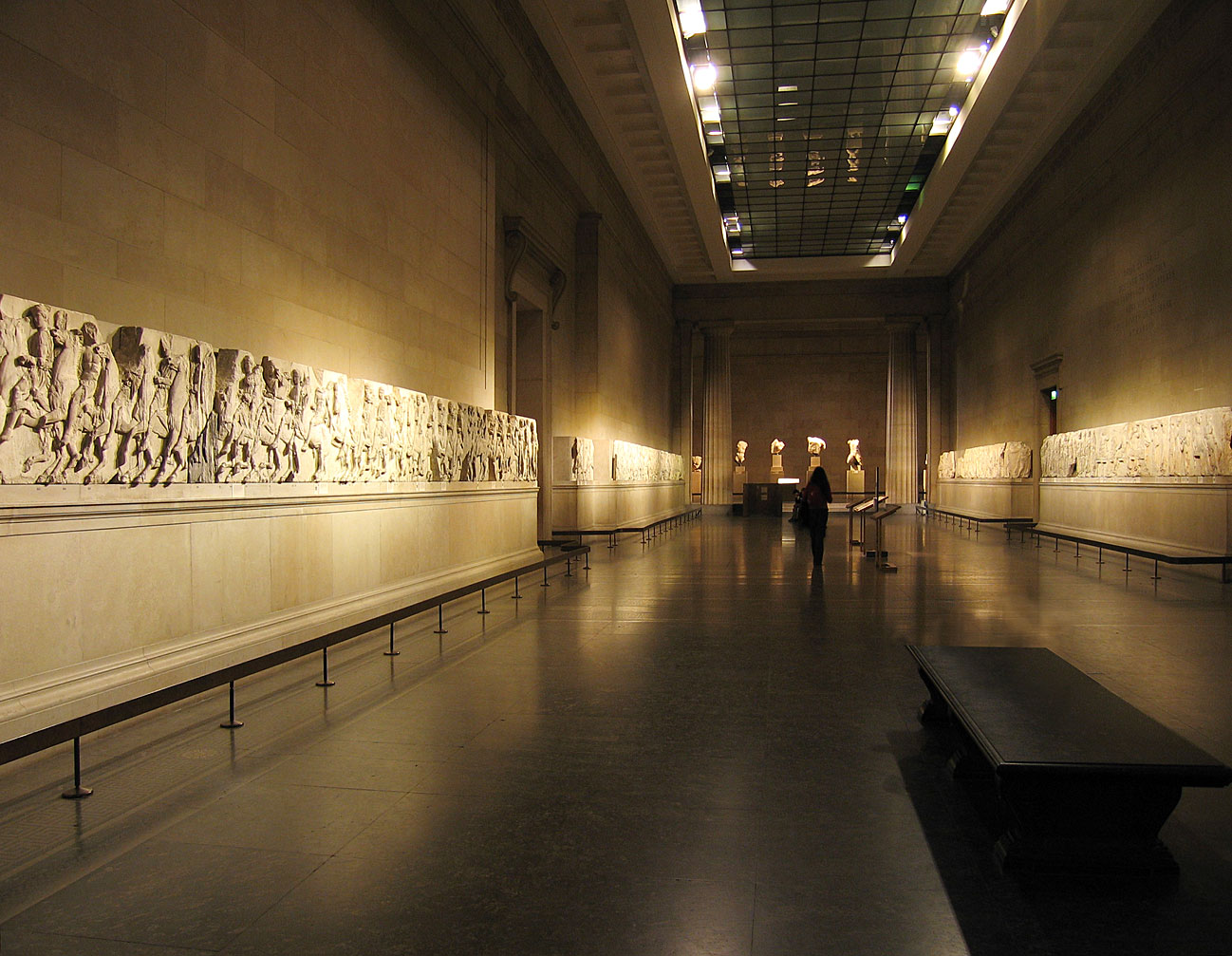
In the autumn of 1801, workmen on the Acropolis of Athens began prying loose slabs of marble that had watched over the city for more than two thousand years. They worked under the direction of the Neapolitan painter Giovanni Lusieri, acting on the orders of Thomas Bruce, 7th Earl of Elgin, who had arrived in the region three years earlier as Britain's ambassador to the Ottoman Sultan Selim III.
The sculptures had already survived a catastrophe. The Parthenon, built from 447 BCE as a temple to Athena under the artistic direction of the sculptor Phidias, had been converted over the centuries into a church, then a mosque. In 1687, during a war between the Ottomans and Venice, the Turks stored gunpowder inside the building. A Venetian artillery shell struck it on 26 September, and the explosion tore out the temple's heart, killing about 300 people and toppling three of its four walls. Roughly three-fifths of the frieze sculptures crashed to the ground. For over a century afterward, the ruins were quarried for building stone, and fallen fragments were reportedly burned to make lime.
Elgin had first hoped simply to document the ruins — hiring artists to sketch and cast the remaining sculptures after the British government declined to fund such work itself. But by 1801 his ambitions had grown. Over the next decade, his agents stripped roughly half of the Parthenon's surviving sculptures, along with pieces from the nearby Erechtheion, the Temple of Athena Nike, and the Propylaia, and shipped them first to Malta and then on to England.
Elgin maintained that he had secured permission from the Ottoman officials who governed Athens at the time. Whether that permission truly extended to removal on this scale has been disputed ever since. He financed the entire operation himself, since London offered no support, eventually spending some £74,240 — worth roughly $4 million today — on excavation, transport and shipping.
Not everyone in Britain approved. Lord Byron denounced Elgin's actions as vandalism, comparing them to looting. Others defended the enterprise as rescue, arguing the sculptures would otherwise have been lost to war, weather, or the lime-kiln. In 1816, a British parliamentary inquiry concluded that Elgin's acquisition had been lawful, and he sold the collection to the government that same year. Under the British Museum Act of 1816, the sculptures passed into the museum's trusteeship on the condition that the collection be kept together and named after Elgin.
More from Art

The Painting With No Foreground
A single robed figure stares out at an empty grey sea — and the emptiness itself became a scandal. When it was unveiled in Berlin in 1810, no one knew quite what to do with it.

The Painter Who Chased the Light
For a few purple minutes each evening, an American exile knelt in an English garden and raced the dying sun to paint two little girls lighting lanterns. It took him two years to finish.

When a President Became a God
Look straight up inside the U.S. Capitol dome and you will find George Washington enthroned among the clouds, surrounded by goddesses — the founding father transformed into myth.

Marble Brought Back to Life
A corpse asleep, a wing barely brushing her skin — and marble somehow learns to breathe. This is the moment Antonio Canova dared to carve.

The World Turned Upside Down
Look closely at a sixteenth-century Flemish village and you'll find a man biting a pillar, another carrying daylight in a basket, and a wife slipping a blue cloak over her husband's shoulders. Every gesture is a joke — if you know the language.

The Girl in the Glass Case
She stood two-thirds life size, dressed in a real tutu and human hair — and the critics who saw her in 1881 recoiled as if she were something obscene.