The Melancholy Man Who Vanished
A dying painter captured a stranger's sorrow in oil — then the portrait itself disappeared into the vaults of history, sold for more than any painting had ever fetched.
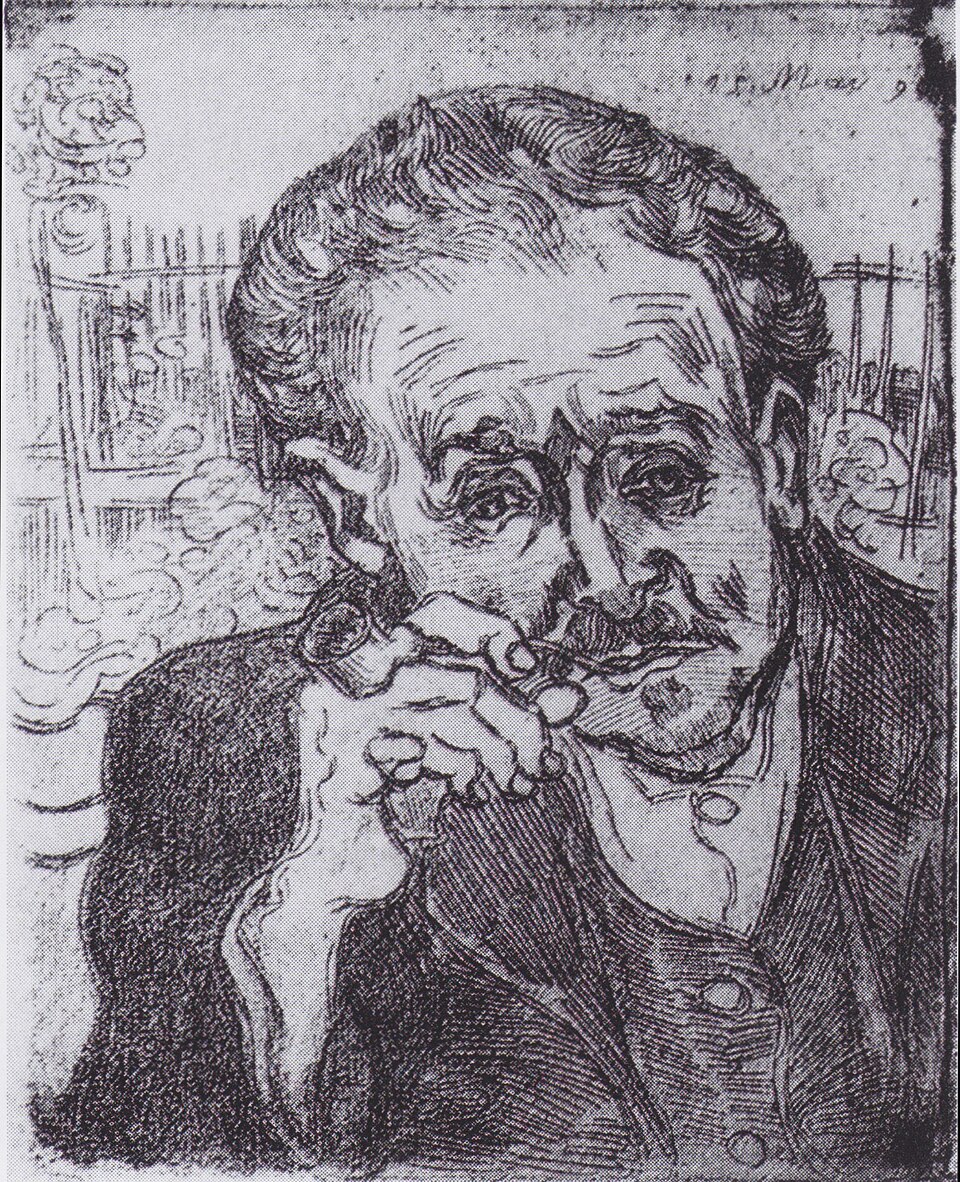
In June 1890, in the small French town of Auvers-sur-Oise, Vincent van Gogh sat across from a man he had first dismissed as useless. Dr. Paul Gachet, a homeopathic physician and amateur artist, had been recommended to Theo van Gogh by Camille Pissarro, a former patient who knew of Gachet's fondness for painters. Vincent had just been released from a year at the asylum in Saint-Rémy-de-Provence, following a breakdown the previous year in which he had cut off part of his own ear.
At first, Vincent was skeptical. He wrote to Theo that Gachet seemed 'sicker than I am,' comparing their situation to one blind man leading another into a ditch. Yet only two days later, writing to his sister Wilhelmina, his tone had transformed entirely: he called Gachet 'a true friend,' someone who resembled him so closely in body and mind that he felt like a brother.
During his stay with Gachet, Van Gogh entered one of the most productive periods of his life, completing more than seventy paintings in a matter of weeks. Among them were two authenticated portraits of the doctor, both showing Gachet seated at a red table, resting his right elbow on it with his head leaning in his hand. On the table, Van Gogh placed two yellow books and a sprig of purple foxglove — the plant from which digitalis is drawn, a nod perhaps to Gachet's medical trade.
Van Gogh described the expression he gave Gachet as one of melancholy, admitting it might look to some like a grimace. He wrote to his sister that he wanted these to be 'modern portraits' — faces with 'the thought, the soul of the model' inside them, the kind that might still be gazed upon a century later with longing. He had long been haunted by Eugène Delacroix's painting of the poet Tasso in a madhouse, an image of a real, suffering man, and he carried that ambition into Gachet's face: the ultramarine coat, the pale, tired features, the transparent blue eyes.
The composition itself borrowed from an earlier subject. Van Gogh had painted Madame Ginoux twice, once in Arles and again at Saint-Rémy, styling the second version after Paul Gauguin's rendering. Gachet had admired that earlier portrait when Van Gogh brought it with him to Auvers, and Vincent carried its table-with-books arrangement and resting-head pose directly into the portraits of the doctor.
More from Art

The Painting With No Foreground
A single robed figure stares out at an empty grey sea — and the emptiness itself became a scandal. When it was unveiled in Berlin in 1810, no one knew quite what to do with it.

The Painter Who Chased the Light
For a few purple minutes each evening, an American exile knelt in an English garden and raced the dying sun to paint two little girls lighting lanterns. It took him two years to finish.

When a President Became a God
Look straight up inside the U.S. Capitol dome and you will find George Washington enthroned among the clouds, surrounded by goddesses — the founding father transformed into myth.

Marble Brought Back to Life
A corpse asleep, a wing barely brushing her skin — and marble somehow learns to breathe. This is the moment Antonio Canova dared to carve.

The World Turned Upside Down
Look closely at a sixteenth-century Flemish village and you'll find a man biting a pillar, another carrying daylight in a basket, and a wife slipping a blue cloak over her husband's shoulders. Every gesture is a joke — if you know the language.

The Girl in the Glass Case
She stood two-thirds life size, dressed in a real tutu and human hair — and the critics who saw her in 1881 recoiled as if she were something obscene.