The Mountain Cézanne Could Not Stop Painting
A single glimpse from a moving train window set off an obsession that would last nearly thirty years and reshape the future of painting.
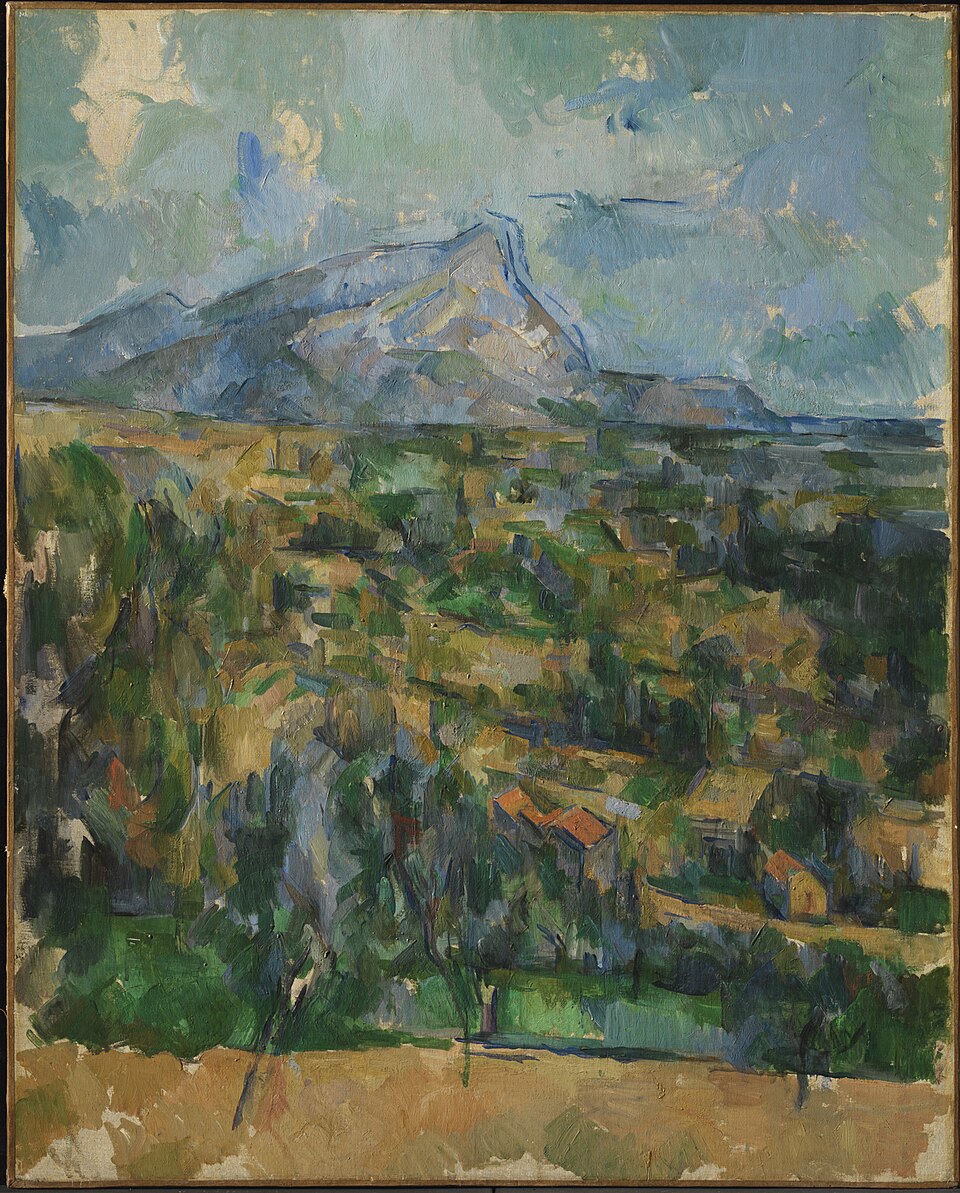
On April 14, 1878, Paul Cézanne sat down to write a letter to his old friend Émile Zola. Half a year earlier, on October 15, 1877, the Aix–Marseille railway line had opened, and it was from a train on that line, crossing the Arc River Valley bridge, that Cézanne had just seen something he called simply a 'beau motif' — a beautiful motif. The sight was Mont Sainte-Victoire, the grey-white limestone mountain that watches over Aix-en-Provence, the town where Cézanne had lived nearly all his life. He was thirty-nine years old, and though he did not know it yet, that view from a train window would become the seed of one of the most sustained artistic investigations in modern painting.
Over the following decades, Cézanne returned to Mont Sainte-Victoire again and again, eventually producing around eighty paintings and watercolors of the mountain. He painted it from three main vantage points: near his brother-in-law's property in Bellevue, near the Bibemus quarry, and later from Les Lauves, a hill just north of Aix. Each time, something shifted — the angle, the light, the balance of the composition, the mood he was chasing. In many of these works, especially the earlier ones, the railway bridge that had first framed his view of the mountain appears again, quietly placed near the center-right of the canvas, a kind of signature of how the whole obsession began.
Cézanne's life gave him the freedom to pursue this obsession. After his father's death, he inherited the family estate and was, for the first time, free from financial worry. But in 1897 his mother died, and to settle her estate among himself and his two sisters, Marie and Rose, he was forced to sell the family property outside Aix. The house sold in 1899, and its loss struck Cézanne hard. He bought a new plot of land on the hill of Les Lauves, just north of Aix, and in 1902 built a studio there. From that studio he had a sweeping view over Aix and the plains beyond, with Mont Sainte-Victoire rising in the distance — and it was here that he painted most of his late-period canvases of the mountain.
Art historians divide Cézanne's Mont Sainte-Victoire paintings into two broad periods: a 'period of synthesis' running roughly from the 1870s to 1895, and a late period from 1895 until his death in 1906. Throughout both, he worked in oil and watercolor alike, using the transparency and lightness of watercolor to capture the mountain in a different register than the denser, more structural oils.
Unlike Claude Monet, who often tried to finish a landscape in a single sitting to catch a fleeting moment of light, Cézanne worked the opposite way. He returned to the same view of Mont Sainte-Victoire over and over, building up a deep, accumulated understanding of the subject rather than recording one instant of it. The result is a body of work that feels strangely outside of time — his paintings rarely betray a specific hour, season, or weather condition. Instead, they reach for something more permanent: the underlying structure of the landscape itself. He subtly distorted the mountain's true forms to sharpen its geometry and to hold the whole composition in balance.
More from Art

The Painting With No Foreground
A single robed figure stares out at an empty grey sea — and the emptiness itself became a scandal. When it was unveiled in Berlin in 1810, no one knew quite what to do with it.

The Painter Who Chased the Light
For a few purple minutes each evening, an American exile knelt in an English garden and raced the dying sun to paint two little girls lighting lanterns. It took him two years to finish.

When a President Became a God
Look straight up inside the U.S. Capitol dome and you will find George Washington enthroned among the clouds, surrounded by goddesses — the founding father transformed into myth.

Marble Brought Back to Life
A corpse asleep, a wing barely brushing her skin — and marble somehow learns to breathe. This is the moment Antonio Canova dared to carve.

The World Turned Upside Down
Look closely at a sixteenth-century Flemish village and you'll find a man biting a pillar, another carrying daylight in a basket, and a wife slipping a blue cloak over her husband's shoulders. Every gesture is a joke — if you know the language.

The Girl in the Glass Case
She stood two-thirds life size, dressed in a real tutu and human hair — and the critics who saw her in 1881 recoiled as if she were something obscene.