The Parthenon: Athens's Marble Crown
A temple built to thank the gods for victory would survive war, fire, faith, and empire — only to be shattered by a single Venetian bomb.
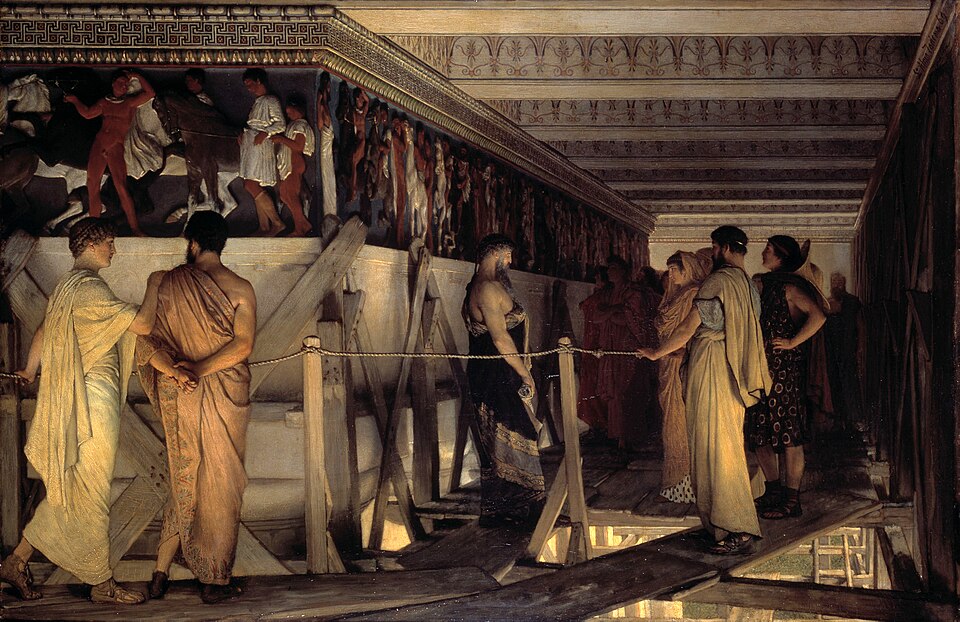
On the Athenian Acropolis, a temple of gleaming marble rises above the city, its columns catching the light exactly as its 5th-century BC architects intended. Built to honor the goddess Athena and to give thanks for the Greek triumph over the Persian invaders, the Parthenon was never merely a shrine — it was a statement, a treasury, and eventually a symbol that would outlast the civilization that raised it.
Construction began in 447 BC, when the Delian League, the alliance of Greek city-states led by Athens, stood at the height of its power. The architects Iktinos and Callicrates designed the building, while the artwork and decorative sculpture continued until 432 BC. Like most Greek temples, the Parthenon doubled as a treasury, and for a time it held the funds of the Delian League itself, the alliance that would later harden into the Athenian Empire.
The very name 'Parthenon' is tangled in mystery. It derives from parthénos, meaning maiden or virgin, but ancient writers rarely used the word for the whole building at first. In the 5th century BC, records simply call it 'the temple.' The architects themselves may have called it Hekatompedos — 'the hundred-footer' — a name that lingered for centuries even after 'Parthenon' became common usage by the 4th century BC orator Demosthenes.
Inside stood a colossal statue of Athena crafted by the sculptor Phidias. According to the historian Thucydides, the statesman Pericles once told the Athenians that the statue's gold could serve as an emergency treasury if the city ever needed it during the Peloponnesian War — a striking reminder that the temple's beauty and its practical value were never entirely separate.
The Parthenon's life did not end with antiquity. In the final decade of the 6th century AD, it was converted into a Christian church dedicated to the Virgin Mary — parthénos again, this time applied to Mary herself. After the Ottoman conquest of the mid-15th century, it became a mosque, its silhouette altered but its bones intact.
More from Architecture

Stonehenge: The Stones That Refuse to Explain Themselves
For more than 4,500 years, a ring of leaning giants has watched the sun rise and set on the same two days each year — and no one alive can say for certain why.

The Dome That Refused to Fall
Two thousand years ago, Roman engineers poured a dome so vast that no one has dared build a bigger one from unreinforced concrete since. It still stands, open to the sky.

A Minaret Rising Over Kingsland Road
On a busy London street better known for shops and buses, the tallest minaret in Britain quietly reaches into the sky. Its story began not in Sinan's sixteenth-century Istanbul, but in 1990s Hackney.

The Bridge That Was Killed Twice
For 427 years it arched over the Neretva like a stone rainbow. Then, in a matter of days in 1993, it simply ceased to exist.

Hoover Dam: The Concrete That Tamed a River
In the scorched depths of Black Canyon, thousands of men built the largest concrete structure the world had ever seen — and finished it two years early, at a cost of over a hundred lives.

Neuschwanstein: The Castle Built for a Ghost
A king who despised his own palace built the most famous fairy-tale castle on earth — and died before he ever truly lived in it.