The Peace That Outlasted the War
Two empires fought for a century over a stretch of Syrian land — and then made peace in a treaty so old, and so remarkable, that a copy of it now hangs on the wall of the United Nations.
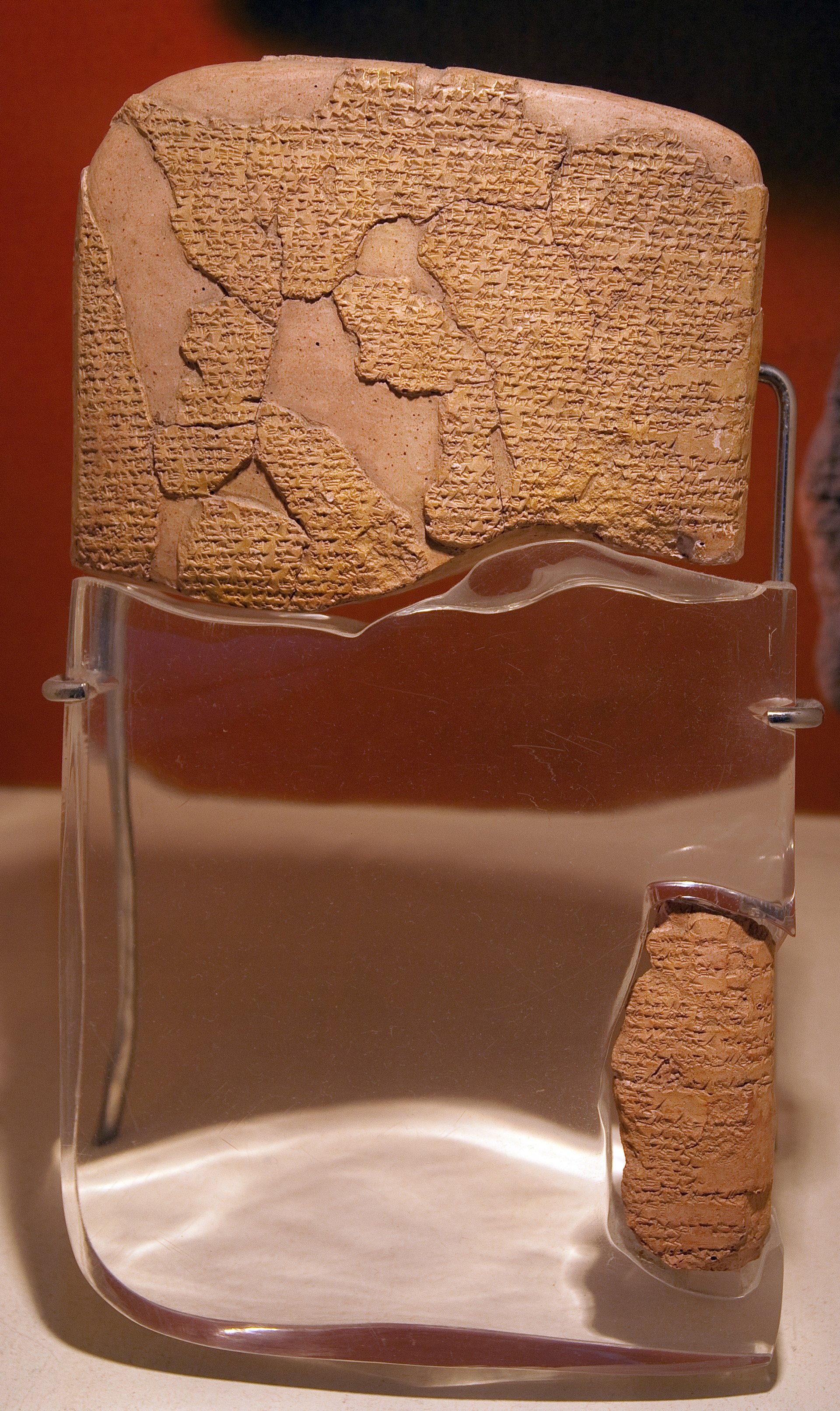
In the thirteenth century BC, the Battle of Kadesh became the stuff of legend before it ever became the stuff of peace. In 1274 BC, Ramesses II of Egypt marched four divisions of troops into Syria, hoping to crush the Hittite presence there and restore Egypt to the dominance it had known under Tuthmosis III. Outdistancing his own army, he was ambushed near the city of Kadesh on the Orontes River by the forces of Hittite king Muwatalli II, who had gathered allies to defend his territory. The Amun division was scattered by a surprise chariot assault, and only the arrival of reinforcements from Amurru saved Ramesses from disaster. Neither side achieved a decisive victory — though Ramesses' scribes, who controlled every inscription carved into Egyptian temple walls, made sure history would remember it as a triumph.
The battle settled nothing. For roughly fifteen more years, Egypt and Hatti remained locked in inconclusive conflict, the latest chapter in tensions that stretched back nearly a century, to when the Hittites had displaced the kingdom of Mitanni as the dominant power in central Syria and absorbed the Egyptian vassal territories of Kadesh and Amurru. Egyptian pharaohs never fully accepted that loss. Ramesses' own father, Seti I, had briefly reclaimed Kadesh in battle, only to relinquish it again in a subsequent treaty — a pattern of gains won and lost that defined the era.
What finally changed the equation wasn't victory but exhaustion, and a shared sense of looming danger. Egypt watched the growing threat of the Sea Peoples on its borders; the Hittites eyed the rising power of Assyria to their east. Neither empire could afford to keep bleeding into an endless Syrian stalemate. So, in the twenty-first year of Ramesses II's reign — 1258 BC — intermediaries negotiated a settlement between the two courts, this time with Ḫattušili III now ruling in Hatti. The two monarchs, remarkably, are believed to have never met face to face.
The result was what we now call the Egyptian–Hittite peace treaty, sometimes loosely called the Treaty of Kadesh even though the city itself is never mentioned in its text. It is also known as the Eternal Treaty or the Silver Treaty, the latter name a clue to its true origin: the surviving inscriptions were copies of original tablets made of silver, since lost, that had been exchanged between the two courts.
The treaty survives today in two independent versions, an extraordinary rarity for the ancient Near East. Ramesses had the Egyptian text engraved in hieroglyphics on the walls of two temples in Thebes — the Ramesseum and the Precinct of Amun-Re at Karnak — where the scribes even reproduced descriptions of the seals and figures stamped on the Hittite tablet delivered to Egypt. The Hittite version turned up far to the north, in the royal archives of Hattusa, the Hittite capital in what is now central Turkey, inscribed on baked clay tablets.
More from Archaeology

The Bronze Disc That Rewrote the Sky
Two looters with a metal detector dug up something illegal, invisible in value, and older than Stonehenge's final stones — a map of the heavens buried for over three thousand years.

The Faceless Women of the Ice Age
Long before writing, before cities, before the wheel, someone carved a woman's body into stone and ivory — and left no name, no face, no explanation.

The Pebble That Might Be Human
A palm-sized stone found on a Moroccan riverbank may be humanity's oldest attempt to see itself — or simply a trick of erosion.

The Crown That Vanished: Deshret and the Red Land
A crown worn by kings for three thousand years has never once been found in a tomb — not one. So where did it go?

The Face That Traveled Between Empires
A farm worker's shovel struck stone in 1897 and unearthed a face so striking it would be sold to France, seized as war booty, and finally traded back for a Velázquez.

The Boy in the Dark Tunnel
A schoolboy fell into black water inside an ancient tunnel and surfaced with his fingers brushing letters no one had noticed for 2,600 years.