The Poem That Invented an American Legend
In 1855, a Boston professor sat down to write an Indian Edda — and ended up giving America a hero whose name never actually belonged to the tribe he wrote about.
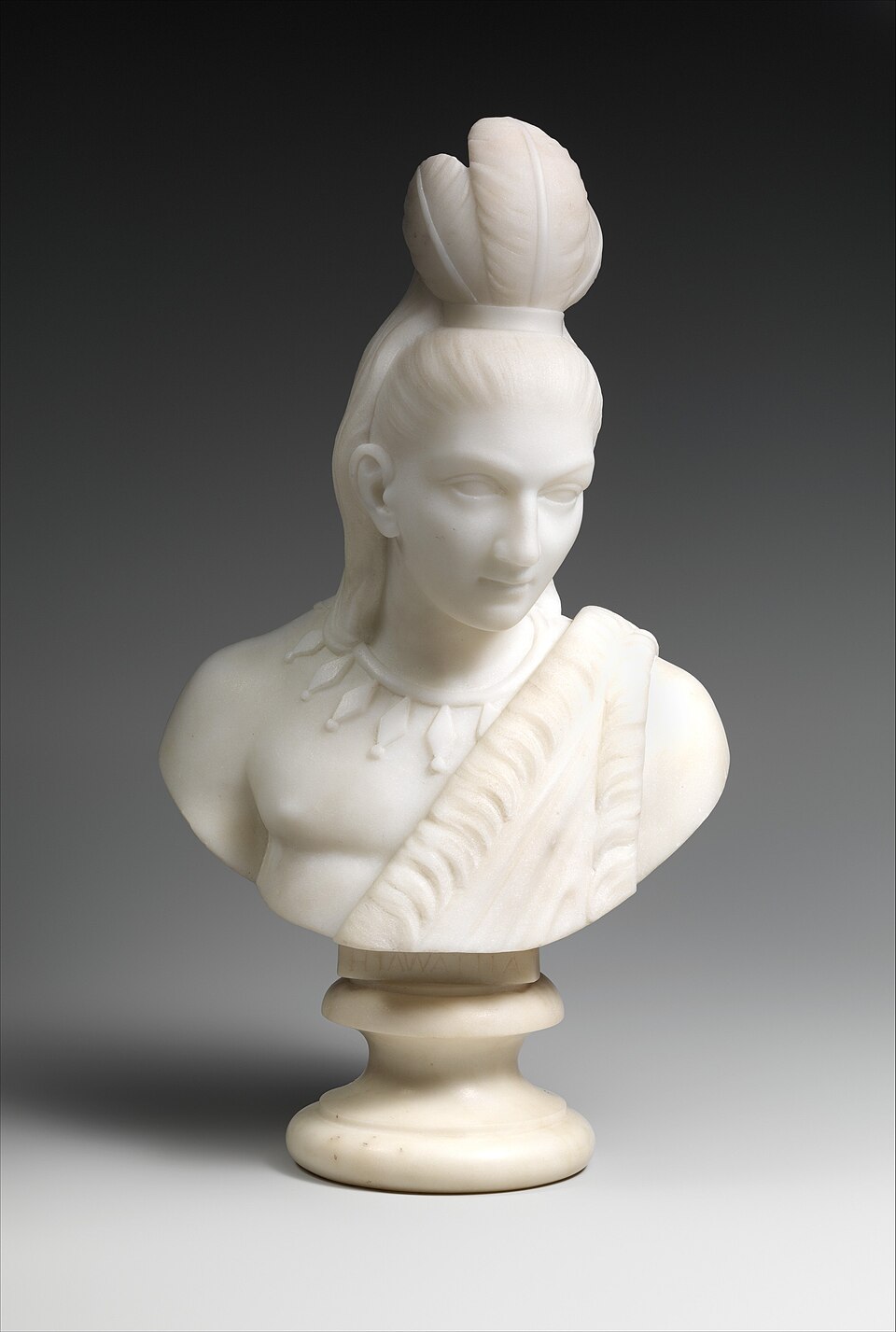
On November 10, 1855, the publishing house Ticknor and Fields released a strange and ambitious poem into the world: The Song of Hiawatha, by Henry Wadsworth Longfellow. Written in trochaic tetrameter — the same driving, chant-like meter Elias Lönnrot had used for Finland's Kalevala — the poem told the story of an Ojibwe warrior named Hiawatha, his love for a Dakota woman named Minnehaha, and a world populated by wind-spirits, talking animals, and ancient grandmothers who fell from the moon. It was an immediate success. By 1857, Longfellow himself calculated that 50,000 copies had sold.
The poem's roots were tangled from the start. Longfellow had originally intended to name his hero Manabozho, following the work of Henry Rowe Schoolcraft, an ethnographer and United States Indian agent whose Algic Researches (1839) supplied much of Longfellow's material. Manabozho was the name used among the Ojibwe of Lake Superior's south shore for a trickster and transformer figure in their folklore. But in a journal entry from June 28, 1854, Longfellow wrote that he would call his work 'Hiawatha' instead — 'that being another name for the same personage,' he believed. He was mistaken. Hiawatha was not another name for Manabozho at all, but a real, pre-colonial figure tied to the League of the Iroquois in New York and Pennsylvania — a wholly different tradition.
Longfellow drew from more than books. He counted the Ojibwe chief Kahge-ga-gah-bowh, also known as George Copway, as a friend who visited his home, and he had frequent encounters with the Sauk leader Black Hawk and other Sauk people on Boston Common. He also leaned on the Narratives of the missionary Heckewelder. Of his method, Longfellow insisted, 'I can give chapter and verse for these legends. Their chief value is that they are Indian legends.'
Longfellow set his story at Pictured Rocks, on the south shore of Lake Superior — one of the very locations where narrators traditionally told Manabozho stories. The poem unfolds across 22 chapters plus an introduction, though Hiawatha himself isn't introduced until Chapter III. It opens with the peace-bringing leader Gitche Manito prophesying Hiawatha's arrival, then recounts how the warrior Mudjekeewis became Father of the Four Winds by slaying the Great Bear, Mishe-Mokwa, and how his three sons — Wabun the East Wind, Kabibonokka the North Wind, and Shawondasee the South Wind — each fell into their own strange romances, one with a maiden turned into the Morning Star, another mistaking a dandelion for a golden-haired woman.
Hiawatha's own origin is stranger still: a woman named Nokomis falls from the moon and gives birth to Wenonah, who is warned against the seductions of the West Wind, Mudjekeewis, but succumbs anyway — and Hiawatha is born of that union. From there the poem follows Hiawatha through childhood adventures, his courtship of Minnehaha, his defeat of the evil magician Pearl-Feather, his invention of written language, and his discovery of corn. Minnehaha's death in a brutal winter marks the poem's tragic turn.
More from Mythology

The Doctor Who Sang a Nation Into Being
A country doctor rode into the forests of Karelia armed with nothing but a notebook — and rode out with the soul of a nation.

The Boat That Carried the Sun
Every sunset, the ancient Egyptians believed, the sun climbed into a boat and sailed straight into the realm of the dead — only to fight a monstrous serpent before dawn could return.

The Wild Man of the Snows
At 21,000 feet, a colonel found tracks in the snow that he blamed on a wolf — but his guides knew better, and gave the world a name that would echo for a century.

The Knight Who Went Mad for Love: Orlando Furioso
A hero so devoted to duty he was Charlemagne's greatest paladin loses his mind—not to a sword wound, but to heartbreak. To cure him, a friend must ride a flying horse to the Moon.

The Book That Turned the World Into Myth
A poet condemned to exile spent his final years in Rome finishing a poem that would outlive empires—a poem about nothing standing still, not gods, not lovers, not even the shape of a man.

Paradise Lost: Milton's Rebel Angel
A blind poet, dictating verses in the dark, dared to explain the ways of God to men — and in doing so, made Hell's ruler unforgettable.