The Queen Who Vanished: Searching for Nefertiti's Tomb
Her face is one of the most reproduced images in human history — yet three thousand years later, no one knows where her body lies.
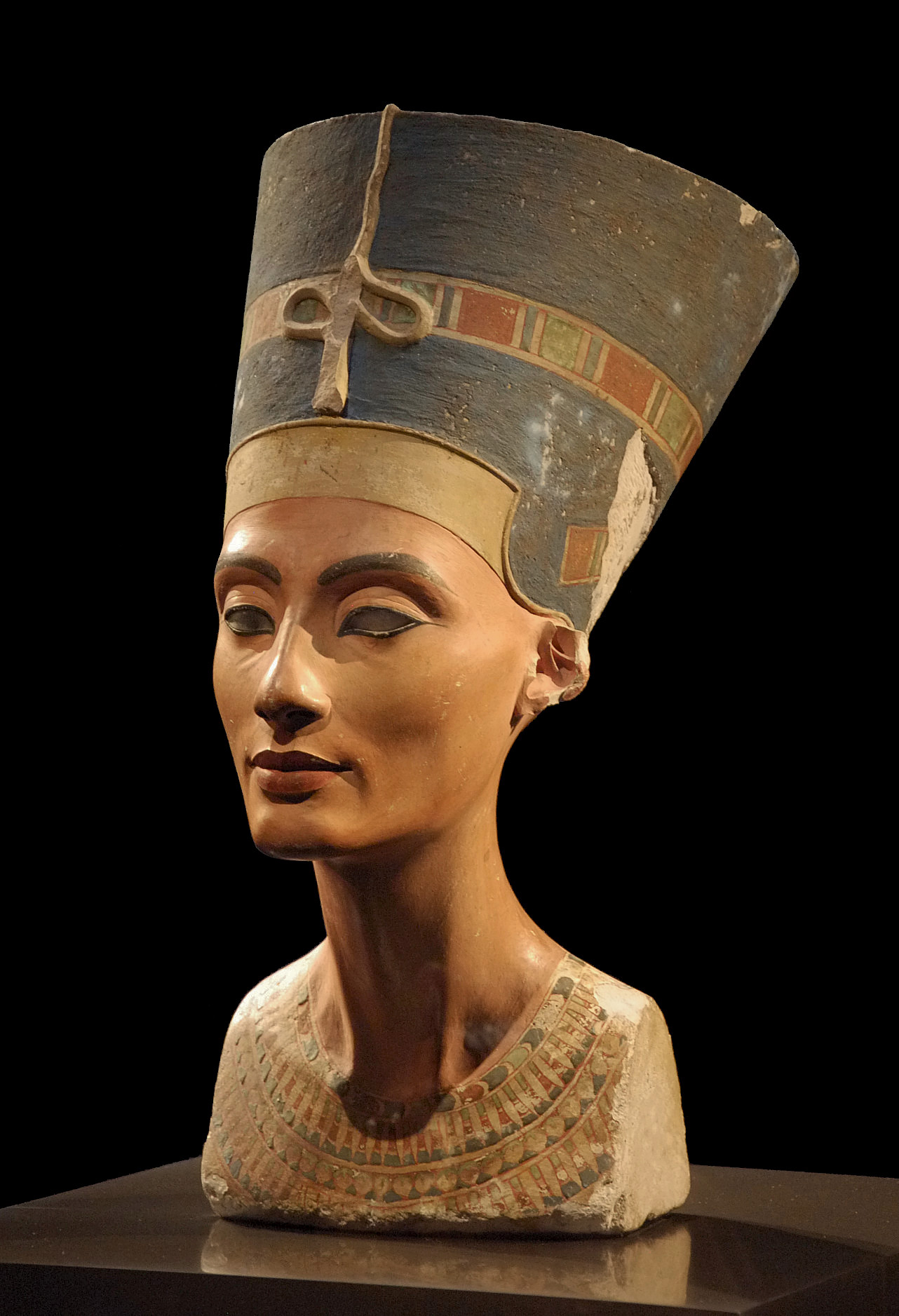
In 1912, in a buried studio in Amarna, archaeologists uncovered a painted limestone bust so lifelike it would become one of the most copied works of art from ancient Egypt. It depicted Nefertiti, great royal wife of Pharaoh Akhenaten, and it was attributed to the sculptor Thutmose. Today it sits in Berlin's Neues Museum, famous the world over. And yet the woman it portrays has no known grave. Her tomb, unlike her face, has never been found.
Nefertiti rose to prominence during one of ancient Egypt's most radical religious upheavals. Alongside Akhenaten, she promoted Atenism, a cult centered on the sun disc Aten that some scholars consider an early experiment in monotheism. Reliefs from the earliest years of Akhenaten's reign show Nefertiti depicted almost twice as often as her husband — an extraordinary visibility that signals real political weight. She appears smiting enemies and receiving offerings in scenes normally reserved for kings.
Her origins remain obscure. Almost nothing is recorded about her life before marriage. Some Egyptologists propose that Ay, who held the title 'God's Father,' was her father, with his wife Tey serving as her nurse — though no source states this outright. Others have floated the idea that she was the Mitanni princess Tadukhipa, a theory unsupported by hard evidence. She and Akhenaten had at least six daughters, including Meritaten, Meketaten, and Ankhesenpaaten, who later married Tutankhamun.
When Akhenaten moved the capital to Akhetaten in his fourth regnal year, Nefertiti's name changed to Neferneferuaten-Nefertiti, folding her identity into the new state religion she helped build.
For decades, Egyptologists believed Nefertiti vanished from the record around the twelfth year of Akhenaten's reign, her fate a mystery attributed to plague, injury, or natural death. But in 2012, an inscription discovered in a limestone quarry at Deir Abu Hinnis, providing evidence that both Akhenaten and Nefertiti were still alive well past his twelfth regnal year, named the 'Great Royal Wife, his beloved, Mistress of the Two Lands, Neferneferuaten Nefertiti' — proof she was alive and still held her position far later than once thought. This has fueled the theory that she herself ruled briefly as the female pharaoh Neferneferuaten before Tutankhamun's ascension.
More from Archaeology

The Bronze Disc That Rewrote the Sky
Two looters with a metal detector dug up something illegal, invisible in value, and older than Stonehenge's final stones — a map of the heavens buried for over three thousand years.

The Faceless Women of the Ice Age
Long before writing, before cities, before the wheel, someone carved a woman's body into stone and ivory — and left no name, no face, no explanation.

The Pebble That Might Be Human
A palm-sized stone found on a Moroccan riverbank may be humanity's oldest attempt to see itself — or simply a trick of erosion.

The Crown That Vanished: Deshret and the Red Land
A crown worn by kings for three thousand years has never once been found in a tomb — not one. So where did it go?

The Face That Traveled Between Empires
A farm worker's shovel struck stone in 1897 and unearthed a face so striking it would be sold to France, seized as war booty, and finally traded back for a Velázquez.

The Boy in the Dark Tunnel
A schoolboy fell into black water inside an ancient tunnel and surfaced with his fingers brushing letters no one had noticed for 2,600 years.