The Sack of Panama: Henry Morgan's Last Great Raid
In the last days of 1670, a Welsh privateer led fourteen hundred men across a jungle isthmus toward the richest city on the Pacific — unaware that peace had already been signed behind his back.
By the winter of 1670, Henry Morgan was already the most feared privateer in the Caribbean, a man who had sacked Puerto Príncipe, Porto Bello, and the twin cities of Maracaibo and Gibraltar on the shores of a Venezuelan lake. But he wanted one final, defining prize before the inevitable peace between England and Spain closed the age of legalized plunder. That prize was Panama, a wealthy Spanish city on the Pacific coast, and in April 1670 he began assembling the largest force of his career.
Morgan recruited furiously across Jamaica, Tortuga, and Hispaniola, drawing English, French, and Dutch volunteers into a single buccaneer army nearly 1,400 strong. Governor Thomas Modyford had already commissioned him to perform 'all manner of exploits' in defense of Jamaica, giving Morgan the legal cover he needed. Nine months of preparation followed before the fleet finally departed from Tortuga in December 1670.
The expedition's first target was Old Providence Island, seized from the Spanish through a ruse rather than open battle. Leaving behind a small garrison to hold it, Morgan sent part of his force toward the Isthmus of Panama, where the Spanish fort of San Lorenzo guarded the mouth of the Río Chagres. The fort fell only after a bloody assault, and Morgan himself arrived with the rest of his army a week later to find it in his hands.
Using San Lorenzo as a base of operations, the buccaneers pushed inland across the isthmus. The march proved brutal — nearly a week through dense jungle, provisions dwindling, men reduced to near starvation. Along the way they beat back a series of Spanish ambushes, emerging finally, ragged and hungry, on the outskirts of Panama itself.
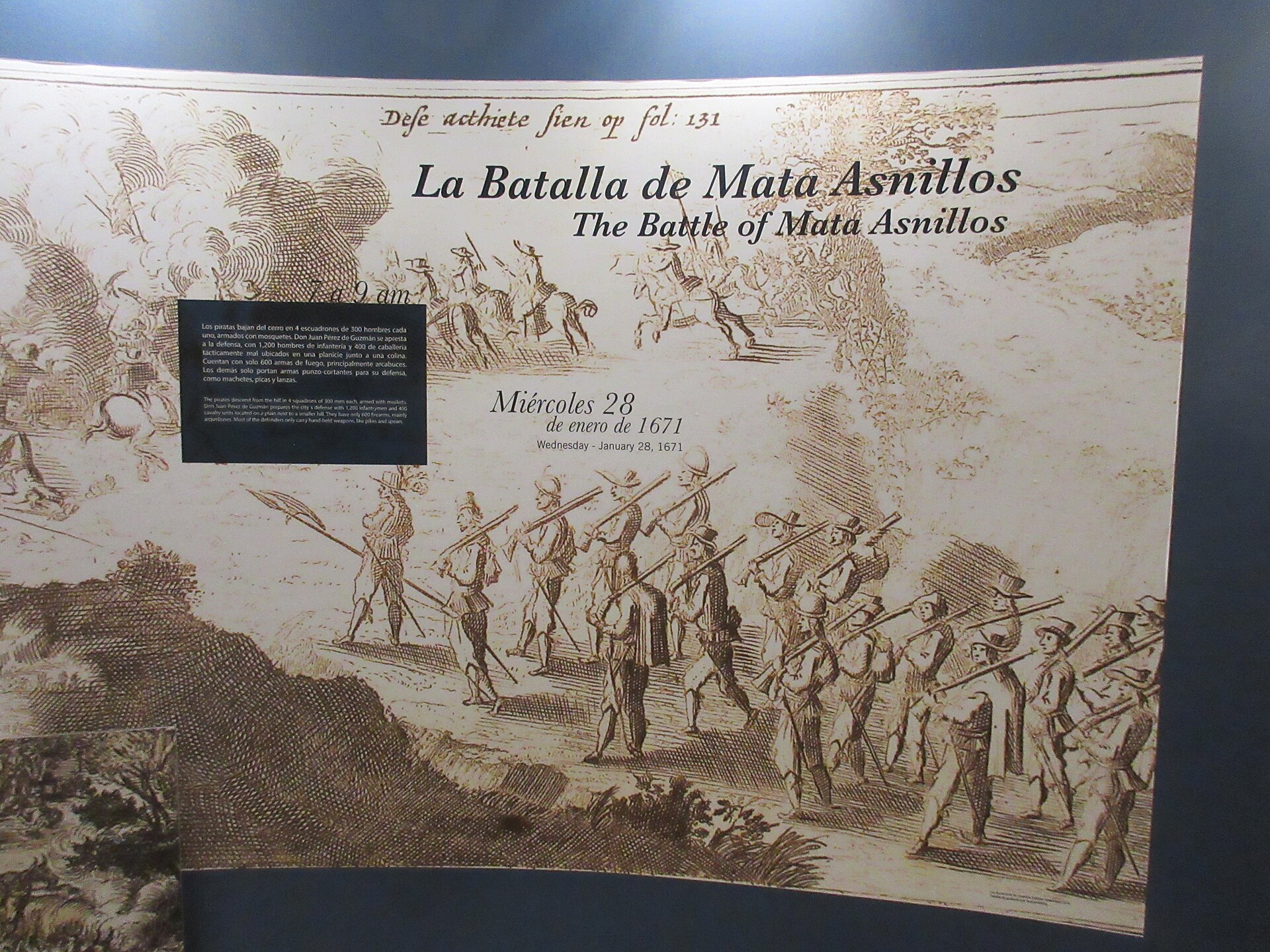
Outside the city, Morgan's army met and shattered a Spanish militia force at the Battle of Mata Asnillos. The road to Panama now lay open, and the buccaneers swept into the city. What followed was a thorough sacking: Panama was plundered and then burned, and Morgan's men fanned out to raid the surrounding countryside and the islands scattered across the Gulf of Panama.
More from Treasures

The Legend of the Nazi Gold Train
Somewhere beneath the hills of Poland, rumor insists, a train loaded with looted treasure vanished into a tunnel and was never seen again. The story survives because the plunder behind it was terrifyingly real.

The Treasure List Carved in Copper
While every other Dead Sea Scroll was written on parchment or papyrus, one was hammered into metal — a list of buried gold and silver that no one has ever found.

The Diamond That Vanished for a Century
For decades, treasure hunters and novelists spun theories about a lost 137-carat gem — sold, recut, melted into legend. It was sitting in a Quebec bank vault the entire time.

Gold, Ghosts, and the Mountain That Keeps Its Secret
For over a century, treasure hunters have vanished into a jagged Arizona range chasing a fortune that may never have existed at all. What they left behind was not gold, but one of America's most enduring legends.

The King Who Buried a River
When Rome finally cornered the Dacian king, it wasn't a sword that gave up his secret — it was a traitor's whisper about a riverbed.

The Fortune Dutch Schultz Took to His Grave
He asked New York's mob bosses for permission to kill a federal prosecutor — and when they said no, he disobeyed them anyway. It was a decision that would end his life and leave behind a fortune that has never been found.