The Silenced Scream
He never once stood before the painting he could not stop painting. For over twenty years, Francis Bacon returned to a scream that made no sound.
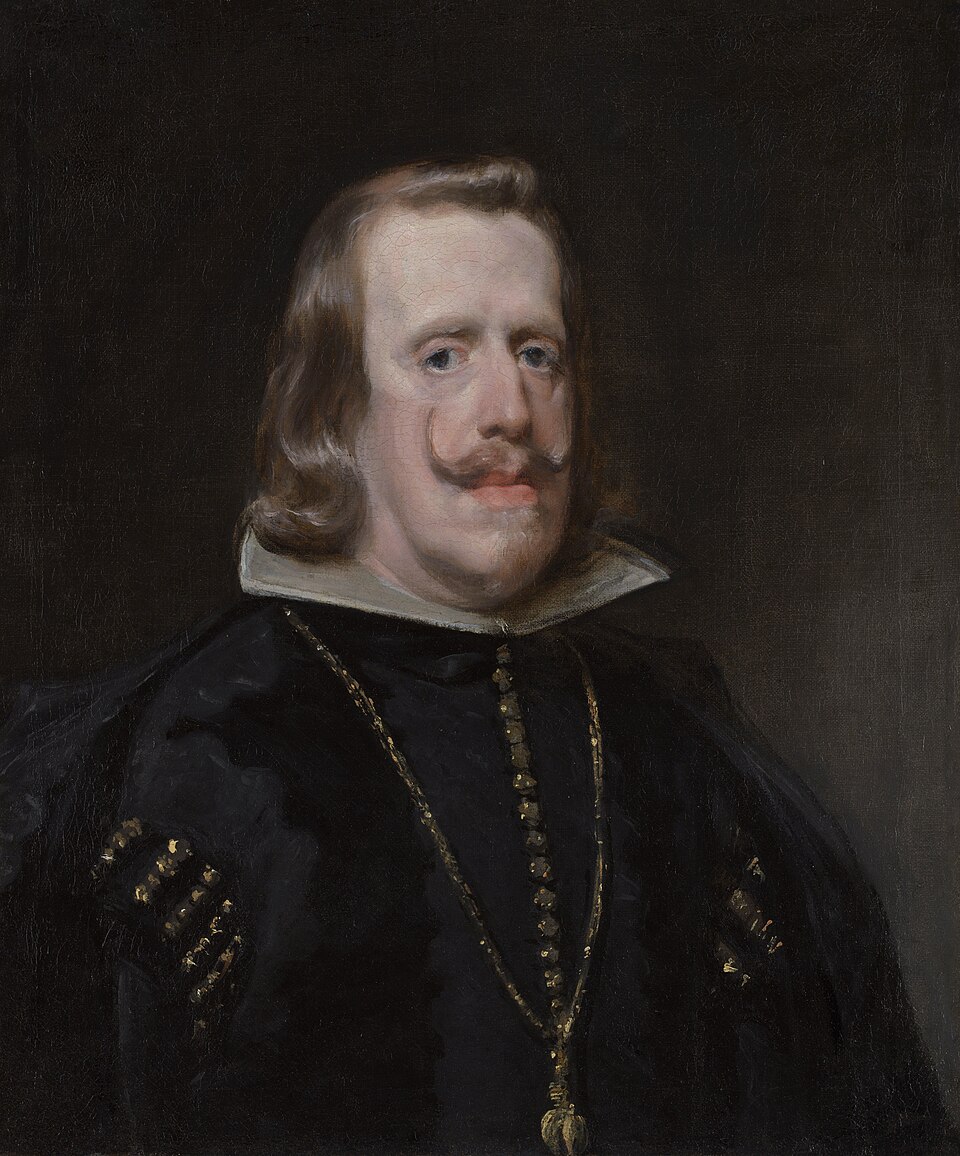
In 1953, Francis Bacon completed Study after Velázquez's Portrait of Pope Innocent X, a distorted reworking of Diego Velázquez's celebrated 1650 portrait of the pontiff who led the Catholic Church from 1644 to 1655. Coming after Head VI (1949), it was one of the first works in what would become a series of some fifty variants Bacon painted between 1949 and 1971, a fixation that art historian David Sylvester ranked, alongside Head VI, among 'the finest pope Bacon produced'.
Bacon revered the old masters — Velázquez, Titian, Rembrandt, and the late Goya — yet he built his own image from a strange archive: film stills, medical textbooks, nineteenth-century journals, and photographs commissioned from his friend John Deakin. He never painted from life. And despite the Velázquez portrait's grip on his imagination, Bacon deliberately avoided seeing the original in person for years, encountering it only much later in his life.
Velázquez himself had been commissioned by Innocent X to raise the pope's prestige, but the Spanish master refused flattery, producing instead an unblinking study of an ageing, shrewd, highly intelligent man. Bacon pushed further into unflattering territory. Critic Armin Zweite described his popes as rendered 'in a sinister manner, in cavernous dungeons, afflicted by an emotional outburst and devoid of any authority.' The pope screams, but the drapes and dark, rich colours around him seem to swallow the sound.
1953 marked a shift in Bacon's palette: the earlier oranges and blues gave way to velvet purples and a more nocturnal tone. Backgrounds once soft-focused became flat, sometimes nothing more than untreated canvas. Pleated curtains, rendered transparent, seem to fall through and encircle the pope's screaming face. Some have linked this darkening to the end of Bacon's turbulent relationship with Peter Lacy, whom he later called the love of his life — a bond in which Lacy, older and dominant, may have shaped Bacon's turn toward father figures like popes.
The figure appears trapped inside an abstract, three-dimensional glass cage — what Sylvester termed a 'space-frame,' a device recurring throughout Bacon's later career. The motif likely drew from sculptors Alberto Giacometti and Henry Moore, both admired by Bacon; Giacometti had used similar structures in The Nose and The Cage, Moore in his 1952 Maquette for King and Queen. Vertical folds resembling curtains, meanwhile, trace back to Bacon's 1949 Study from the Human Body and possibly to Titian's 1558 Portrait of Cardinal Filippo Archinto. Bacon called the effect 'shuttering,' borrowed in spirit from Edgar Degas, explaining that sensation should not come straight at the viewer but 'slide slowly and gently across.'
More from Art

The Painting With No Foreground
A single robed figure stares out at an empty grey sea — and the emptiness itself became a scandal. When it was unveiled in Berlin in 1810, no one knew quite what to do with it.

The Painter Who Chased the Light
For a few purple minutes each evening, an American exile knelt in an English garden and raced the dying sun to paint two little girls lighting lanterns. It took him two years to finish.

When a President Became a God
Look straight up inside the U.S. Capitol dome and you will find George Washington enthroned among the clouds, surrounded by goddesses — the founding father transformed into myth.

Marble Brought Back to Life
A corpse asleep, a wing barely brushing her skin — and marble somehow learns to breathe. This is the moment Antonio Canova dared to carve.

The World Turned Upside Down
Look closely at a sixteenth-century Flemish village and you'll find a man biting a pillar, another carrying daylight in a basket, and a wife slipping a blue cloak over her husband's shoulders. Every gesture is a joke — if you know the language.

The Girl in the Glass Case
She stood two-thirds life size, dressed in a real tutu and human hair — and the critics who saw her in 1881 recoiled as if she were something obscene.