The Sonnet That Gave Liberty a Voice
A poet who almost said no wrote fourteen lines for a fundraiser — and accidentally rewrote what a statue meant to the world.
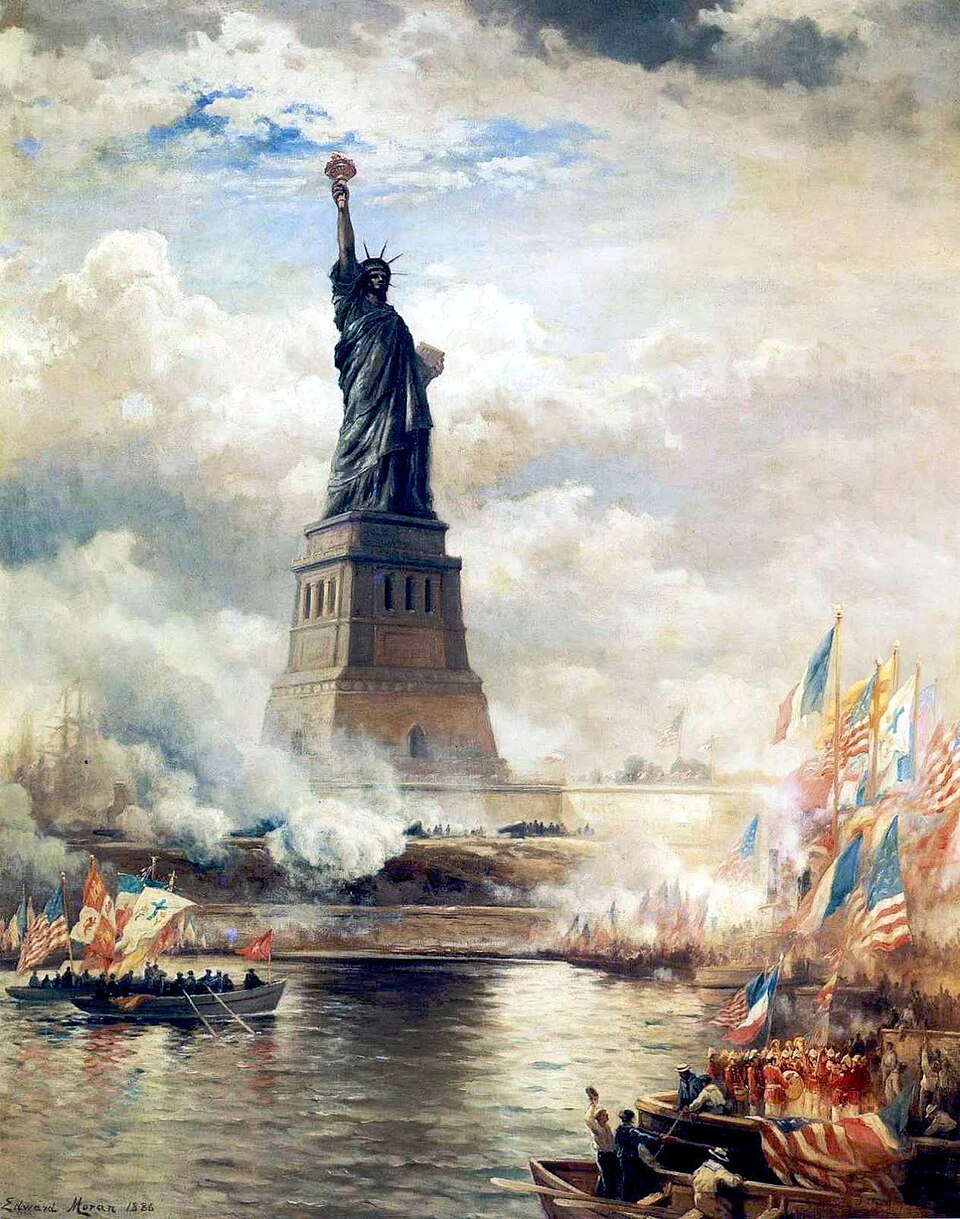
In 1883, a committee scrambled to raise money for something unglamorous but essential: a pedestal. The colossal statue meant to stand in New York Harbor, a gift from France called Liberty Enlightening the World, had no base to stand on, and organizers turned to art and literature to fund it. Among those asked to contribute was Emma Lazarus, a poet born in 1849 who had spent years aiding Jewish refugees fleeing pogroms in eastern Europe.
At first, Lazarus refused. Writing verse to order for a fundraising auction felt beneath her. But her friend, writer Constance Cary Harrison, pressed the point: the statue would greet immigrants as they sailed into the harbor, and Lazarus, of all people, understood what that arrival meant. Persuaded, she wrote 'The New Colossus,' a Petrarchan sonnet that imagined the statue not as a symbol of empire but as a 'Mother of Exiles.'
The poem deliberately set itself against an older wonder. Its opening lines invoke the Colossus of Rhodes, the giant bronze that once guarded a Greek harbor in the third century BC — 'the brazen giant of Greek fame.' Lazarus's 'New Colossus' answered that ancient monument to conquest with a female figure of welcome, standing between the 'sea-washed, sunset gates' where the Hudson and East Rivers meet.
She wrote of an 'air-bridged harbor that twin cities frame,' a reference to New York and Brooklyn, still separate cities in 1883. She wrote too of the torch's 'imprisoned lightning,' a nod to its then-novel electric light. And she gave the poem its most enduring phrase: a plea to send the 'huddled masses yearning to breathe free' — words drawn from her own work with refugees escaping persecution in Imperial Russia.
The sonnet was the first piece read aloud when the fundraising exhibit opened on November 2, 1883, and it was published in Joseph Pulitzer's New York World and in The New York Times. Yet its moment passed quickly. By August 1885 the pedestal fund was complete, the exhibit closed, and when the statue was unveiled in 1886, Lazarus's poem played no part at all. She had died the year before her words would find their true home.
More from Art

The Painting With No Foreground
A single robed figure stares out at an empty grey sea — and the emptiness itself became a scandal. When it was unveiled in Berlin in 1810, no one knew quite what to do with it.

The Painter Who Chased the Light
For a few purple minutes each evening, an American exile knelt in an English garden and raced the dying sun to paint two little girls lighting lanterns. It took him two years to finish.

When a President Became a God
Look straight up inside the U.S. Capitol dome and you will find George Washington enthroned among the clouds, surrounded by goddesses — the founding father transformed into myth.

Marble Brought Back to Life
A corpse asleep, a wing barely brushing her skin — and marble somehow learns to breathe. This is the moment Antonio Canova dared to carve.

The World Turned Upside Down
Look closely at a sixteenth-century Flemish village and you'll find a man biting a pillar, another carrying daylight in a basket, and a wife slipping a blue cloak over her husband's shoulders. Every gesture is a joke — if you know the language.

The Girl in the Glass Case
She stood two-thirds life size, dressed in a real tutu and human hair — and the critics who saw her in 1881 recoiled as if she were something obscene.