The Storyteller from Aleppo and the Lamp That Never Was
A poor boy in a city that was never quite China, a lamp that grants everything but truth, and a tale so beloved the world forgot it was invented in Paris.
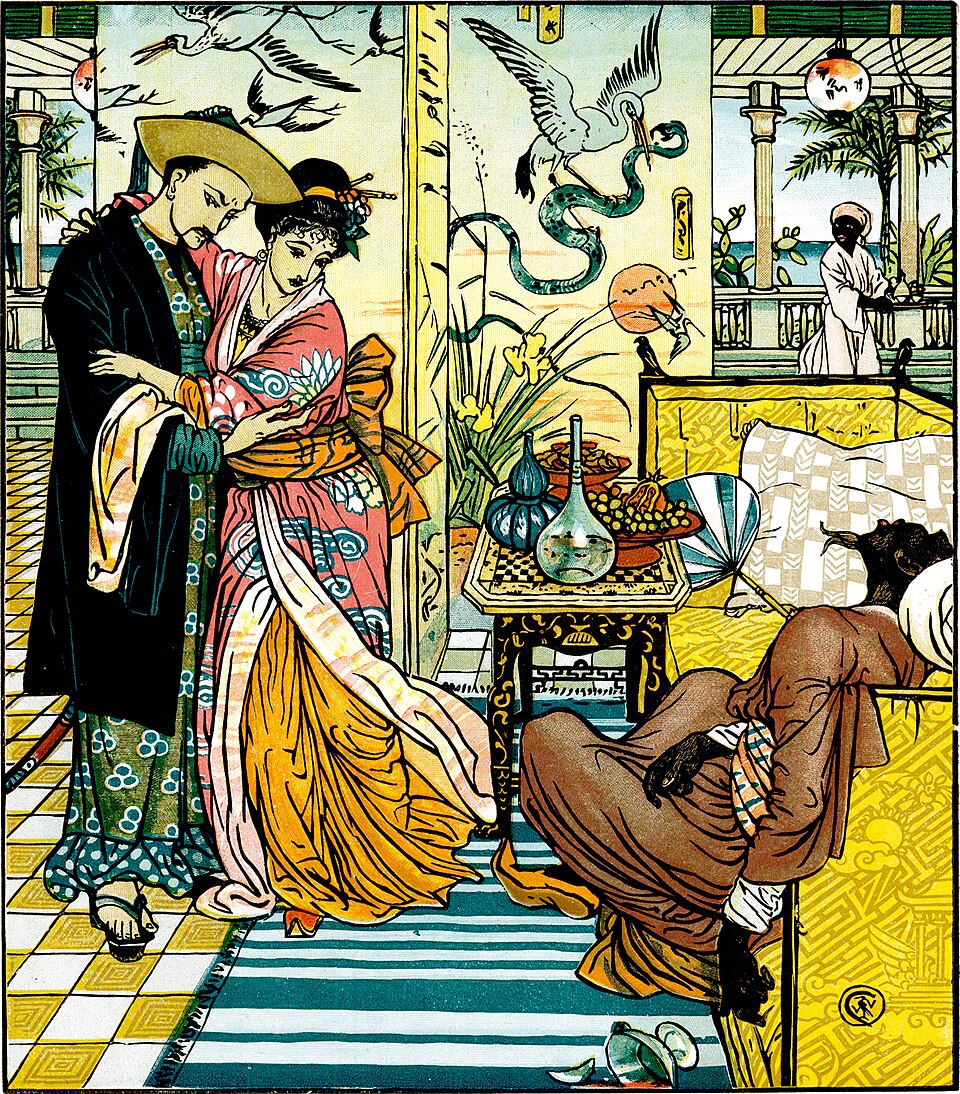
On a winter night in 1709, a Syrian traveler named Hanna Diyab sat with the French scholar Antoine Galland in Paris and told him a story about a lazy boy, a magic lamp, and a sorcerer from the Maghreb. Diyab had journeyed from Aleppo with the traveler Paul Lucas, and Galland, eager to finish his translation of One Thousand and One Nights, wrote down summaries of the tales Diyab offered him. For Aladdin, Diyab went further and gave Galland an actual manuscript, so no diary summary of it survives — only the record that this exchange happened, and that Galland transcribed the story for publication that winter.
The tale itself opens 'in one of the cities of Ancient China,' though almost nothing else about it feels Chinese: the ruler is called Sultan, not Emperor, the characters are Muslim, and their world is filled with the customs and platitudes of the Middle East. Aladdin is an impoverished young man, the son of a tailor named Mustapha who dies of grief over his son's idleness. Into this life walks a sorcerer from the Maghreb, who claims to be Aladdin's late father's brother and promises to make him a wealthy merchant — while secretly planning to use him to retrieve a wonderful oil lamp hidden in a booby-trapped magic cave.
The sorcerer leads Aladdin to the cave and instructs him to bring back the lamp, but when Aladdin refuses to hand it over before climbing out, the sorcerer traps him underground and abandons him. In his despair, Aladdin wrings his hands and accidentally rubs a ring the sorcerer had lent him. A genie appears, bound to whoever wears the ring, and frees him. Aladdin returns home with the lamp, the ring, and jewels gathered from the cave's enchanted garden, still not understanding what he holds.
The true power reveals itself when Aladdin's mother tries to clean the lamp so they can sell it for food. Rubbing it summons a second, far more powerful genie — one bound to obey whoever possesses the lamp itself. With this genie's aid, Aladdin becomes wealthy and influential, outmaneuvers a rival suitor, and marries Princess Badroulbadour, the sultan's daughter. The genie builds the couple a palace that outshines the sultan's own.
Word of Aladdin's fortune reaches the sorcerer, who returns to the city. While Aladdin is away hunting, the sorcerer tricks the princess — unaware of the lamp's true value — by offering to trade 'new lamps for old.' Once he possesses it, he commands the genie to carry the entire palace, princess included, to his home in the Maghreb. Aladdin still has the ring, and its lesser genie, though too weak to undo the theft outright, transports him to where his palace now stands.
More from Mythology

The Doctor Who Sang a Nation Into Being
A country doctor rode into the forests of Karelia armed with nothing but a notebook — and rode out with the soul of a nation.

The Boat That Carried the Sun
Every sunset, the ancient Egyptians believed, the sun climbed into a boat and sailed straight into the realm of the dead — only to fight a monstrous serpent before dawn could return.

The Wild Man of the Snows
At 21,000 feet, a colonel found tracks in the snow that he blamed on a wolf — but his guides knew better, and gave the world a name that would echo for a century.

The Knight Who Went Mad for Love: Orlando Furioso
A hero so devoted to duty he was Charlemagne's greatest paladin loses his mind—not to a sword wound, but to heartbreak. To cure him, a friend must ride a flying horse to the Moon.

The Book That Turned the World Into Myth
A poet condemned to exile spent his final years in Rome finishing a poem that would outlive empires—a poem about nothing standing still, not gods, not lovers, not even the shape of a man.

Paradise Lost: Milton's Rebel Angel
A blind poet, dictating verses in the dark, dared to explain the ways of God to men — and in doing so, made Hell's ruler unforgettable.