The Titan Who Stole Fire for Mankind
He tricked the king of the gods at a feast, stole the one thing Olympus refused to share, and paid for it with his liver — every single day, forever.
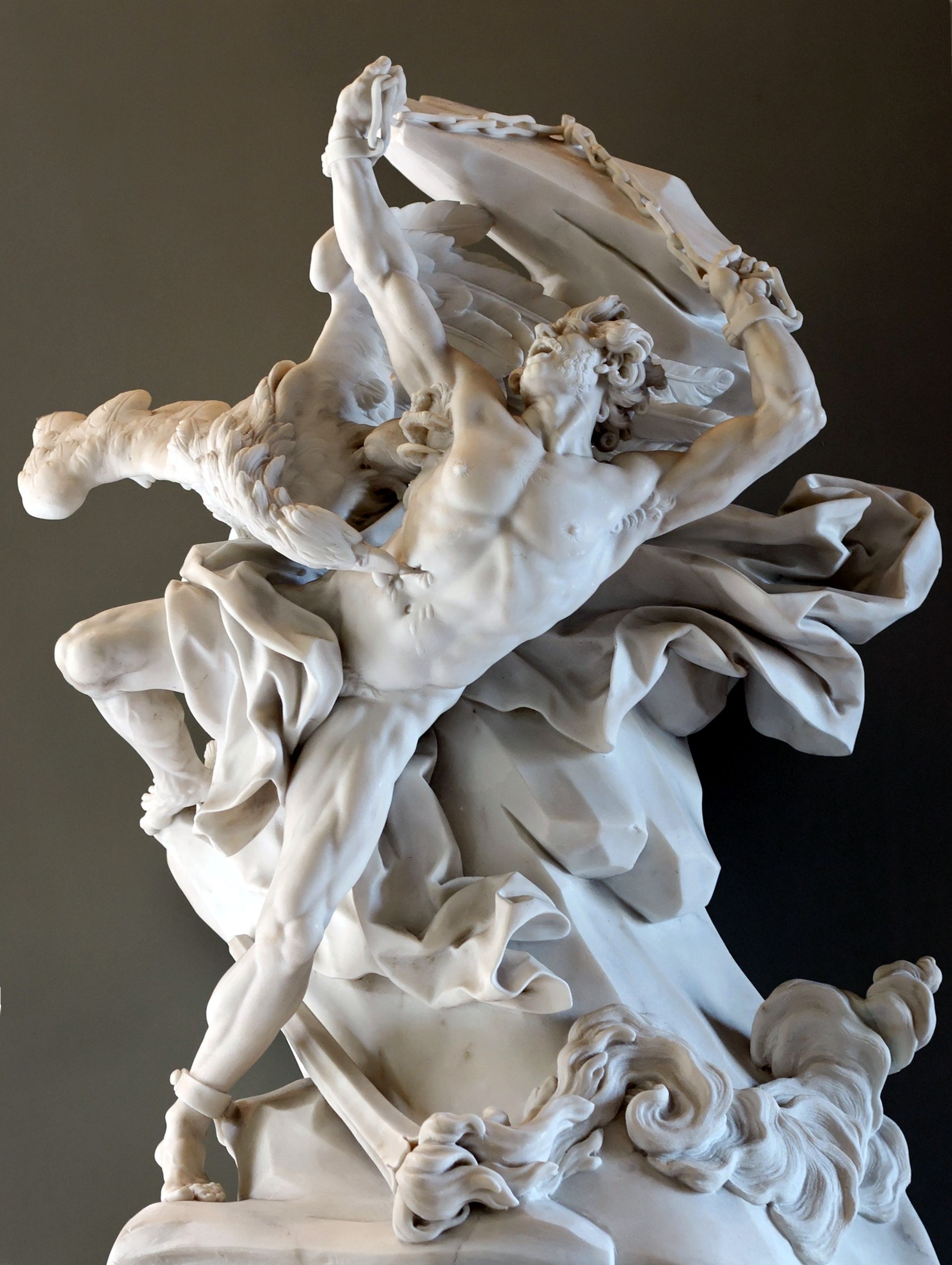
On a hillside called Mecone, a meal was being divided between gods and mortals, and a Titan named Prometheus was arranging the portions. Son of Iapetus, brother to Atlas, Menoetius, and Epimetheus, he had survived the fall of the old Titan order by staying clear of its wars, and now stood trusted enough by Zeus to referee this delicate feast. But Prometheus, prized above all for his cleverness, could not resist a trick.
He divided a slaughtered ox into two piles. One held the meat, hidden inside the animal's unappetizing stomach. The other wrapped the bare bones in glistening, tempting fat. He offered Zeus the choice. Zeus, drawn by appearances, chose the fat-wrapped bones — and so it was decided, from that day forward, that humans would keep the meat of their sacrifices for themselves and burn only bones and fat for the gods.
Zeus was not fooled for long, and he was furious. In retaliation, he withheld fire from humanity, plunging mortal life into cold and helplessness. Prometheus, unwilling to let his creation — or his favored charges — suffer, defied Zeus outright. He hid a coal inside a hollow fennel stalk and carried it down from Olympus, delivering fire back to human hands.
With fire came everything that follows it: warmth, forged tools, craft, and the beginnings of what the Greeks understood as civilization itself. Prometheus was already remembered as a champion of humanity, and in some tellings as the very sculptor who shaped the first people from clay. Fire was his gift completed — knowledge and technology handed to a species that had none.
Zeus's punishment matched the scale of the offense. He had Prometheus bound to a rock in the Caucasus Mountains, near peaks the Greeks placed at the edge of the known world. Each day an eagle, a creature sacred to Zeus, descended to tear open Prometheus's side and devour his liver — organ the Greeks believed to be the seat of emotion. Each night the liver grew back, resetting the torment for the next dawn.
More from Mythology

The Doctor Who Sang a Nation Into Being
A country doctor rode into the forests of Karelia armed with nothing but a notebook — and rode out with the soul of a nation.

The Boat That Carried the Sun
Every sunset, the ancient Egyptians believed, the sun climbed into a boat and sailed straight into the realm of the dead — only to fight a monstrous serpent before dawn could return.

The Wild Man of the Snows
At 21,000 feet, a colonel found tracks in the snow that he blamed on a wolf — but his guides knew better, and gave the world a name that would echo for a century.

The Knight Who Went Mad for Love: Orlando Furioso
A hero so devoted to duty he was Charlemagne's greatest paladin loses his mind—not to a sword wound, but to heartbreak. To cure him, a friend must ride a flying horse to the Moon.

The Book That Turned the World Into Myth
A poet condemned to exile spent his final years in Rome finishing a poem that would outlive empires—a poem about nothing standing still, not gods, not lovers, not even the shape of a man.

Paradise Lost: Milton's Rebel Angel
A blind poet, dictating verses in the dark, dared to explain the ways of God to men — and in doing so, made Hell's ruler unforgettable.