The Two-Blood Border Lord: Byzantium's Only Epic
He was born of an abduction and a conversion, raised on the wild edge of an empire — and Byzantium never produced another hero quite like him.
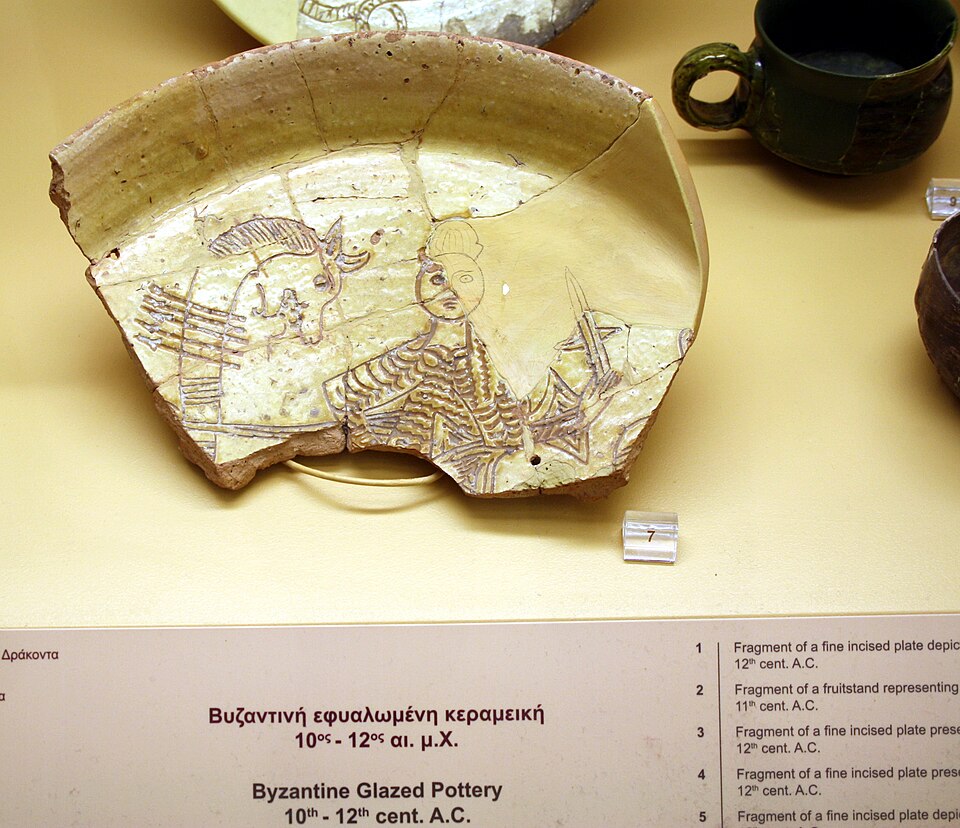
Somewhere in the borderlands of eastern Anatolia, where the Byzantine Empire's writ frayed into raids and shifting loyalties with the Arab world, a story took shape in the mouths of soldiers and singers long before anyone wrote it down. It told of a boy called Basil, whose very name in epithet — Digenes Akritas, 'two-blood border lord' — announced his impossible origin: half Greek, half Arab, born from violence that turned into marriage.
The tale begins with his parents. His mother, Eirene, came from the noble Doukas family of Byzantium. His father, Mousour, was an Arab emir who abducted her during a raid — and then, remarkably, converted to Christianity so he could marry her. This first half of the epic is told in a grave, epic register, dwelling on the collision of two worlds that somehow resolved into a household.
The second half changes register entirely. It follows Basil's own life, often narrated in the first person, moving from his childhood — cast in terms reminiscent of Hercules — to his adult exploits defending the Byzantine frontier. Along the way he encounters Maximo, an Amazon warrior, in an episode that blends romance with myth-tinged combat. Some historians have wondered whether the figure was loosely inspired by the eleventh-century Cappadocian general and emperor Romanos Diogenes, though the epic itself resists being pinned to any single event.
The poem runs to somewhere between 3,000 and 4,000 lines, and no single authoritative text of it survives. Instead, scholars have pieced it together from six manuscripts discovered across the nineteenth and twentieth centuries, the oldest dating to the late 1200s or early 1300s. Each manuscript tells a different version of the same core story — a reminder that in the Byzantine world, copying a text rarely meant copying it word for word.
Two versions matter most: the Escorial manuscript, held in Spain's Escorial library, and the Grottaferrata manuscript, from the Greek monastery of Grottaferrata. The Grottaferrata version is more polished and literary; the Escorial version is rougher, closer to everyday speech, full of gaps and metrical stumbles — and, many scholars believe, closer to the poem's original oral spirit. Both share a common core reaching back to the twelfth century, when a Ptochoprodromic poem addressed to Emperor Manuel I Komnenos already referenced a 'New Akrites,' proof the legend was alive and circulating at court.
More from Mythology

The Doctor Who Sang a Nation Into Being
A country doctor rode into the forests of Karelia armed with nothing but a notebook — and rode out with the soul of a nation.

The Boat That Carried the Sun
Every sunset, the ancient Egyptians believed, the sun climbed into a boat and sailed straight into the realm of the dead — only to fight a monstrous serpent before dawn could return.

The Wild Man of the Snows
At 21,000 feet, a colonel found tracks in the snow that he blamed on a wolf — but his guides knew better, and gave the world a name that would echo for a century.

The Knight Who Went Mad for Love: Orlando Furioso
A hero so devoted to duty he was Charlemagne's greatest paladin loses his mind—not to a sword wound, but to heartbreak. To cure him, a friend must ride a flying horse to the Moon.

The Book That Turned the World Into Myth
A poet condemned to exile spent his final years in Rome finishing a poem that would outlive empires—a poem about nothing standing still, not gods, not lovers, not even the shape of a man.

Paradise Lost: Milton's Rebel Angel
A blind poet, dictating verses in the dark, dared to explain the ways of God to men — and in doing so, made Hell's ruler unforgettable.