The Violins Worth Stealing: Inside the World of the Stradivarius
Fewer than 650 of them survive on Earth, each one worth millions — and that scarcity alone has made the Stradivarius one of the most coveted objects a person can hold in their hands.
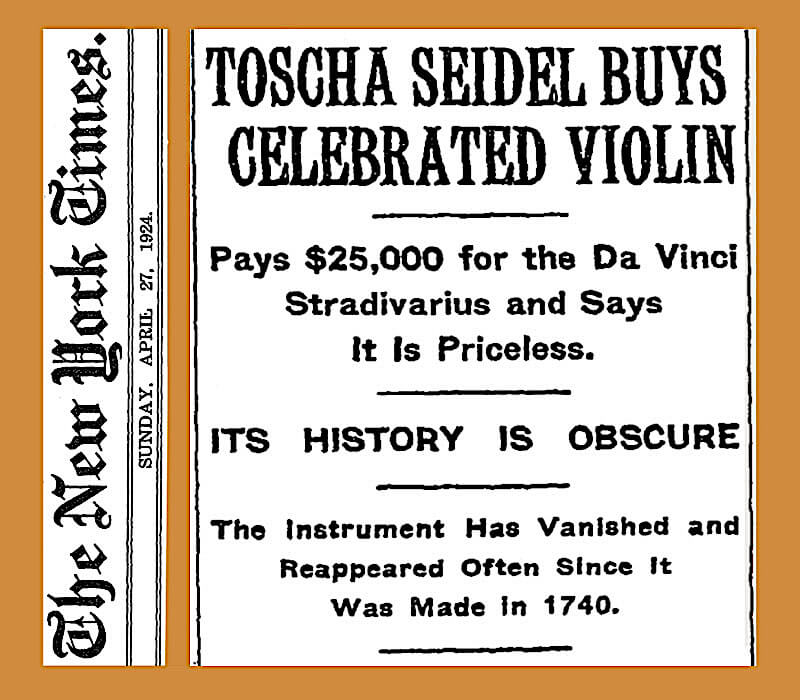
Antonio Stradivari, born in 1644 in Cremona, Italy, spent his life building instruments — violins, violas, cellos, harps — and by the time he died he had produced somewhere around 1,100 pieces, 512 of them violins. Today, only an estimated 650 to 700 of his instruments are known to survive, scattered across museums, private vaults, and the hands of a select few professional musicians. That number is the root of everything that makes a Stradivarius so extraordinary, and so dangerous to possess: extreme rarity paired with extreme value creates an object that the world cannot stop chasing.
The craftsmanship behind these instruments remains, remarkably, only partially understood. Stradivari built on an inner form, using spruce for the top, willow for internal blocks, and maple for the back and neck. Scientists at National Taiwan University have found traces of aluminum, copper, and calcium in the wood, possibly from chemical treatments applied by loggers, and researchers have proposed that varnishes made from potassium borate, sodium and potassium silicate, or even an egg-tempera mixture called vernice bianca — made from gum arabic, honey, and egg white — protected the wood from rot and insects. Dendrochronological analysis of 314 tree-ring series from 284 authenticated instruments has traced Stradivari's best wood to high-altitude Norway spruce forests in Trentino, likely the Val di Fiemme, harvested during the brutal cold of the Little Ice Age.
Despite all this science — CT scans, acoustic modeling, chemical analysis — no one has been able to conclusively explain, or replicate, the sound that made these instruments legendary. Blind tests conducted since the 19th century have often failed to show that a Stradivarius sounds meaningfully better than a fine modern violin, a finding that has quietly unsettled the mystique surrounding them. Yet the mystique persists, and so does the price tag.
That price tag is staggering. A Stradivarius built in the 1680s, or during his 'Long Pattern' period between 1690 and 1700, can be worth anywhere from hundreds of thousands to several million dollars today. In May 2006, Christie's auctioned a Stradivarius violin known as the 'Hammer' for 3.54 million US dollars. The 1697 'Molitor' Stradivarius has its own storied rumors attached to it. Even damage to one of these instruments carries a price most people can't imagine: when classical violinist David Garrett accidentally broke his Stradivarius during a performance, the repair alone reportedly cost 100,000 euros.
This combination — rarity, unmatched cultural cachet, and eye-watering market value — is exactly what makes Stradivarius instruments irresistible targets. An object small enough to carry in one hand, yet worth millions and instantly recognizable to collectors and institutions worldwide, occupies a strange category of vulnerability. It is treasured enough to be locked away in the Museo del Violino in Cremona or Berlin's Musikinstrumentenmuseum, yet valuable enough that it must also be played, transported, insured, and guarded by touring musicians who take it out into a world full of risk every time they step on stage.
More from Art

The Painting With No Foreground
A single robed figure stares out at an empty grey sea — and the emptiness itself became a scandal. When it was unveiled in Berlin in 1810, no one knew quite what to do with it.

The Painter Who Chased the Light
For a few purple minutes each evening, an American exile knelt in an English garden and raced the dying sun to paint two little girls lighting lanterns. It took him two years to finish.

When a President Became a God
Look straight up inside the U.S. Capitol dome and you will find George Washington enthroned among the clouds, surrounded by goddesses — the founding father transformed into myth.

Marble Brought Back to Life
A corpse asleep, a wing barely brushing her skin — and marble somehow learns to breathe. This is the moment Antonio Canova dared to carve.

The World Turned Upside Down
Look closely at a sixteenth-century Flemish village and you'll find a man biting a pillar, another carrying daylight in a basket, and a wife slipping a blue cloak over her husband's shoulders. Every gesture is a joke — if you know the language.

The Girl in the Glass Case
She stood two-thirds life size, dressed in a real tutu and human hair — and the critics who saw her in 1881 recoiled as if she were something obscene.