The Wall That Never Stopped Growing
It was never one wall, and it was never truly finished — for two thousand years, dynasty after dynasty kept adding to a barrier meant to hold back the entire steppe.
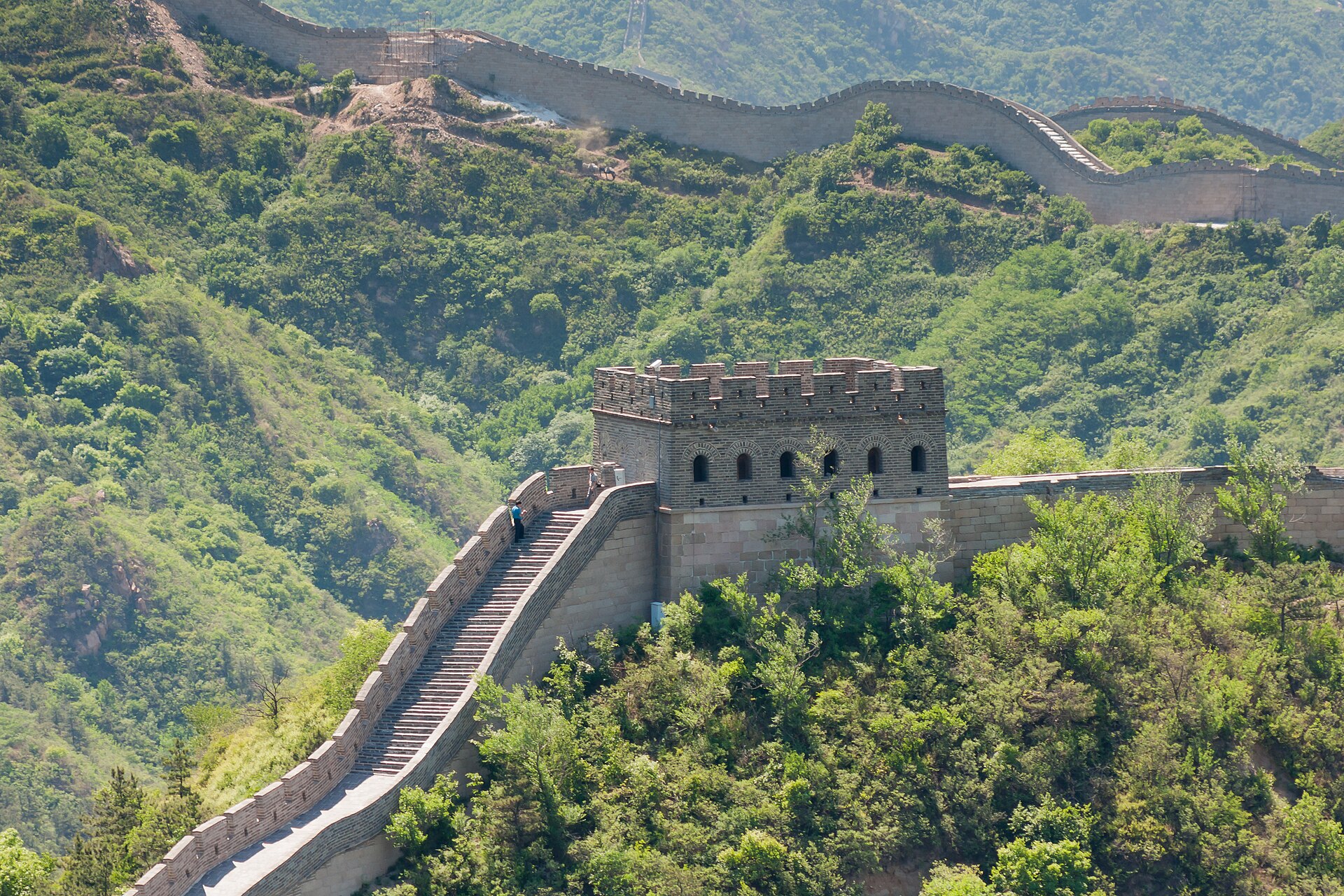
Long before it became a single legendary structure, the Great Wall of China was a patchwork of separate ambitions. Between the 8th and 5th centuries BC, during the Spring and Autumn period, Chinese states already knew how to build defensive walls — stamped earth and gravel packed between wooden frames, or stone where the terrain demanded it. In the subsequent Warring States period, more than twenty rival kingdoms, including Chu, Qi, Yan, Wei, Han, Zhao, Zheng, Qin, Lu, Zhongshan and Zhou, had raised their own fortifications, often against each other as much as against outside threats.
Everything changed in 221 BC, when the state of Qin defeated its rivals and its ruler declared himself the First Emperor of a unified China. He ordered the old internal walls — the ones that had divided the former kingdoms — torn down, since they no longer served a centralizing empire. But against the Xiongnu people threatening from the north, he commanded something new: the connection of surviving northern fortifications into a continuous line of defense. 'Build and move on' guided the construction, a principle suggesting the frontier itself was never meant to be fixed in place.
Builders worked with whatever lay closest at hand, since hauling materials across such distances was punishing work. Stone went into mountainous stretches; rammed earth filled the plains. No complete record survives of the Qin wall's exact course, and most of what was built then has long since eroded. Later dynasties — the Han, the Northern dynasties, the Sui — repaired, rebuilt, and extended these fortifications at enormous cost, each generation inheriting and reshaping the project.
Historians still debate exactly why the effort was so relentless. Some point to genuine defense against Mongol and Turkic-related nomadic groups from the Eurasian Steppe, chief among them the Xiongnu. Others note that defeated rulers from conquered kingdoms were sometimes punished with exile and forced labor on these very walls. Still others suggest the wall served as a visible declaration — to subjects and outsiders alike — that China now stood united under one rule, or as a means of controlling who could leave the country.
Beyond raw defense, the wall functioned as a working system: watchtowers, troop barracks, and garrison stations lined its length, alongside a signaling network using smoke and fire to pass warnings rapidly across vast distances. It also doubled as an economic instrument, letting the state regulate immigration and emigration and impose duties on goods moving along the Silk Road.
More from Architecture

Stonehenge: The Stones That Refuse to Explain Themselves
For more than 4,500 years, a ring of leaning giants has watched the sun rise and set on the same two days each year — and no one alive can say for certain why.

The Dome That Refused to Fall
Two thousand years ago, Roman engineers poured a dome so vast that no one has dared build a bigger one from unreinforced concrete since. It still stands, open to the sky.

A Minaret Rising Over Kingsland Road
On a busy London street better known for shops and buses, the tallest minaret in Britain quietly reaches into the sky. Its story began not in Sinan's sixteenth-century Istanbul, but in 1990s Hackney.

The Bridge That Was Killed Twice
For 427 years it arched over the Neretva like a stone rainbow. Then, in a matter of days in 1993, it simply ceased to exist.

Hoover Dam: The Concrete That Tamed a River
In the scorched depths of Black Canyon, thousands of men built the largest concrete structure the world had ever seen — and finished it two years early, at a cost of over a hundred lives.

Neuschwanstein: The Castle Built for a Ghost
A king who despised his own palace built the most famous fairy-tale castle on earth — and died before he ever truly lived in it.