The Woman in Gold: How a Stolen Klimt Found Its Way Home
A gilded Viennese beauty vanished into Nazi hands in 1941 — and it took six decades, a niece's fight, and the US Supreme Court to bring her back.
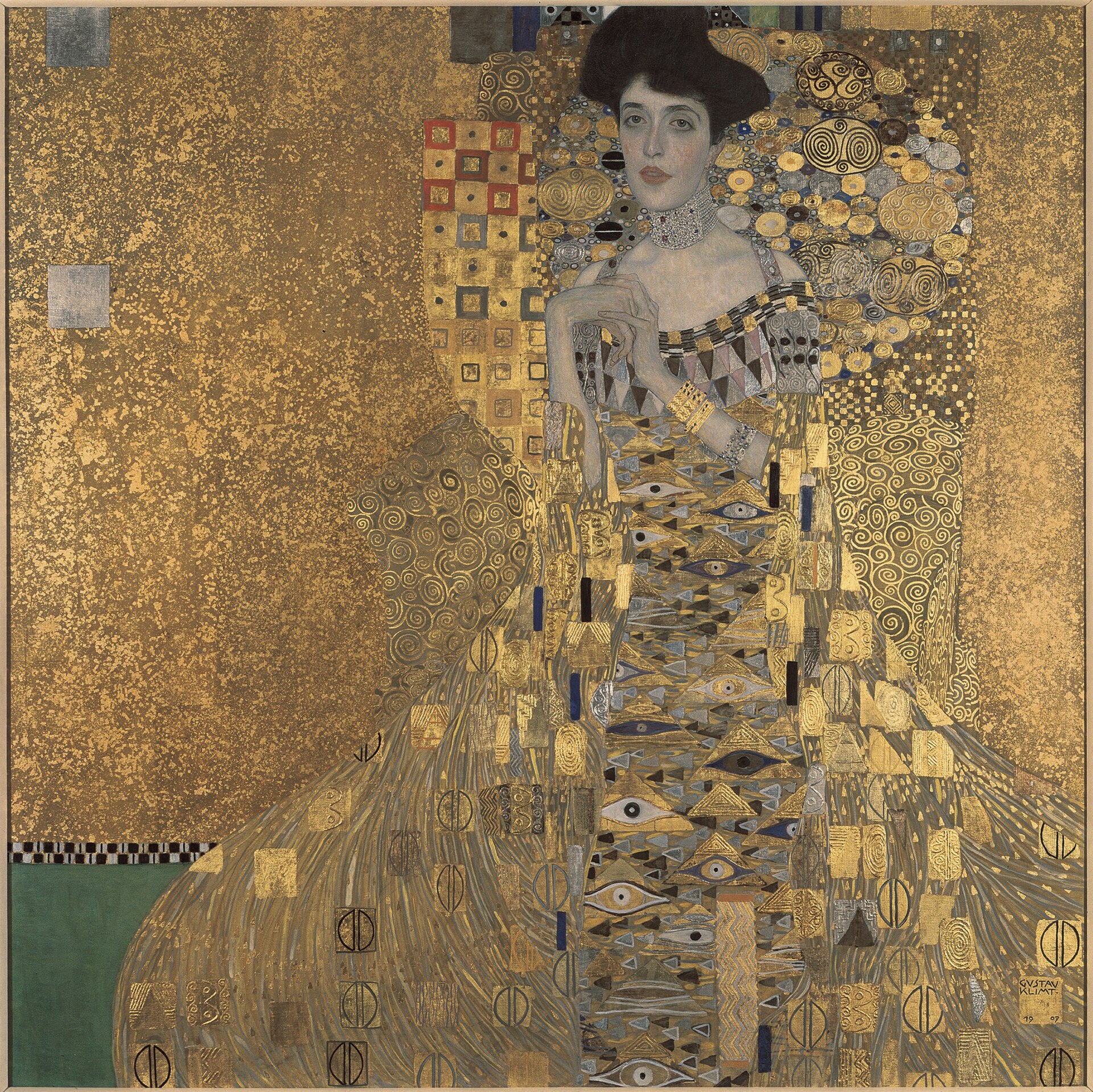
Between 1903 and 1907, across four painstaking years, Gustav Klimt completed a portrait unlike anything Vienna had seen: a woman encased in shimmering gold leaf, her dark eyes fixed on the viewer with an intensity that seemed to defy the ornamental swirl around her. The sitter was Adele Bloch-Bauer, and the painting had been commissioned by her husband, Ferdinand Bloch-Bauer, a wealthy Viennese banker and sugar producer. It would become the final and most fully realized work of what art historians call Klimt's golden phase.
Klimt himself was born in 1862 near Vienna and trained at the Vienna School of Arts and Crafts. By the late 1890s he had become a leading figure of the city's artistic rebellion, co-founding the Vienna Secession in 1897 to break from conservative tradition. His work grew increasingly daring, and by 1900 he was the favored portraitist of Vienna's Jewish bourgeoisie — a class of self-made industrialists eager to embrace art the state museums had rejected. His golden period, beginning around 1898, saw him gild his canvases with actual gold leaf, lending his subjects what one art historian called a sacred or magical quality.
Adele Bauer came from just such a family: her father directed the Wiener Bankverein, one of Austria-Hungary's largest banks. She married Ferdinand Bloch in December 1899, in a match arranged between two prominent families — her older sister had already married his older brother. Adele met Klimt in the late 1890s, and whether their relationship was romantic or purely a friendship remains disputed among historians; no definitive evidence of an affair has ever surfaced, though speculation has lingered for over a century.
Adele died in 1925, still only in her forties. Her will expressed a wish that the Klimt paintings owned by the family eventually be left to the Österreichische Galerie Belvedere — though technically the works belonged to Ferdinand, not to her. For over a decade, the portrait remained in the family's possession, a golden testament to a marriage and an era.
That era ended violently with the Anschluss, Nazi Germany's annexation of Austria. Ferdinand, a Jewish man facing persecution, fled Vienna for Switzerland, abandoning most of his wealth, including his substantial art collection. In 1941, after a fabricated charge of tax evasion, the Nazis seized his remaining assets — among them the portrait of his late wife. A lawyer representing the German state handed the painting to the Galerie Belvedere, invoking Adele's will as justification, even though the will had never given her the legal authority to dispose of Ferdinand's property. Ferdinand died in 1945, his own will naming his nephew and two nieces as heirs.
More from Art

The Painting With No Foreground
A single robed figure stares out at an empty grey sea — and the emptiness itself became a scandal. When it was unveiled in Berlin in 1810, no one knew quite what to do with it.

The Painter Who Chased the Light
For a few purple minutes each evening, an American exile knelt in an English garden and raced the dying sun to paint two little girls lighting lanterns. It took him two years to finish.

When a President Became a God
Look straight up inside the U.S. Capitol dome and you will find George Washington enthroned among the clouds, surrounded by goddesses — the founding father transformed into myth.

Marble Brought Back to Life
A corpse asleep, a wing barely brushing her skin — and marble somehow learns to breathe. This is the moment Antonio Canova dared to carve.

The World Turned Upside Down
Look closely at a sixteenth-century Flemish village and you'll find a man biting a pillar, another carrying daylight in a basket, and a wife slipping a blue cloak over her husband's shoulders. Every gesture is a joke — if you know the language.

The Girl in the Glass Case
She stood two-thirds life size, dressed in a real tutu and human hair — and the critics who saw her in 1881 recoiled as if she were something obscene.