The Woman Who Flew to the Moon
Ten suns once scorched the earth, and the woman who paid the price for saving it ended up living alone on the Moon, with only a rabbit for company.
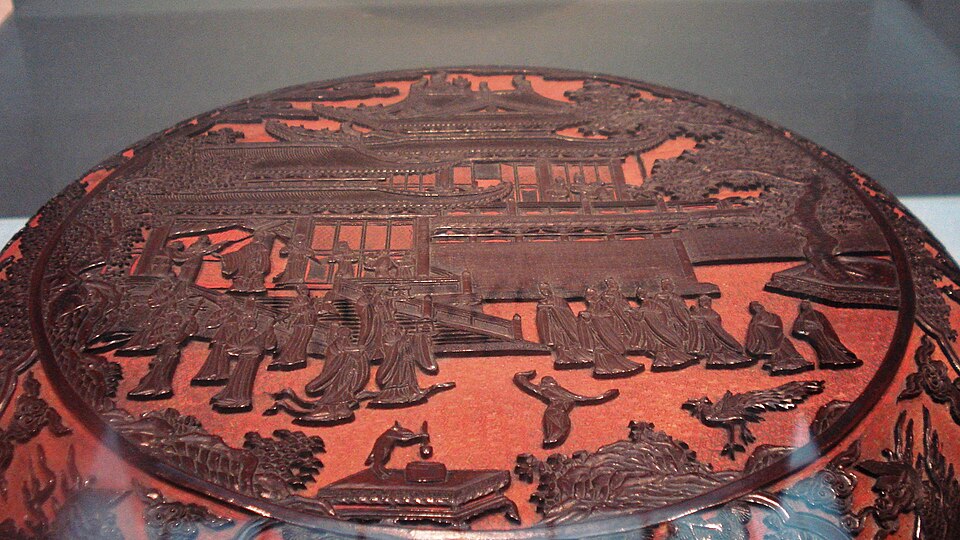
Long before satellites and space probes bore her name, Chang'e was a beautiful woman married to Hou Yi, the greatest archer in the heavens. The world she lived in was burning — not metaphorically, but literally. Ten suns had risen together into the sky, scorching the earth and bringing ruin upon the people below. It was Hou Yi who ended the catastrophe, shooting down nine of the ten suns and sparing humanity from destruction.
For this feat, Hou Yi was rewarded with a rare and precious substance: the elixir of immortality, given in two portions. He might have taken it himself and lived forever, but he refused to do so without his beloved wife by his side. Unwilling to ascend without her, he held onto the elixir and eventually entrusted it to Chang'e, waiting for the right moment when they might share it together.
That moment never came peacefully. While Hou Yi was away hunting, his own apprentice, a man named Fengmeng, broke into their home and tried to force Chang'e to hand over the elixir for himself. Rather than let it fall into his hands, Chang'e made a desperate choice — she swallowed both portions herself. In an instant, her body lifted past the heavens, and she chose the Moon as her new home, drawn to it because she still loved her husband and wished to remain as close to him as her new immortal state would allow.
When Hou Yi returned and learned what had happened, grief overtook him. Feeling responsible for the fate that had separated them forever, he laid out the fruits and cakes his wife had once loved to eat, an offering to her memory, before taking his own life. In older versions of the tale, the story is darker still — Chang'e does not act to protect the elixir from a thief, but steals it from her own husband and flees to the Moon so he could never follow her.
On the Moon, Chang'e is said to dwell in the Guǎng Hán Gōng, the 'Vast-Cold Palace,' accompanied only by her pet, the Jade Rabbit, Yu Tu. Her story became one of the foundational myths behind the Mid-Autumn Festival, and for centuries afterward, poets found in her a mirror for their own solitude. The Tang dynasty poet Li Shangyin wrote of her directly, sensing in the moonlit goddess a loneliness that matched his own. Over hundreds of poems, Chang'e slowly became less a deity of the ten suns and more a universal symbol of nostalgia and isolation.
More from Mythology

The Doctor Who Sang a Nation Into Being
A country doctor rode into the forests of Karelia armed with nothing but a notebook — and rode out with the soul of a nation.

The Boat That Carried the Sun
Every sunset, the ancient Egyptians believed, the sun climbed into a boat and sailed straight into the realm of the dead — only to fight a monstrous serpent before dawn could return.

The Wild Man of the Snows
At 21,000 feet, a colonel found tracks in the snow that he blamed on a wolf — but his guides knew better, and gave the world a name that would echo for a century.

The Knight Who Went Mad for Love: Orlando Furioso
A hero so devoted to duty he was Charlemagne's greatest paladin loses his mind—not to a sword wound, but to heartbreak. To cure him, a friend must ride a flying horse to the Moon.

The Book That Turned the World Into Myth
A poet condemned to exile spent his final years in Rome finishing a poem that would outlive empires—a poem about nothing standing still, not gods, not lovers, not even the shape of a man.

Paradise Lost: Milton's Rebel Angel
A blind poet, dictating verses in the dark, dared to explain the ways of God to men — and in doing so, made Hell's ruler unforgettable.