The Woman Who Would Not Stop Smiling
For five centuries, one woman's half-smile has outlasted kings, wars, and thieves. What was Leonardo really hiding beneath the paint?
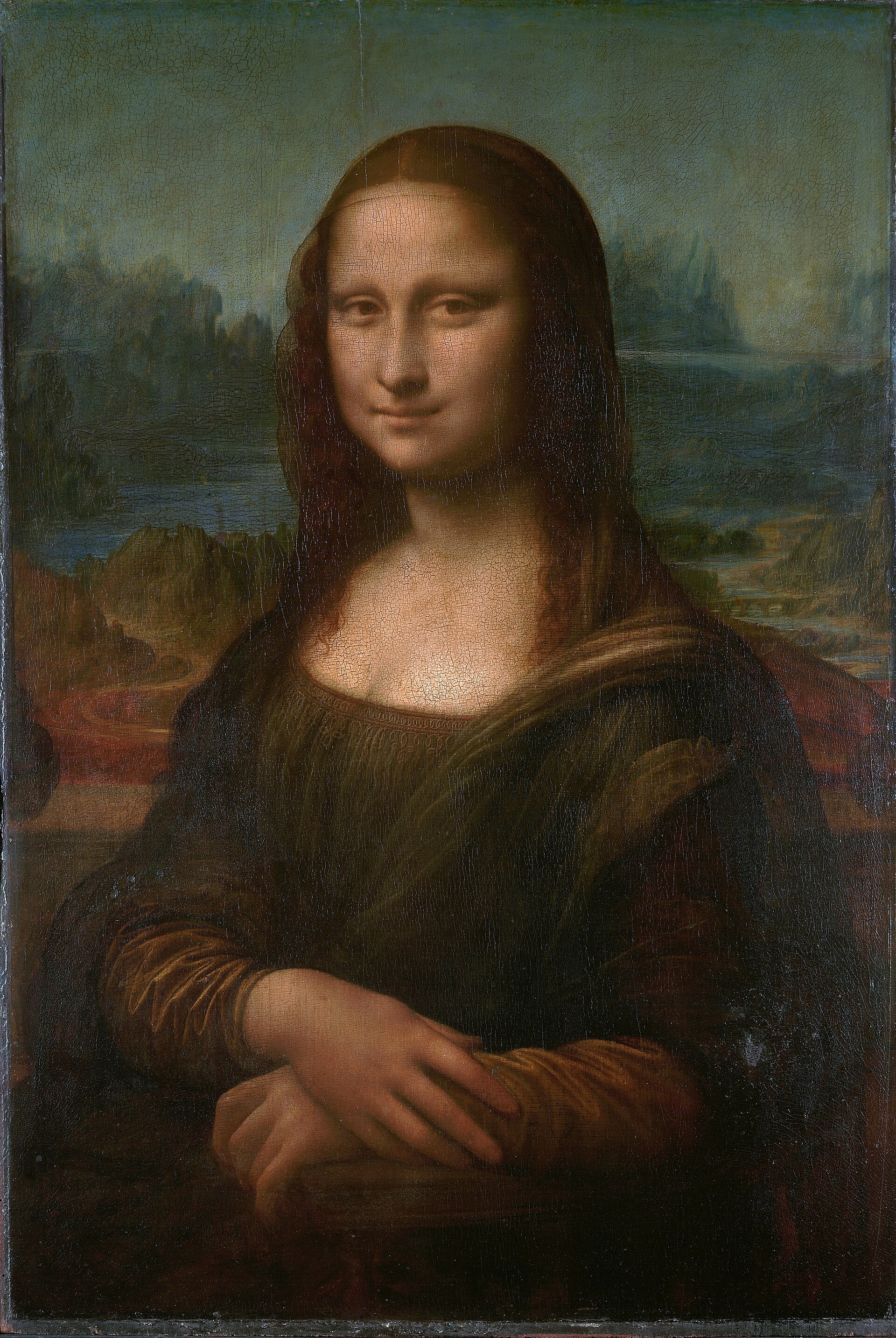
In a small workshop in Florence, around 1503 or 1504, Leonardo da Vinci began a portrait he would never quite finish. The sitter, most scholars now agree, was Lisa Gherardini, wife of the wealthy silk merchant Francesco del Giocondo. The painting may have been commissioned to mark the birth of their second son, Andrea, and to celebrate their new home — a modest, domestic origin for what would become the most famous image in Western art.
Leonardo painted her in oil on a panel of white poplar, using a technique he called sfumato — Italian for 'smoky.' By blurring outlines and softening transitions of light and shadow, especially at the corners of her mouth and eyes, he gave her an expression that seems to shift depending on how long you look. It is this ambiguity, more than any single brushstroke, that has kept viewers staring for five hundred years.
The composition itself was radical for its time: a woman shown seated, upright, arms folded in a pozzetto armchair, gazing directly at the viewer. Beneath the naturalism, Leonardo built the image on a hidden pyramidal structure, with her folded hands forming the base. It was an ordinary woman rendered with extraordinary technical control — and that combination unsettled and captivated audiences long after Leonardo's death.
Leonardo never delivered the portrait to the Giocondo family. He kept working on it, possibly as late as 1517, carrying it with him even after he moved to France at the invitation of King Francis I. When Leonardo died in 1519, the painting passed into French royal hands — bought, according to tradition, for 4,000 écus — and hung first at Fontainebleau, later at Versailles, and eventually, after the French Revolution, in the Louvre.
For centuries the painting was admired but not yet mythologized. That changed in the 19th century, as critics like Walter Pater began reading deep symbolism into her expression, tying her to ideas of womanhood and mystery that Leonardo himself never wrote down. The name Mona Lisa itself carries this layered history: 'Monna' was simply a polite Italian address, akin to 'Madam,' and the Italian title La Gioconda was also a pun on Lisa's married name, meaning 'the jocund one' — the happy woman.
More from Art

The Painting With No Foreground
A single robed figure stares out at an empty grey sea — and the emptiness itself became a scandal. When it was unveiled in Berlin in 1810, no one knew quite what to do with it.

The Painter Who Chased the Light
For a few purple minutes each evening, an American exile knelt in an English garden and raced the dying sun to paint two little girls lighting lanterns. It took him two years to finish.

When a President Became a God
Look straight up inside the U.S. Capitol dome and you will find George Washington enthroned among the clouds, surrounded by goddesses — the founding father transformed into myth.

Marble Brought Back to Life
A corpse asleep, a wing barely brushing her skin — and marble somehow learns to breathe. This is the moment Antonio Canova dared to carve.

The World Turned Upside Down
Look closely at a sixteenth-century Flemish village and you'll find a man biting a pillar, another carrying daylight in a basket, and a wife slipping a blue cloak over her husband's shoulders. Every gesture is a joke — if you know the language.

The Girl in the Glass Case
She stood two-thirds life size, dressed in a real tutu and human hair — and the critics who saw her in 1881 recoiled as if she were something obscene.