The Wreck That Waited 260 Years
A slave ship built for London's most notorious slave merchant became a pirate's flagship — and then vanished into the sands off Cape Cod for over two and a half centuries.
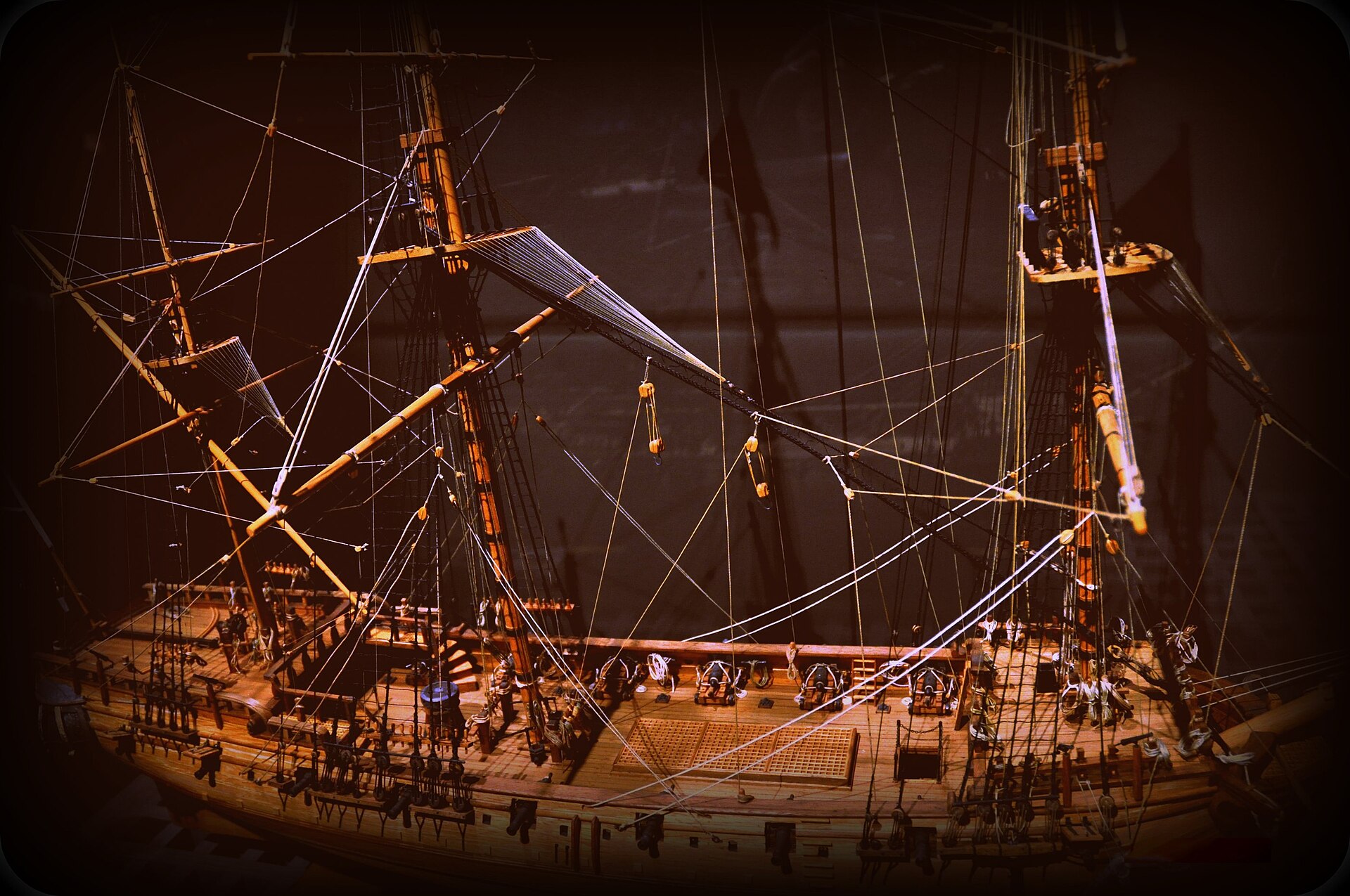
In 1715, Sir Humphrey Morice, described as 'the foremost London slave merchant of his day', commissioned a square-rigged, three-masted galley in London. Named Whydah Gally after the West African slave-trading Kingdom of Whydah, she measured 110 feet long, rated at 300 tuns burthen, and could reach speeds of 13 knots. Armed with 18 six-pound cannons, expandable to 28 in wartime, she was built for the brutal machinery of the Atlantic slave trade: a heavily armed transport designed to carry goods to Africa, human beings across the ocean, and profits back to England.
Her maiden voyage began in early 1716. She sailed down the West African coast through what is now Gambia and Senegal to Nigeria and Benin, near the port that gave her her name. She departed Africa carrying an estimated 500 enslaved people, along with gold, Akan jewelry, and ivory. In the Caribbean, that human cargo and the goods aboard were traded for precious metals, sugar, indigo, rum, logwood, pimento, ginger, and medicinal ingredients — the final leg of a voyage meant to return to England laden with wealth.
That return voyage never happened as planned. In late February 1717, under Captain Lawrence Prince, Whydah Gally was navigating the Windward Passage between Cuba and Hispaniola when pirates led by Samuel Bellamy caught up with her. Bellamy commanded two vessels at the time, the 26-gun Sultana and the 10-gun sloop Marianne, captained by his friend Paulsgrave Williams. After a three-day chase, Prince surrendered near the Bahamas following only a token exchange of cannon fire.
Bellamy chose Whydah Gally as his new flagship. Some of her original crew stayed aboard and joined the pirates — among the freed African slaves, displaced English sailors, Native Americans, and social outcasts who found the high seas a rare leveler of class. In gesture toward Prince's peaceful surrender, Bellamy gave him the Sultana along with £20 in silver and gold, equivalent to roughly £3,600 today. Bellamy's men then fitted Whydah Gally with 10 more cannons and stripped her top deck of the pilot's cabin and slave barricade, lightening her for pirate work. Some 150 of Bellamy's crew were assigned to man her.
The pirates sailed north along the American coastline, raiding vessels as they went, aiming for the coast of Maine. A storm damaged the ship and snapped a mast; repairs were patched together, with more substantial work possibly done near Block Island or Rhode Island. At some point Bellamy loaded more than 30 additional cannons below decks, possibly as ballast — two of which, recovered in 2009 by underwater explorer Barry Clifford, weighed 800 and 1,500 pounds.
More from Treasures

The Legend of the Nazi Gold Train
Somewhere beneath the hills of Poland, rumor insists, a train loaded with looted treasure vanished into a tunnel and was never seen again. The story survives because the plunder behind it was terrifyingly real.

The Treasure List Carved in Copper
While every other Dead Sea Scroll was written on parchment or papyrus, one was hammered into metal — a list of buried gold and silver that no one has ever found.

The Diamond That Vanished for a Century
For decades, treasure hunters and novelists spun theories about a lost 137-carat gem — sold, recut, melted into legend. It was sitting in a Quebec bank vault the entire time.

Gold, Ghosts, and the Mountain That Keeps Its Secret
For over a century, treasure hunters have vanished into a jagged Arizona range chasing a fortune that may never have existed at all. What they left behind was not gold, but one of America's most enduring legends.

The King Who Buried a River
When Rome finally cornered the Dacian king, it wasn't a sword that gave up his secret — it was a traitor's whisper about a riverbed.

The Fortune Dutch Schultz Took to His Grave
He asked New York's mob bosses for permission to kill a federal prosecutor — and when they said no, he disobeyed them anyway. It was a decision that would end his life and leave behind a fortune that has never been found.