Too True to Bear: Velázquez and the Pope Who Couldn't Look Away
A pope stared at his own painted face and reportedly gasped that it was too true. Three centuries later, another artist would make that face scream.
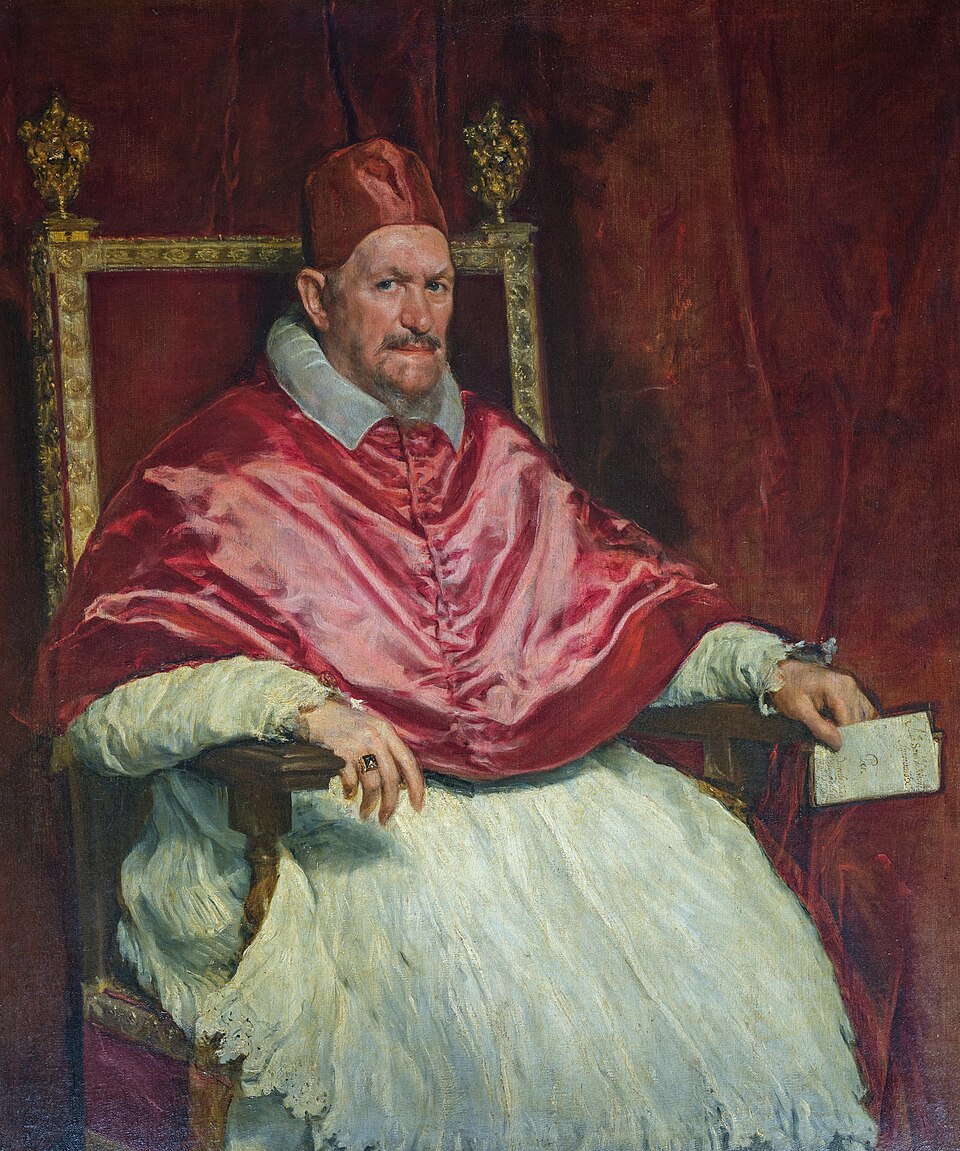
In the summer of 1650, in a Rome thick with heat and Baroque ambition, a Spanish court painter sat down to capture the most powerful man in the Catholic world — and refused to flatter him. Diego Velázquez, already celebrated across Europe, was on his second voyage to Italy when he painted Pope Innocent X, born Giovanni Battista Pamphilj, head of the Church since 1644. The result would come to be regarded by many artists and critics as the finest portrait ever created.
Getting there was not simple. Innocent X was wary of sitting for Velázquez, suspicious of the painter's reputation, and demanded proof of his skill before agreeing. According to one account, Velázquez answered by painting an actual portrait of his own servant, Juan de Pareja; once the pope saw it, he relented. Experts today doubt this tidy origin story, noting that Velázquez had already painted others in the pope's inner circle, including his barber — a track record likely more decisive than any single demonstration piece.
The finished canvas is startling in its honesty. Innocent X appears aging, shrewd, deeply intelligent, dressed in light linen vestments suited to summer weather. Velázquez surrounded him with rich reds — his upper garments, his headdress, the hanging curtains behind him — a chromatic intensity that makes the pope's presence almost physical. Velázquez even tucked his own signature onto a paper held in the pope's hands, though the date on it has never been legible.
Legend holds that when Innocent X finally beheld the finished work, he exclaimed, 'È troppo vero! È troppo vero!' — 'It's too true! It's too true!' Whether or not he spoke those exact words, he never disputed the portrait's uncanny quality. Yet for all its brilliance, the picture was not proudly displayed to the world. The Pamphilj family kept it largely private, showing it only to close relatives, and for much of the 17th and 18th centuries it remained known mainly to a select circle of connoisseurs.
Those who did see it were staggered. The French historian Hippolyte Taine called it 'the masterpiece amongst all portraits,' writing that once seen, it was impossible to forget. In 1923, the art dealer René Gimpel recorded in his diary that the financier Morgan would have paid a million dollars for it, marveling at how Velázquez — used to painting pale Spanish complexions — steeped his brush 'the color of wine' to render the ruddy, vividly alive Italian pope, his face 'a whirlpool of flesh, and blood, and life.'
More from Art

The Painting With No Foreground
A single robed figure stares out at an empty grey sea — and the emptiness itself became a scandal. When it was unveiled in Berlin in 1810, no one knew quite what to do with it.

The Painter Who Chased the Light
For a few purple minutes each evening, an American exile knelt in an English garden and raced the dying sun to paint two little girls lighting lanterns. It took him two years to finish.

When a President Became a God
Look straight up inside the U.S. Capitol dome and you will find George Washington enthroned among the clouds, surrounded by goddesses — the founding father transformed into myth.

Marble Brought Back to Life
A corpse asleep, a wing barely brushing her skin — and marble somehow learns to breathe. This is the moment Antonio Canova dared to carve.

The World Turned Upside Down
Look closely at a sixteenth-century Flemish village and you'll find a man biting a pillar, another carrying daylight in a basket, and a wife slipping a blue cloak over her husband's shoulders. Every gesture is a joke — if you know the language.

The Girl in the Glass Case
She stood two-thirds life size, dressed in a real tutu and human hair — and the critics who saw her in 1881 recoiled as if she were something obscene.