Two Madonnas, One Mystery
A single contract in Renaissance Milan produced two nearly identical masterpieces by Leonardo da Vinci — and nobody has ever fully explained why.
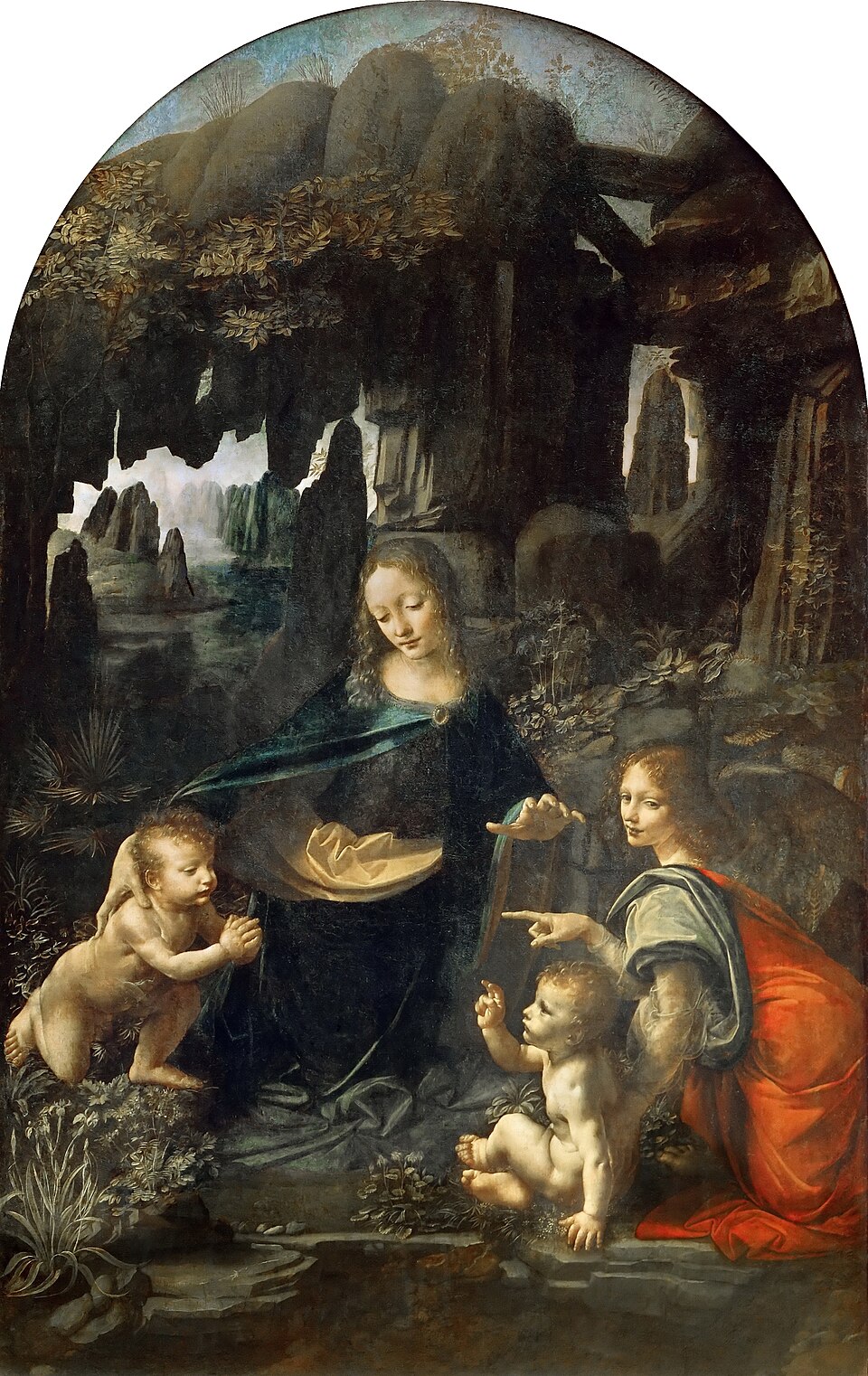
On April 25, 1483, in Milan, a prior named Bartolomeo Scorlione sat down with the Confraternity of the Immaculate Conception and struck a deal with three painters: Leonardo da Vinci and the brothers Ambrogio and Evangelista de Predis. The contract called Leonardo 'Master' and laid out, in careful detail, what colours and gilding the finished work should carry. It was meant for a wooden altarpiece already under construction in the chapel of San Francesco Grande, a chapel founded prior to 1335 by Beatrice d'Este, wife of Gian Galeazzo Visconti, Duke of Milan — roughly a century and a half before the contract was signed.
The commission was ambitious. The central painting was to show the Virgin Mary and the Christ child alongside two prophets, likely David and Isaiah, ringed by angels. Above it, a gilded relief lunette would depict God and the Virgin, with a painted crib beneath. Flanking panels would carry angelic musicians and singers, and further relief carvings would tell the story of the Virgin's life. The due date was ferociously tight: December 8, 1483, the Feast of the Immaculate Conception, just seven months away.
What emerged from this commission, eventually, was not one painting but two — nearly identical in composition, each showing the Virgin Mary, the infant Jesus, the infant John the Baptist, and the angel Uriel, arranged among rocks that gave the works their name. The earlier version, now hanging in the Louvre in Paris, is dated to around 1483–1486 and is generally accepted as the fulfillment of that original contract. It is almost entirely attributed to Leonardo himself, celebrated as a textbook example of his sfumato technique — the soft, smoke-like blending of tones that erases hard edges.
The first certain historical record of the Louvre painting places it in the French royal collection by 1625, but how it got there from Milan remains unclear. One theory holds that Leonardo sold this version privately, leaving the confraternity without the painting it had actually paid for — which would explain why a second version had to be made.
That second painting, now in London's National Gallery, is dated to before 1508 and was made for the very chapel the 1483 contract described, in the church of San Francesco Grande — also referred to in some records as San Francesco Maggiore. For a long time, scholars believed Leonardo's assistants did much of the work, but a restoration carried out between 2008 and 2010 led National Gallery conservators to conclude that Leonardo's own hand dominates the canvas — though debate continues, particularly over the flowers, which suggest collaboration, possibly with Ambrogio de Predis or another assistant, Evangelista.
More from Art

The Painting With No Foreground
A single robed figure stares out at an empty grey sea — and the emptiness itself became a scandal. When it was unveiled in Berlin in 1810, no one knew quite what to do with it.

The Painter Who Chased the Light
For a few purple minutes each evening, an American exile knelt in an English garden and raced the dying sun to paint two little girls lighting lanterns. It took him two years to finish.

When a President Became a God
Look straight up inside the U.S. Capitol dome and you will find George Washington enthroned among the clouds, surrounded by goddesses — the founding father transformed into myth.

Marble Brought Back to Life
A corpse asleep, a wing barely brushing her skin — and marble somehow learns to breathe. This is the moment Antonio Canova dared to carve.

The World Turned Upside Down
Look closely at a sixteenth-century Flemish village and you'll find a man biting a pillar, another carrying daylight in a basket, and a wife slipping a blue cloak over her husband's shoulders. Every gesture is a joke — if you know the language.

The Girl in the Glass Case
She stood two-thirds life size, dressed in a real tutu and human hair — and the critics who saw her in 1881 recoiled as if she were something obscene.