Werewolf: The Curse of the Full Moon
For centuries, ordinary men and women were burned alive for a crime no one could actually witness: turning into a wolf. Where did this terror come from — and why did it grip Europe for over a hundred years?
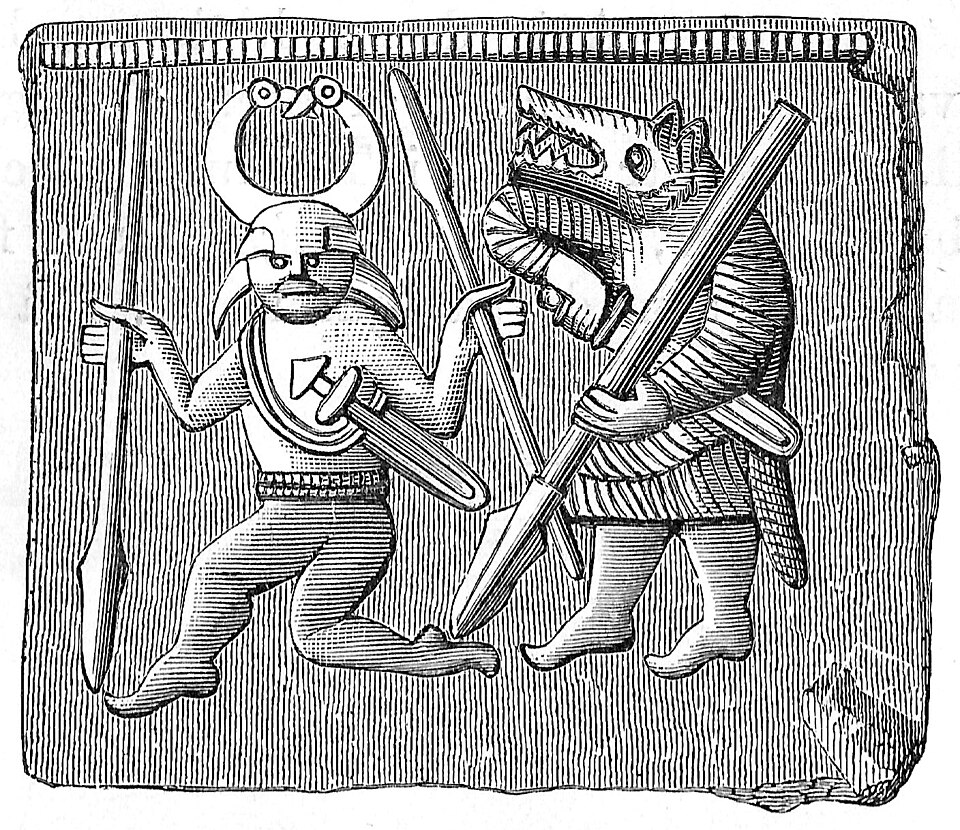
In folklore, a werewolf is a person who can shapeshift into a wolf, or into a hybrid wolf-human creature, either by choice or by a curse. The word itself, from Old English werwulf, literally means 'man-wolf'. Ancient writers had another name for the affliction: lycanthropy, from the Greek lukánthrōpos, 'wolf-man' — a term first used to describe people who simply believed themselves to be wolves.
The idea is old and widespread. Herodotus, writing in the 5th century BCE, described a people near the Black Sea, the Neuri, who were said to turn into wolves for a few days each year. The Roman poet Ovid told of King Lycaon of Arcadia, who served human flesh to the god Jupiter to test him; discovering the deception, Jupiter turned Lycaon into a wolf forever. Pliny recounted a different version: a sacrificial victim who swam across a lake, became a wolf on the far shore, and lived as one for nine years — with the condition that if he touched no human flesh in that time, he would become a man again. He succeeded, but lost nine years of his life to the wolf's form. Vergil, Propertius, Servius, and Petronius — who lived from 27 to 66 CE and served as entertainment director in Emperor Nero's court — all wrote of the transformation, Petronius weaving a werewolf tale into his satirical Satyricon.
Across Eurasia, other cultures imagined their own animal-human hybrids: Scandinavian bear-men, Native American bison-men, African hyena-men, Turkish itbarak, and, according to some tellings, the 'cat women' of Istanbul. One tradition places the earliest recorded claim of werewolf reality in Central Asia around the year 170, in a letter describing the curse — or, as the letter apparently framed it, a power rather than a curse. Those born werewolves, it was said, were born in March, a month said to hold twice the usual number of full moons, with the transformation tied to days between the 3rd and the 18th. Believers claimed werewolves could be recognized by changes in eye color and unusually large, sharp canine teeth.
By the early 15th century, belief in werewolves had fused with the era's growing terror of witchcraft. The earliest werewolf trials emerged in what is now Switzerland — the Valais and Vaud regions — before spreading across Europe through the 16th century, peaking in the 17th, and fading out in the 18th. In France alone, between 1520 and 1630, more than a hundred years, an estimated 30,000 werewolf cases shook the countryside. Accusations of lycanthropy were a small but potent thread within the broader witch-hunt phenomenon, often tangled with older charges of wolf-riding and wolf-charming.
Specific cases reveal how deadly this belief became. In 1573, near Dole close to Dijon, France, a man named Gilles Garnier was accused of harming villagers and killing children while transformed. When he confessed, he was burned alive at the stake. In 1598, near Caude, French villagers found the mutilated body of a 15-year-old boy being devoured by a pair of wolves; when the villagers approached, the creatures fled into the trees. The most notorious case, that of Peter Stumpp in 1589, ignited a fresh wave of fascination and persecution across French- and German-speaking Europe. The persecution lasted longest in Bavaria and Austria, where the hunting of suspected 'wolf-charmers' continued past 1650, with final cases recorded in Carinthia and Styria in the early 18th century.
More from Mythology

The Doctor Who Sang a Nation Into Being
A country doctor rode into the forests of Karelia armed with nothing but a notebook — and rode out with the soul of a nation.

The Boat That Carried the Sun
Every sunset, the ancient Egyptians believed, the sun climbed into a boat and sailed straight into the realm of the dead — only to fight a monstrous serpent before dawn could return.

The Wild Man of the Snows
At 21,000 feet, a colonel found tracks in the snow that he blamed on a wolf — but his guides knew better, and gave the world a name that would echo for a century.

The Knight Who Went Mad for Love: Orlando Furioso
A hero so devoted to duty he was Charlemagne's greatest paladin loses his mind—not to a sword wound, but to heartbreak. To cure him, a friend must ride a flying horse to the Moon.

The Book That Turned the World Into Myth
A poet condemned to exile spent his final years in Rome finishing a poem that would outlive empires—a poem about nothing standing still, not gods, not lovers, not even the shape of a man.

Paradise Lost: Milton's Rebel Angel
A blind poet, dictating verses in the dark, dared to explain the ways of God to men — and in doing so, made Hell's ruler unforgettable.