When Painters Learned to See Like Gods
Before Florence, Christ's face was flat and gold-lit; after it, He cast a shadow. What changed a whole civilization's way of seeing?
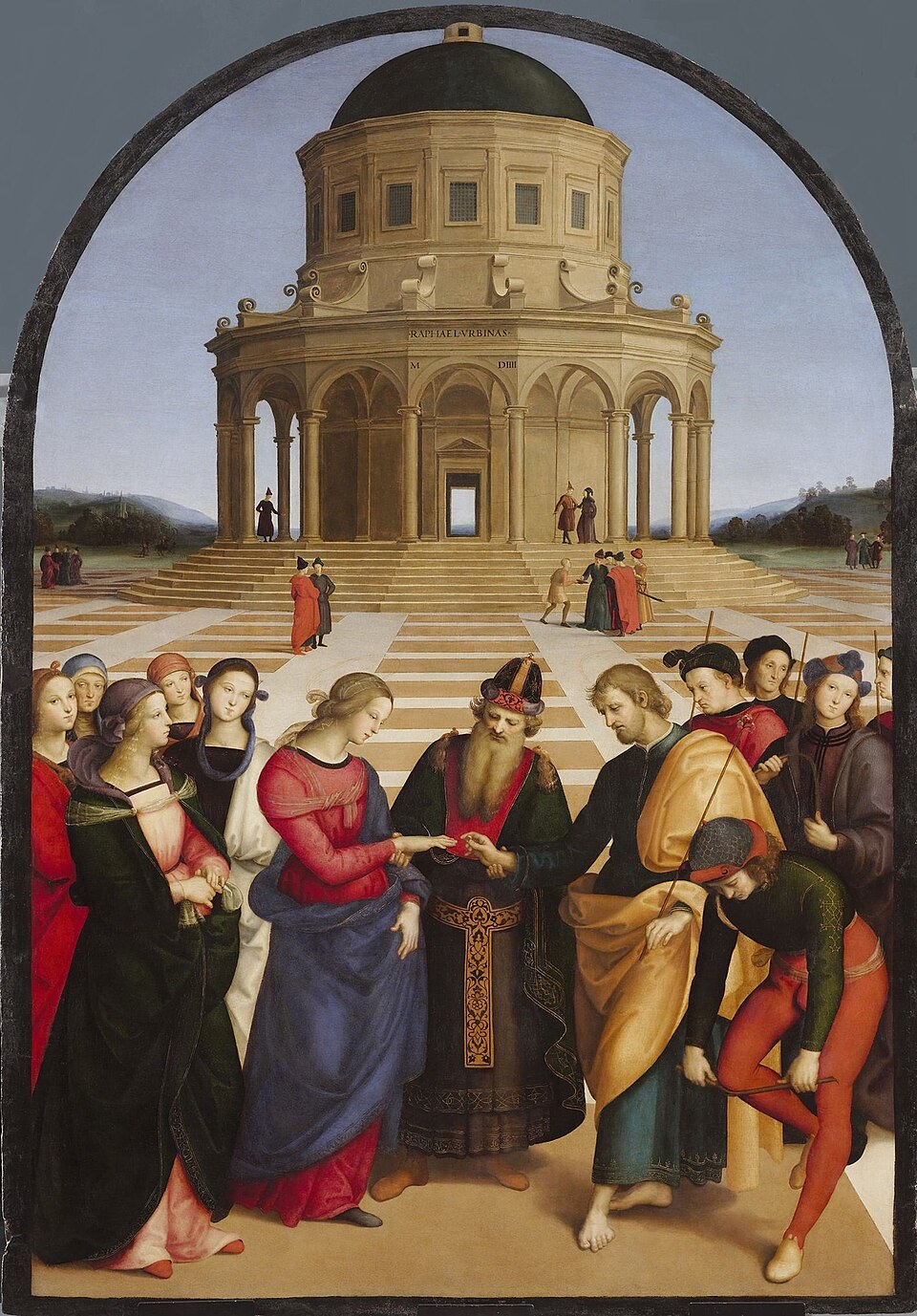
In the late 13th century, in the churches of Tuscany, a shift began that would eventually rewrite the visual language of the Western world. It started quietly, with a painter named Giotto, who gave figures weight, dimension, and something no Byzantine icon had ever possessed: the illusion of breath. This was the Proto-Renaissance, running roughly from 1300 to 1425, and alongside Giotto stood Taddeo Gaddi, Orcagna, and Altichiero, all working to loosen painting from its flat, symbolic past.
The city that carried this spark forward was Florence, in Tuscany — the acknowledged birthplace of the Renaissance and of Renaissance painting itself. It was no accident. The Medici Bank had brought Florence extraordinary wealth, and Cosimo de' Medici used it to patronize artists on a scale unconnected to church or crown. Genius seemed to cluster there: Giotto, Masaccio, Brunelleschi, Piero della Francesca, Leonardo da Vinci, Michelangelo — a concentration of talent that raised the standards for everyone working in their shadow.
What fed these painters' imaginations went far beyond pigment and plaster. Lost Classical texts on philosophy, poetry, drama, and science resurfaced, feeding a new Humanist philosophy that placed humanity's relationship with the universe and God outside the Church's exclusive control. Brunelleschi the architect and Donatello the sculptor began the first archaeological studies of Roman ruins, and their classicism bled into painting as early as the 1420s, visible in the works of Masaccio and Paolo Uccello.
Science mattered too. Advanced mathematics, inherited from Byzantine and Islamic scholars, gave painters new tools for representing space. The printing press, arriving in the 15th century, spread ideas faster than ever before. And the development of oil paint, newly introduced to Italy, gave artists a medium of unprecedented richness and permanence — one that would outlast the tempera panels of earlier generations.
By the Early Renaissance (1425–1495), Masaccio's innovations were carried further by Fra Angelico, Paolo Uccello, Piero della Francesca, Sandro Botticelli, Verrocchio, Domenico Ghirlandaio, and Giovanni Bellini. Then came the High Renaissance, from 1495 to 1527 — the era of Leonardo da Vinci, Michelangelo, Raphael, Andrea del Sarto, Correggio, Giorgione, the mature Bellini, and Titian. Venice, too, had built its own artistic dynasty through the Bellini family, their gifted in-law Mantegna, and later Giorgione, Titian, and Tintoretto.
More from Art

The Painting With No Foreground
A single robed figure stares out at an empty grey sea — and the emptiness itself became a scandal. When it was unveiled in Berlin in 1810, no one knew quite what to do with it.

The Painter Who Chased the Light
For a few purple minutes each evening, an American exile knelt in an English garden and raced the dying sun to paint two little girls lighting lanterns. It took him two years to finish.

When a President Became a God
Look straight up inside the U.S. Capitol dome and you will find George Washington enthroned among the clouds, surrounded by goddesses — the founding father transformed into myth.

Marble Brought Back to Life
A corpse asleep, a wing barely brushing her skin — and marble somehow learns to breathe. This is the moment Antonio Canova dared to carve.

The World Turned Upside Down
Look closely at a sixteenth-century Flemish village and you'll find a man biting a pillar, another carrying daylight in a basket, and a wife slipping a blue cloak over her husband's shoulders. Every gesture is a joke — if you know the language.

The Girl in the Glass Case
She stood two-thirds life size, dressed in a real tutu and human hair — and the critics who saw her in 1881 recoiled as if she were something obscene.