When Shadows Learned to Move: The Birth of Baroque Painting
A stone leaves a boy's hand mid-flight, a candle gutters in a dark room, and suddenly painting stops holding its breath. Somewhere around 1600, art decided to catch fire.
Imagine standing before two versions of the same biblical hero. In one, Michelangelo's David stands composed, calm, contemplating the fight ahead of him — the Renaissance moment before. In the other, Bernini's David is mid-throw, muscles coiled, the stone already leaving his hand toward Goliath. That single shift, from stillness to action, from the moment before to the moment of, marks the arrival of something new in European art: the Baroque.
The word itself began as an insult. 'Baroque' was first used to mock what critics saw as excessive, overwrought art — some trace it to 'Baroco', a term from medieval logic for an awkward, labored form of syllogism. It took until 1888, when the Swiss art historian Heinrich Wölfflin published his book Renaissance und Barock, for the term to be rehabilitated into a serious category of study. Wölfflin described the Baroque as 'movement imported into mass,' the opposite of everything the Renaissance had prized.
The roots of this transformation lie partly in religious anxiety. Between 1545 and 1563, the Roman Catholic Church convened the Council of Trent to answer the challenges of the Protestant Reformation and to reform itself from within. Though the Council said little directly about art, later clerical writers like Molanus insisted that religious paintings and sculptures depict their subjects clearly, powerfully, and with decorum — no more of Mannerism's stylistic games. Many historians see this populist push as the spark behind the innovations of Caravaggio and the Carracci brothers, rivals competing for commissions in Rome around 1600.
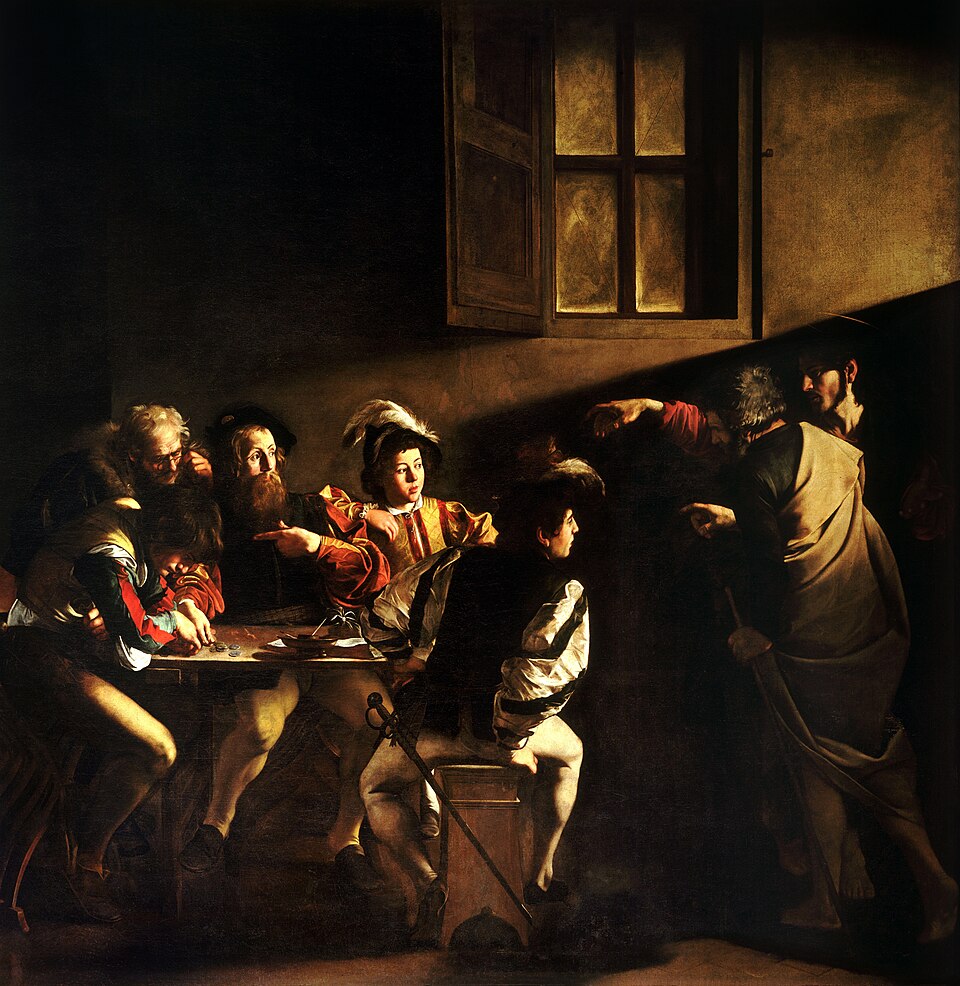
Caravaggio, in particular, changed everything. Heir to the humanist tradition of the High Renaissance, he painted directly from life, placing ordinary, often rough-looking people in dramatic pools of light against total darkness. His realism shocked contemporaries — he was repeatedly criticized for lacking decorum — but it opened an entirely new chapter in painting. That interplay of intense light and deep shadow, called chiaroscuro, became a signature Baroque device, echoed later in the work of Rembrandt, Vermeer, Le Nain, and La Tour.
Baroque painting was never one single style. It stretched from roughly 1600 through the 17th century and into the early 18th, encompassing everything from the emotional drama of Rubens to the cool classicism of Nicolas Poussin and the quiet domestic scenes of Johannes Vermeer. What united them, at least in the loosest sense, was a rejection of Renaissance calm in favor of something more urgent: rich color, deep shadow, and above all, emotion over rationality.
More from Art

The Painting With No Foreground
A single robed figure stares out at an empty grey sea — and the emptiness itself became a scandal. When it was unveiled in Berlin in 1810, no one knew quite what to do with it.

The Painter Who Chased the Light
For a few purple minutes each evening, an American exile knelt in an English garden and raced the dying sun to paint two little girls lighting lanterns. It took him two years to finish.

When a President Became a God
Look straight up inside the U.S. Capitol dome and you will find George Washington enthroned among the clouds, surrounded by goddesses — the founding father transformed into myth.

Marble Brought Back to Life
A corpse asleep, a wing barely brushing her skin — and marble somehow learns to breathe. This is the moment Antonio Canova dared to carve.

The World Turned Upside Down
Look closely at a sixteenth-century Flemish village and you'll find a man biting a pillar, another carrying daylight in a basket, and a wife slipping a blue cloak over her husband's shoulders. Every gesture is a joke — if you know the language.

The Girl in the Glass Case
She stood two-thirds life size, dressed in a real tutu and human hair — and the critics who saw her in 1881 recoiled as if she were something obscene.