Big Ben: The Bell That Became a Nation's Voice
A fire destroyed a palace, and out of the ashes rose a tower whose bell would come to speak for an entire democracy — though almost no one who hears it knows its real name.
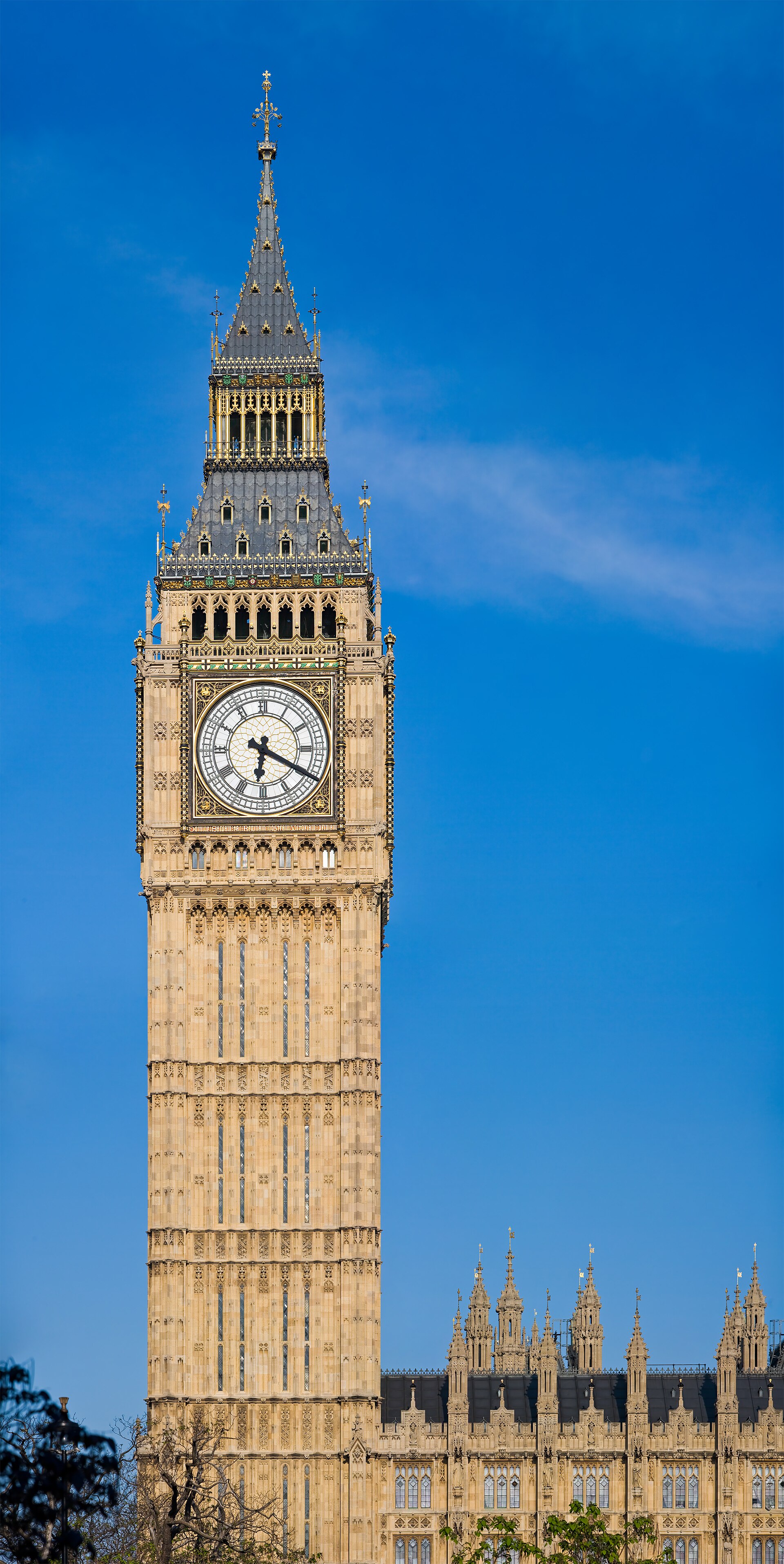
On the night of 16 October 1834, the old Palace of Westminster burned to the ground, taking with it centuries of parliamentary history. Out of that disaster came an opportunity: architect Charles Barry was commissioned to design a new palace in the neo-Gothic style, and for its crowning tower he turned to Augustus Pugin, whose earlier work — including a design for Scarisbrick Hall in Lancashire — shaped the tower's final look. Construction began on 28 September 1843, with contractors Thomas Grissell and Morton Peto overseeing the work. A trowel inscription in the Parliamentary Archives even records that Emily, sister of Peto's daughter-in-law, laid the first stone.
It was Pugin's last great design. Writing to Barry as he handed over the drawings, Pugin declared he had never worked so hard for anyone, calling the finished bell tower 'beautiful' — a rare personal flourish before his descent into mental illness and death in 1852.
Completed in 1859, the tower stood 316 feet (96.3 metres) tall, making it, at the time of its completion, the third-tallest clock tower in Britain. Its square base measured 40 feet on each side, resting on foundations 12 feet thick. Sand-coloured Anston limestone clad the brick structure, topped by a cast-iron-tiled spire. To reach the top required climbing 334 steps in total — 290 to the clock room, 44 more to the belfry, and a final 59 to the spire.
The clock itself was a marvel of Victorian engineering. Designed by Edmund Beckett Denison and George Airy, the Astronomer Royal, and built by Edward John Dent and his son Frederick, it became the largest and most accurate four-faced striking clock in the world upon completion. Its dials measured 22.5 feet (6.9 m) in diameter and sit, at the centre, 180 feet above ground level. Remarkably, the mechanism could be finely adjusted using pre-decimal pennies added to or removed from the pendulum — a simple trick that kept it astonishingly precise.
The Great Bell, cast at the Whitechapel Bell Foundry, weighs 13.5 long tons. Its nickname, 'Big Ben,' likely honours Sir Benjamin Hall, who oversaw the bell's installation and whose name is inscribed upon it — though another theory credits heavyweight boxing champion Benjamin Caunt. Four smaller quarter bells chime every fifteen minutes, and the sound of the great bell can carry for miles.
More from Architecture

Stonehenge: The Stones That Refuse to Explain Themselves
For more than 4,500 years, a ring of leaning giants has watched the sun rise and set on the same two days each year — and no one alive can say for certain why.

The Dome That Refused to Fall
Two thousand years ago, Roman engineers poured a dome so vast that no one has dared build a bigger one from unreinforced concrete since. It still stands, open to the sky.

A Minaret Rising Over Kingsland Road
On a busy London street better known for shops and buses, the tallest minaret in Britain quietly reaches into the sky. Its story began not in Sinan's sixteenth-century Istanbul, but in 1990s Hackney.

The Bridge That Was Killed Twice
For 427 years it arched over the Neretva like a stone rainbow. Then, in a matter of days in 1993, it simply ceased to exist.

Hoover Dam: The Concrete That Tamed a River
In the scorched depths of Black Canyon, thousands of men built the largest concrete structure the world had ever seen — and finished it two years early, at a cost of over a hundred lives.

Neuschwanstein: The Castle Built for a Ghost
A king who despised his own palace built the most famous fairy-tale castle on earth — and died before he ever truly lived in it.