Cabot: The Debtor Who Found a New World
A bankrupt bridge-builder fled Spain in disgrace, then talked a king into funding a voyage that would put North America on English maps.
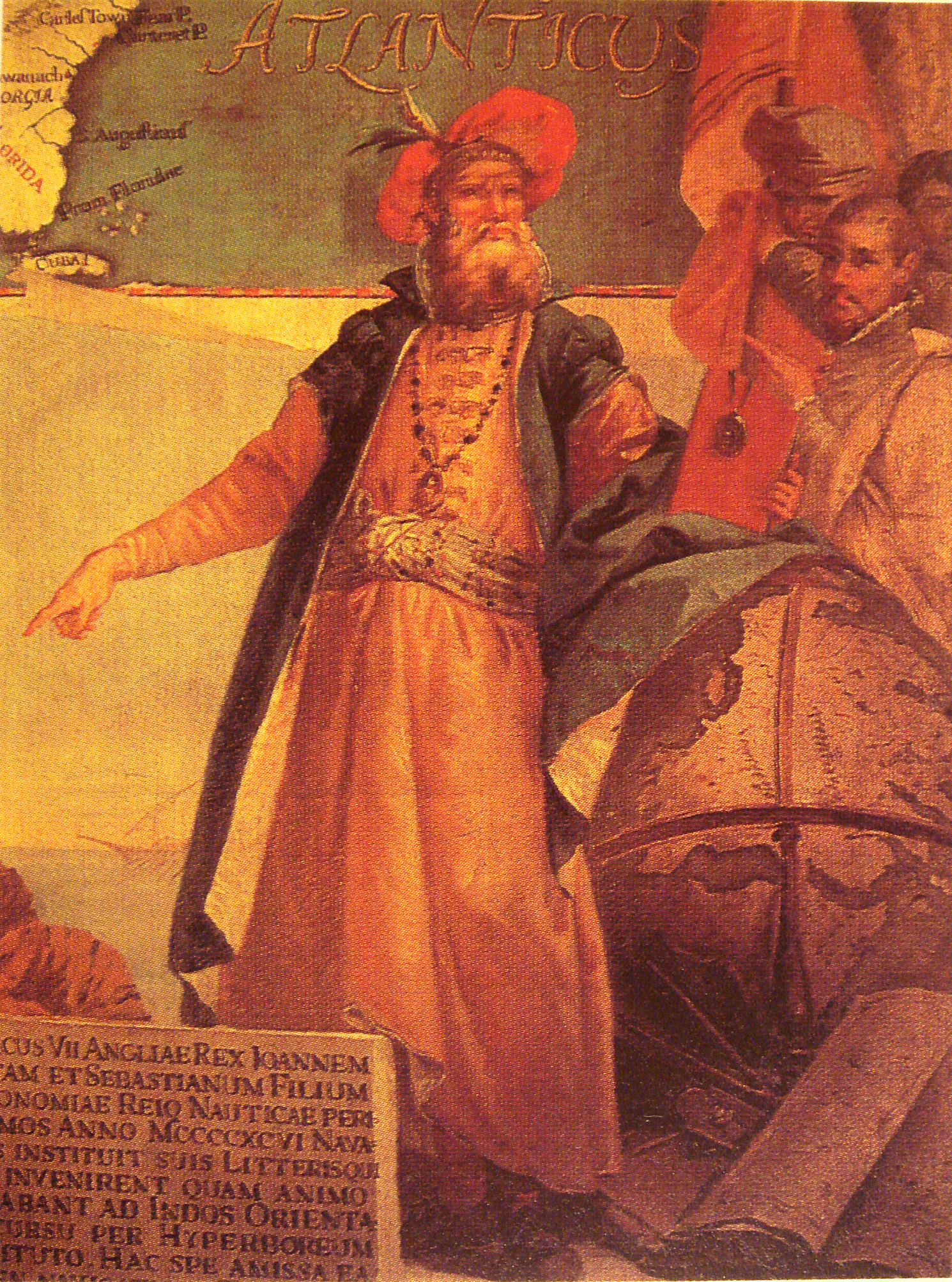
In the autumn of 1497, a ship called the Matthew crept along a coastline no European had charted since Norse sailors vanished from Vinland four centuries earlier. At its helm stood a Venetian citizen born in Italy under the name Giovanni Caboto, known to the English who financed him as John Cabot. He was sailing under commission from King Henry VII, hunting for a northern passage to Asia, and what he found instead was the edge of a continent.
Cabot's path to that deck had been anything but direct. Born around 1450, likely in Italy — with Gaeta and Castiglione Chiavarese both proposed as his birthplace — he was the son of Giulio Caboto and had a brother named Piero. By 1461 he was living in Venice, and in 1471 he joined the prestigious religious confraternity of the Scuola Grande di San Giovanni Evangelista, a sign he was already a respected figure in the city. Full Venetian citizenship came in 1476, opening the door to Mediterranean trade.
That trade took him far. A 1483 document shows him selling a slave in Crete whom he had acquired in territories then held by the Sultan of Egypt, spanning much of modern Israel, Syria, and Lebanon. He later told the Milanese ambassador in London, in 1497, that he had visited Mecca — a claim historians treat cautiously, though his years trading eastern goods like spices and silk likely gave him rare firsthand knowledge of where such merchandise originated.
By 1484 he was married to a woman named Mattea and had several sons — Ludovico, Sebastian, and Sancto. Venetian records also link him to house-building projects in the city, experience that would resurface later in an unexpected way. But prosperity did not last: by November 1488 Cabot had left Venice as an insolvent debtor, his creditors chasing him with a formal letter demanding his arrest.
He surfaced next in Valencia, Spain, under the name 'John Cabot Montecalunya', proposing harbour improvements that were ultimately rejected. In 1494 he tried again in Seville, contracted to build a stone bridge over the Guadalquivir river. He worked on it for five months before the city council abandoned the project that December. Twice a builder without a finished building, Cabot pivoted once more — this time toward the ocean.
More from Explorations

Humboldt: The Man Who Measured the World
A Prussian noble's son, once mocked as a sickly child, would climb a volcano to a world-record height and rewrite how humanity understood nature itself.

The Man Who Named Canada
A Breton mariner planted a wooden cross on a foreign shore and claimed a kingdom he did not understand — then spent a winter frozen into its river, praying a stranger's remedy would save his men.

Sixty Ships Into the Unknown: Hanno's Voyage Down the African Coast
A Carthaginian fleet of sixty ships and thousands of settlers vanished past the Pillars of Hercules to found cities on an unmapped coast — and came home with the skins of hairy, hostile 'gorillas' as proof of how far they had gone.

HMS Challenger: The Voyage That Charted the Deep
A stripped-down warship, its guns torn out to make room for microscopes, set sail from Portsmouth to answer a question no one had ever properly asked: what lies at the bottom of the sea?

Scott's Last Expedition: The Letters Written at the End of the World
Five men reached the bottom of the world only to find a Norwegian flag already planted there. What followed was not glory, but a slow, frozen unraveling that the world would remember for a century.

Marco Polo: In the Court of Kublai Khan
A fifteen-year-old boy meets the father he barely knew — and is soon swept toward the richest court on Earth. Twenty-four years later, he returns home with tales so vast that Venice simply calls him 'Mister Millions'.