Crossing the Rubicon
In the cold January of 49 BC, Julius Caesar made a decision that would echo through history. With his 13th Legion, he crossed the Rubicon, a small river marking the boundary between Rome and its provinces. This act, though seemingly simple, set in motion a chain of events that would change the course of Roman history forever.
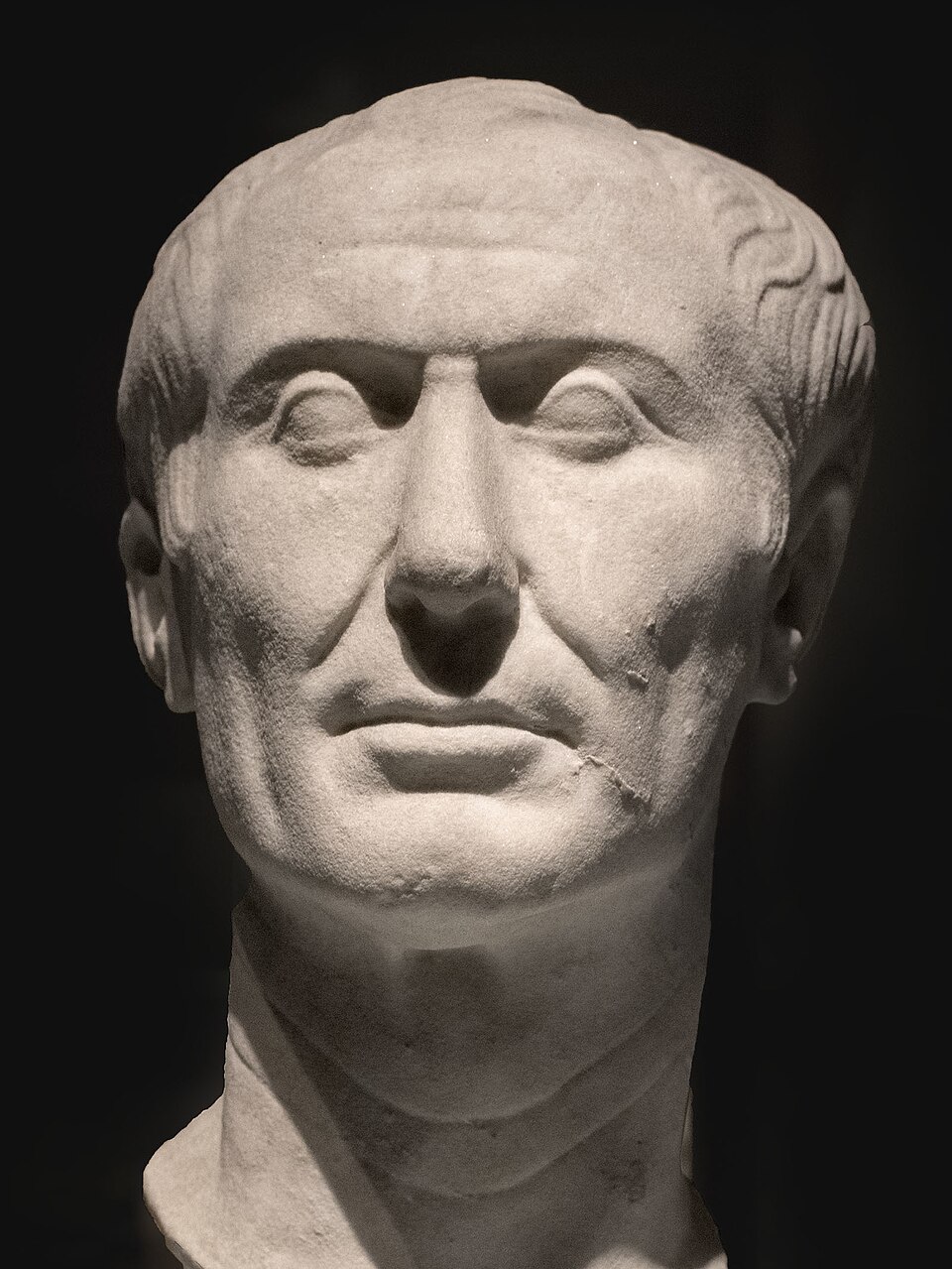
The Rubicon was more than just a river; it was a line that separated the Roman provinces from the heart of the Republic. Crossing it meant defying the law, risking death, and plunging Rome into chaos. Caesar, a powerful general, had been ordered by the Senate to disband his army and return to Rome as his governorship ended. But he had no intention of obeying. His decision to cross the Rubicon was not just a military move, but a declaration of war against the Senate.
Instead of laying down his command, Caesar led his army south, occupying the town of Ariminum before pressing on toward the Rubicon itself. This crossing would be remembered as one of history's great turning points. The exact date is unknown, but scholars usually place it on the night of 10 and 11 January, reasoning from the speeds at which messengers of the era could travel.
The river itself was no great obstacle, but the law it represented was formidable. Roman law stated that anyone entering Italy with an army forfeited his right to command and became an outlaw, subject to death. Caesar, by crossing the Rubicon, defied not only that law but the very structure that upheld the Republic.
By the time Caesar himself set foot on Italian soil, part of his forces had already crossed the day before, and his legate, Quintus Hortensius, had already occupied the town of Ariminum — meaning war had, in effect, already begun before Caesar's own crossing. On the night after his crossing, Caesar dined with Sallust, Hirtius, Oppius, Lucius Balbus, and Sulpicius Rufus, a strikingly ordinary scene given the enormity of what had just occurred.
Caesar's crossing was a bold move, but also a calculated risk. The Roman historian Suetonius describes him as hesitant as he approached the river, even attributing the moment to a supernatural apparition. The phrase 'alea iacta est'—'the die is cast'—was allegedly spoken by Caesar as he crossed. It has since become a symbol of irreversible action, a moment when the consequences of a decision can no longer be undone.
More from History

The Morning Bingham Climbed to Machu Picchu
On a cold July morning in 1911, an American historian scrambled up a jungle-choked ridge above the Urubamba River — and by afternoon, a forgotten Inca citadel would belong to the world.

The Last Half-Hour of the Hindenburg
It was already half a day late, and the public had been told to keep away — but at seven o'clock that evening, the Hindenburg finally turned toward its mooring mast for the last time.

The Last Hours of Pompeii: August 24, 79 AD
By noon it was just another hot day beside the Bay of Naples. By evening, an entire mountain had rewritten the fate of thousands.

The Longest Walk: Mandela's Last Steps to Freedom
After 27 years behind bars, a 71-year-old man had to relearn how to walk out of a prison gate — into a waiting world of cameras, crowds, and a country holding its breath.

The Document Lincoln Signed on the First Day of 1863
On a single January morning, a president's pen would change the legal status of more than three million people — if the ink held and his hand did not shake.

The Day of the Dream: August 28, 1963
Two hundred and fifty thousand people converged on the National Mall that morning — by nightfall, one voice from the steps of the Lincoln Memorial would echo for generations.