The Last Hours of Pompeii: August 24, 79 AD
By noon it was just another hot day beside the Bay of Naples. By evening, an entire mountain had rewritten the fate of thousands.

The morning of August 24 began ordinarily enough in Pompeii and Herculaneum, two prosperous towns tucked against the slopes of Mount Vesuvius on the Bay of Naples. Seventeen years earlier a major earthquake had shaken the region, on February 5, 62 AD, a warning few had connected to the quiet, green mountain looming above them. On this day, according to the traditional dating drawn from Pliny the Younger's letters to Tacitus, that mountain would end their world.
Across the bay in Misenum, a young man named Pliny the Younger was staying with his uncle, Pliny the Elder, commander of the Roman fleet. It was from here, watching the horizon, that the eruption was first noticed as a strange, towering shape climbing into the sky — the only detailed eyewitness account of the disaster that survives from antiquity.
Vesuvius erupted violently, hurling a column of super-heated tephra and volcanic gases to a height of 33 kilometers. The volcano ejected molten rock, pulverized pumice, and hot ash at a staggering rate of 1.5 million tons per second. The sheer thermal energy released that day is estimated at 100,000 times that of the atomic bombings of Hiroshima and Nagasaki — an almost incomprehensible violence unleashed within hours.
The eruption did not strike in one single blow. Detailed stratigraphic studies of the ash layers show that it unfolded over two full days, in alternating Vesuvian and Pelean phases that repeated six times. A towering Plinian column of debris and gas, rising between 15 and 30 kilometers, alternated with pyroclastic surges — fast-moving, superheated currents distinct from the classic 'Vesuvian' column that gives this event its name.
In Pompeii, ashfall accumulated steadily across the first phase, collapsing roofs and forcing residents to choose between shelter and flight; an earthquake during this period brought down still more buildings. In Herculaneum, closer to the mountain, the danger arrived differently. Along the ancient shoreline, people gathered in vaulted boathouses, seeking refuge by the sea, hoping for rescue by boat as others reportedly had escaped earlier.
More from History

The Morning Bingham Climbed to Machu Picchu
On a cold July morning in 1911, an American historian scrambled up a jungle-choked ridge above the Urubamba River — and by afternoon, a forgotten Inca citadel would belong to the world.

The Last Half-Hour of the Hindenburg
It was already half a day late, and the public had been told to keep away — but at seven o'clock that evening, the Hindenburg finally turned toward its mooring mast for the last time.

The Longest Walk: Mandela's Last Steps to Freedom
After 27 years behind bars, a 71-year-old man had to relearn how to walk out of a prison gate — into a waiting world of cameras, crowds, and a country holding its breath.

The Document Lincoln Signed on the First Day of 1863
On a single January morning, a president's pen would change the legal status of more than three million people — if the ink held and his hand did not shake.

The Day of the Dream: August 28, 1963
Two hundred and fifty thousand people converged on the National Mall that morning — by nightfall, one voice from the steps of the Lincoln Memorial would echo for generations.
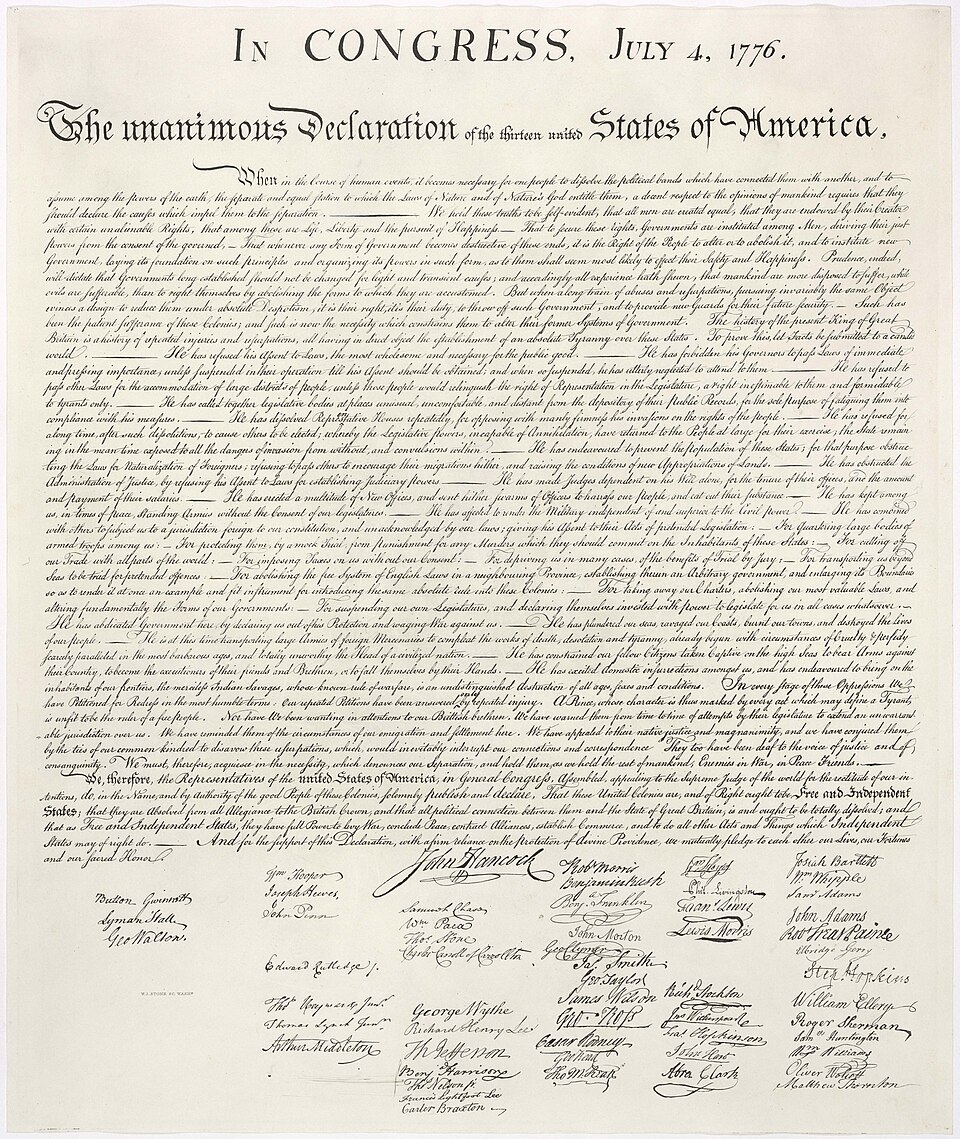
The Room Where They Signed Their Own Death Warrants
Inside a brick statehouse in Philadelphia, fifty-six men were about to commit treason against the most powerful empire on Earth — and they knew exactly what that could cost them.