The Last Half-Hour of the Hindenburg
It was already half a day late, and the public had been told to keep away — but at seven o'clock that evening, the Hindenburg finally turned toward its mooring mast for the last time.

By the morning of May 6, 1937, the LZ 129 Hindenburg was running badly behind schedule. It had left Frankfurt on the evening of May 3 for the first of ten planned round trips that season, and after an uneventful Atlantic crossing slowed only by headwinds, it passed over Boston hours late. Afternoon thunderstorms over Lakehurst, New Jersey, promised further delay, so Captain Max Pruss diverted the airship over Manhattan Island, drawing crowds into the streets to watch the great silver ship pass overhead.
At 4:00 p.m. Pruss took the Hindenburg over the Lakehurst field, then led his passengers on a tour along the New Jersey shore while waiting for the weather to break. Word finally came at 6:22 p.m. that the storms had cleared, and Pruss turned the ship back toward Lakehurst to land nearly half a day behind schedule. Because so little time remained to service the airship before its scheduled return to Europe, officials announced that the public would not be allowed near the mooring site or aboard the ship during its stay.
Around 7:00 p.m., at an altitude of 650 feet, the Hindenburg began its final approach for what was called a 'flying moor' — a high landing in which ropes and a mooring cable would be dropped so ground crews could winch the airship down to the mast. It was a maneuver the Hindenburg had performed only a handful of times before at Lakehurst.
At 7:09 p.m. the ground crew was not yet ready, so the airship made a sharp, full-speed turn to the west around the field. Two minutes later it turned back and began valving gas, its engines idling forward as it slowed. At 7:14 p.m., at 394 feet, Captain Pruss ordered the aft engines full astern to brake the ship's approach.
Then, at 7:17 p.m., the wind shifted from east to southwest. Pruss ordered a sharp turn to starboard, sending the airship into an S-shaped path toward the mooring mast. As this final turn progressed, at 7:18 p.m. Pruss called for ballast to be dropped — 300, then another 300, then 500 kilograms — to correct the ship's trim.
More from History

The Morning Bingham Climbed to Machu Picchu
On a cold July morning in 1911, an American historian scrambled up a jungle-choked ridge above the Urubamba River — and by afternoon, a forgotten Inca citadel would belong to the world.

The Last Hours of Pompeii: August 24, 79 AD
By noon it was just another hot day beside the Bay of Naples. By evening, an entire mountain had rewritten the fate of thousands.

The Longest Walk: Mandela's Last Steps to Freedom
After 27 years behind bars, a 71-year-old man had to relearn how to walk out of a prison gate — into a waiting world of cameras, crowds, and a country holding its breath.

The Document Lincoln Signed on the First Day of 1863
On a single January morning, a president's pen would change the legal status of more than three million people — if the ink held and his hand did not shake.

The Day of the Dream: August 28, 1963
Two hundred and fifty thousand people converged on the National Mall that morning — by nightfall, one voice from the steps of the Lincoln Memorial would echo for generations.
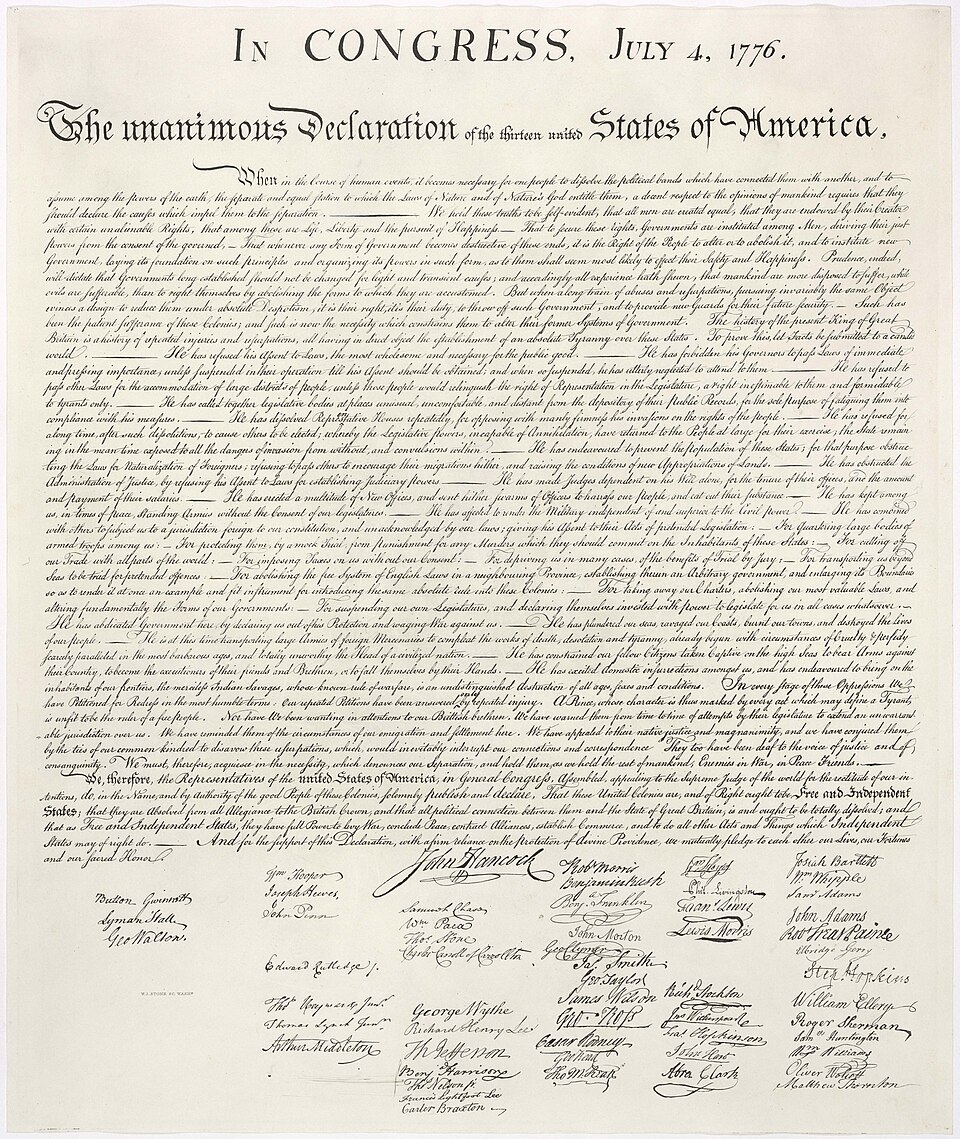
The Room Where They Signed Their Own Death Warrants
Inside a brick statehouse in Philadelphia, fifty-six men were about to commit treason against the most powerful empire on Earth — and they knew exactly what that could cost them.