The Room Where They Signed Their Own Death Warrants
Inside a brick statehouse in Philadelphia, fifty-six men were about to commit treason against the most powerful empire on Earth — and they knew exactly what that could cost them.
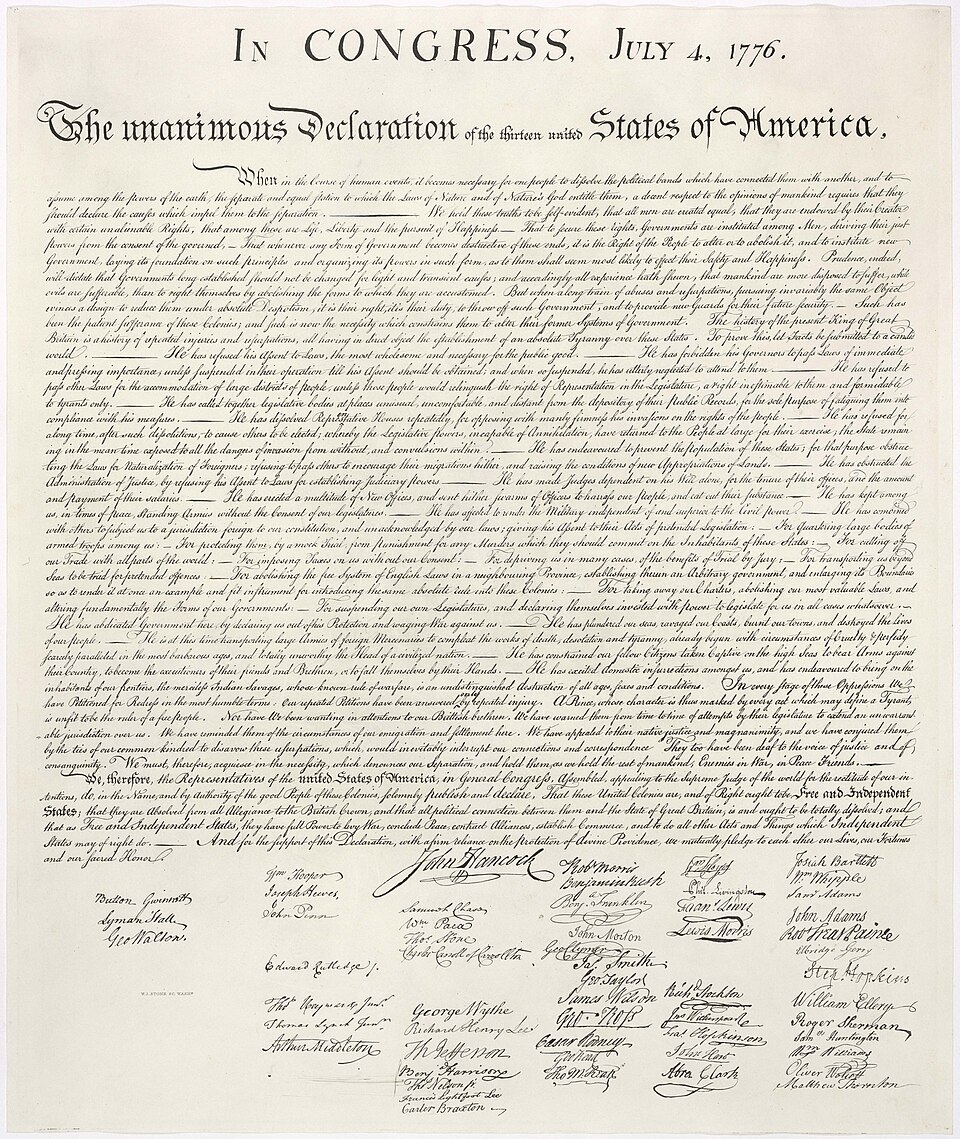
By the morning of July 4, 1776, the delegates of the Second Continental Congress had already been arguing, editing, and waiting for weeks. They filed into the Pennsylvania State House — the building history would later rename Independence Hall — knowing that the document laid before them was the culmination of a process that had begun on June 11, when Congress appointed a Committee of Five: John Adams, Benjamin Franklin, Thomas Jefferson, Robert R. Livingston, and Roger Sherman. Adams had pushed the committee to let Jefferson write the first draft, and Jefferson had done so between June 11 and June 28, working largely alone before Congress took its turn with the text.
Two days earlier, on July 2, Congress had already passed the Lee Resolution, formally declaring that the British Crown no longer held authority over the Thirteen Colonies. That vote had settled the question of independence itself. What remained on July 4 was the language — the public explanation the delegates would offer to the world and to each other for why they were breaking from Great Britain.
The war had been underway for more than a year by this point. Shots had first been fired at Lexington and Concord in April 1775, and King George III had formally declared the colonies to be in rebellion the previous August. So the men in that room were not deliberating in the abstract; they were formalizing a fight already being fought, with soldiers already dying in the field.
The text before them listed twenty-seven grievances against the king, laying out in specific, accumulated detail the abuses that justified revolution. It asserted natural and legal rights — including the right of revolution itself — and built toward the sentence that would outlast every grievance it accompanied: that all men are created equal, endowed with unalienable rights to life, liberty, and the pursuit of happiness.
When the Congress voted, the Declaration was adopted unanimously. Every delegate representing every one of the thirteen colonies had put his name, in effect, to an act of high treason against the Crown — a crime punishable by torture and death under British law. There was no ambiguity about the stakes. To sign was to gamble one's life on the colonies' ability to win a war they had not yet come close to finishing.
More from History

The Morning Bingham Climbed to Machu Picchu
On a cold July morning in 1911, an American historian scrambled up a jungle-choked ridge above the Urubamba River — and by afternoon, a forgotten Inca citadel would belong to the world.

The Last Half-Hour of the Hindenburg
It was already half a day late, and the public had been told to keep away — but at seven o'clock that evening, the Hindenburg finally turned toward its mooring mast for the last time.

The Last Hours of Pompeii: August 24, 79 AD
By noon it was just another hot day beside the Bay of Naples. By evening, an entire mountain had rewritten the fate of thousands.

The Longest Walk: Mandela's Last Steps to Freedom
After 27 years behind bars, a 71-year-old man had to relearn how to walk out of a prison gate — into a waiting world of cameras, crowds, and a country holding its breath.

The Document Lincoln Signed on the First Day of 1863
On a single January morning, a president's pen would change the legal status of more than three million people — if the ink held and his hand did not shake.

The Day of the Dream: August 28, 1963
Two hundred and fifty thousand people converged on the National Mall that morning — by nightfall, one voice from the steps of the Lincoln Memorial would echo for generations.