December 1, 1955: The Ride That Stopped a City
A tired seamstress boards a familiar bus after a long day at work. By the time she steps off in handcuffs, Montgomery will never be the same.
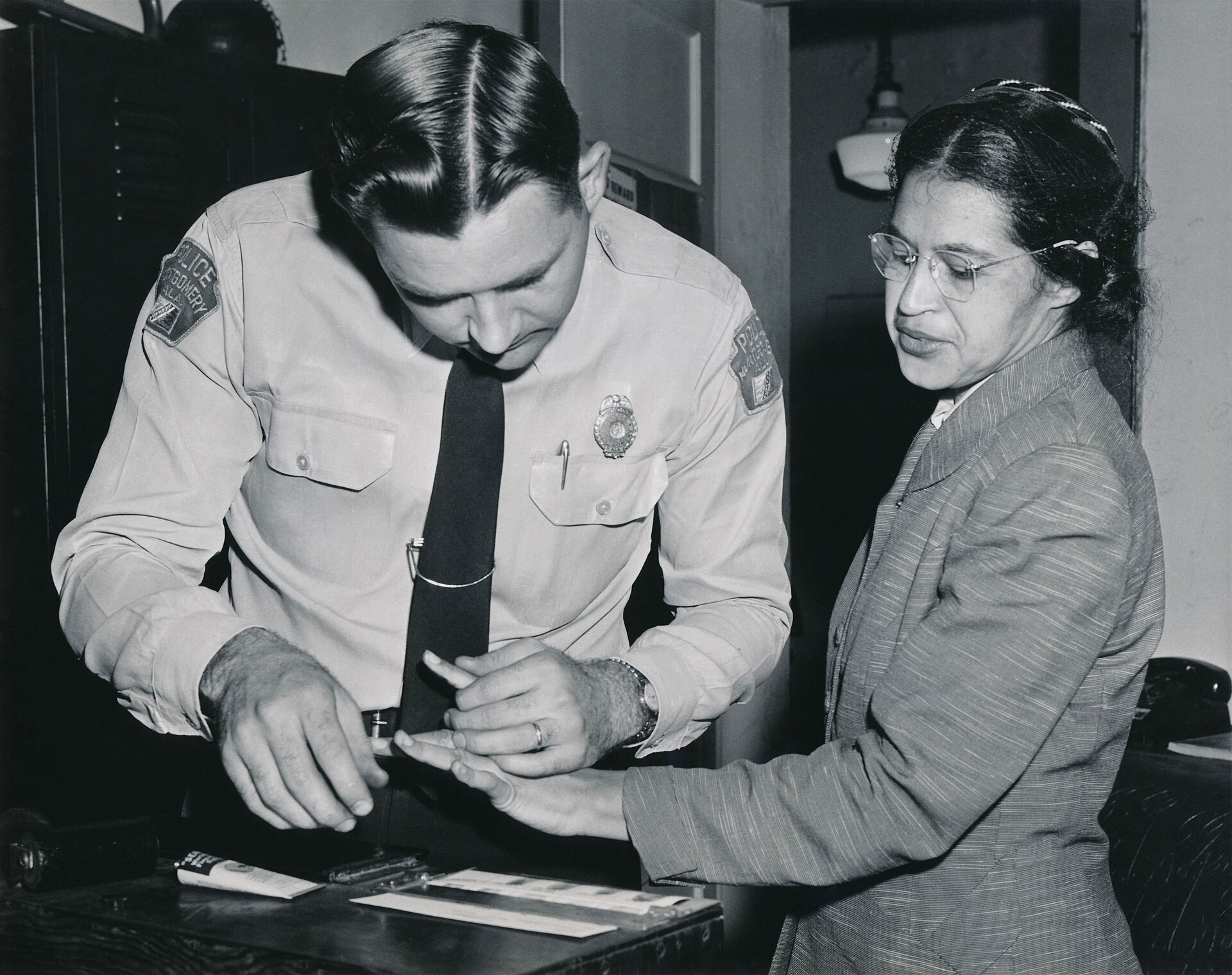
On the afternoon of December 1, 1955, Rosa Parks finished her workday in downtown Montgomery, Alabama, and walked to the bus stop to head home, just as she had done countless times before. She boarded a city bus and took a seat in the front row of the section designated for Black riders, the middle of the bus, just behind the rows reserved exclusively for white passengers. Montgomery custom required Black riders to give up these seats whenever the white section filled and a white passenger needed a place to sit.
As the bus filled with more passengers, the white section reached capacity. The driver turned and ordered four Black riders, including Parks, to give up their seats so a white man could sit down. Three of the other passengers complied and moved. Parks did not.
She stayed in her seat. This was not the first time a Black rider in Montgomery had refused to move; months earlier, fifteen-year-old Claudette Colvin had done the same and been arrested. But on this particular afternoon, it was Parks in the seat, and Parks who would not rise.
The driver, faced with her refusal, called the police. Officers arrived on the bus and placed her under arrest for violating the city's segregation ordinance, taking her into custody that same day.
Word of the arrest spread quickly through Montgomery's Black community that evening. Local civil rights leaders, who had been searching for a strong test case against the segregation laws, recognized in Parks's arrest exactly what they had been waiting for.
More from History

The Morning Bingham Climbed to Machu Picchu
On a cold July morning in 1911, an American historian scrambled up a jungle-choked ridge above the Urubamba River — and by afternoon, a forgotten Inca citadel would belong to the world.

The Last Half-Hour of the Hindenburg
It was already half a day late, and the public had been told to keep away — but at seven o'clock that evening, the Hindenburg finally turned toward its mooring mast for the last time.

The Last Hours of Pompeii: August 24, 79 AD
By noon it was just another hot day beside the Bay of Naples. By evening, an entire mountain had rewritten the fate of thousands.

The Longest Walk: Mandela's Last Steps to Freedom
After 27 years behind bars, a 71-year-old man had to relearn how to walk out of a prison gate — into a waiting world of cameras, crowds, and a country holding its breath.

The Document Lincoln Signed on the First Day of 1863
On a single January morning, a president's pen would change the legal status of more than three million people — if the ink held and his hand did not shake.

The Day of the Dream: August 28, 1963
Two hundred and fifty thousand people converged on the National Mall that morning — by nightfall, one voice from the steps of the Lincoln Memorial would echo for generations.