Empire State: The Giant That Rose in 410 Days
In the depths of the Great Depression, a construction crew raced against economic collapse to build the tallest tower the world had ever seen — and finished with weeks to spare.
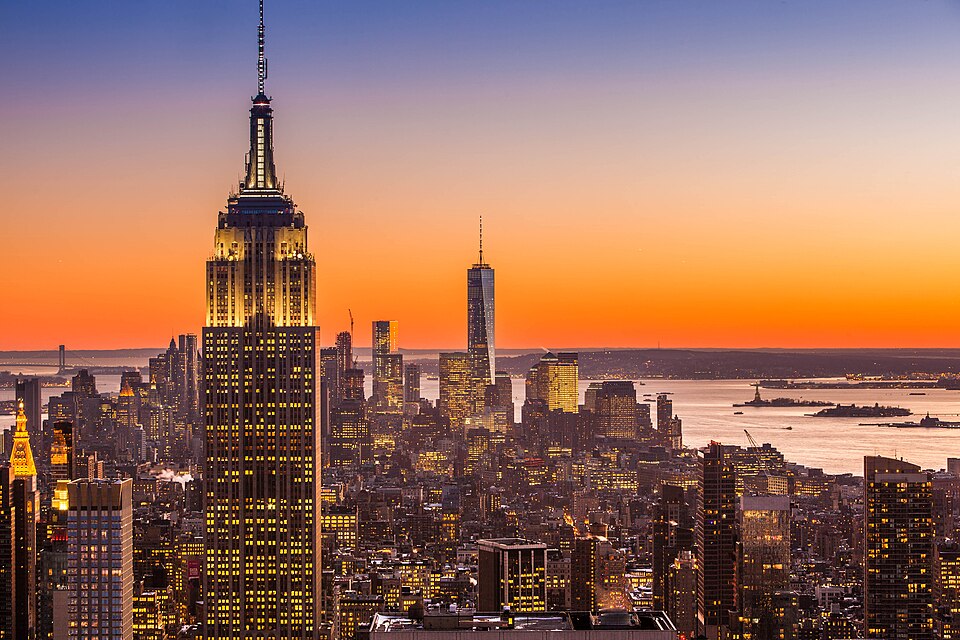
On the west side of Fifth Avenue, between 33rd and 34th Streets, stood the old Waldorf–Astoria Hotel, built in 1893. By 1929, the site's owners, Empire State Inc., had bigger ambitions. They wanted a skyscraper that would define not just a skyline but an era, and they hired the architectural firm Shreve, Lamb & Harmon to design it in the sleek, geometric language of Art Deco.
The design was not settled easily. Empire State Inc. revised the plans fifteen times, each iteration pushing the building higher, until they were certain it would claim the title of the world's tallest structure. Construction finally began on March 17, 1930. What followed was one of the most astonishing feats of speed in construction history: the building opened just thirteen and a half months later, on May 1, 1931.
The numbers involved were staggering for their time. Roughly 55,000 tons of steel went into the frame, along with 10 million bricks, about 760 kilometers of electrical wiring, 96 kilometers of water pipes, and nearly 5,600 kilometers of telephone cable. Workers installed 6,550 windows and laid 30,000 square meters of marble flooring. The finished tower weighed 331,000 tons and rose 102 stories, reaching a roof height of 1,250 feet (381 meters) — 1,454 feet (443.2 meters) including its antenna.
Only the lowest 86 stories were truly usable, containing over 2.1 million square feet of office and commercial space topped by an observatory. The remaining sixteen stories formed a spire meant mostly for mechanical use and broadcasting equipment, crowned by a 203-foot pinnacle and lightning rod. The building's stepped setbacks — required by New York's 1916 Zoning Resolution to let sunlight reach the streets — gave it its instantly recognizable silhouette.
Despite the fanfare surrounding its construction, the timing was brutal. The Great Depression left many of its offices empty for years, and the building's owners did not turn a profit until the early 1950s. It was sometimes joked that the observation deck, not the offices, kept the building solvent, as tourists paid to take in the view that tenants weren't yet filling the floors to enjoy.
More from Architecture

Stonehenge: The Stones That Refuse to Explain Themselves
For more than 4,500 years, a ring of leaning giants has watched the sun rise and set on the same two days each year — and no one alive can say for certain why.

The Dome That Refused to Fall
Two thousand years ago, Roman engineers poured a dome so vast that no one has dared build a bigger one from unreinforced concrete since. It still stands, open to the sky.

A Minaret Rising Over Kingsland Road
On a busy London street better known for shops and buses, the tallest minaret in Britain quietly reaches into the sky. Its story began not in Sinan's sixteenth-century Istanbul, but in 1990s Hackney.

The Bridge That Was Killed Twice
For 427 years it arched over the Neretva like a stone rainbow. Then, in a matter of days in 1993, it simply ceased to exist.

Hoover Dam: The Concrete That Tamed a River
In the scorched depths of Black Canyon, thousands of men built the largest concrete structure the world had ever seen — and finished it two years early, at a cost of over a hundred lives.

Neuschwanstein: The Castle Built for a Ghost
A king who despised his own palace built the most famous fairy-tale castle on earth — and died before he ever truly lived in it.