Evliya Çelebi: The Fifty-Year Journey
A young courtier dreamed he stood before the Prophet and, tongue-tied with awe, blurted the wrong word — and that single slip of the tongue sent him wandering for the rest of his life.
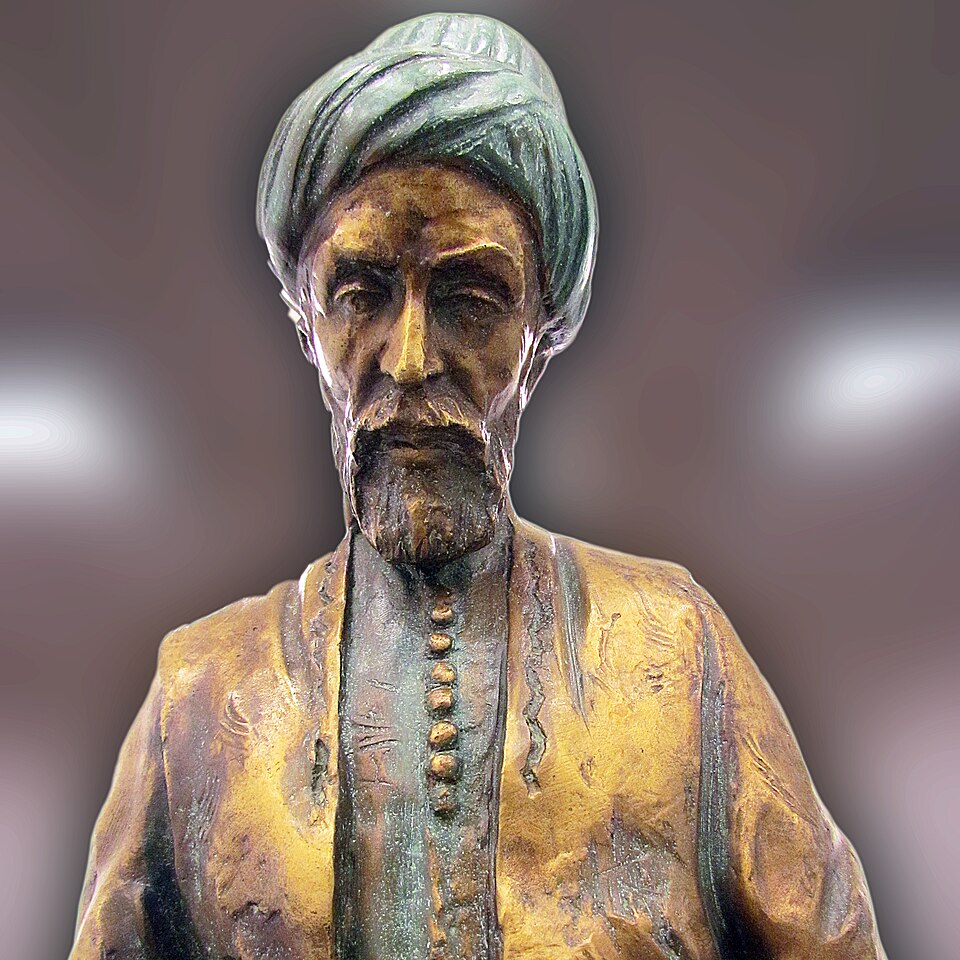
On the night of Aşure, in the Muharrem of 1040 (19 August 1630), a young man named Dervish Mehmed Zillî fell asleep in Constantinople and dreamed himself inside the Ahi Çelebi Mosque near the Yemiş pier. A vast congregation filled the space, and at its head stood the Prophet Muhammed, flanked by his four faithful caliphs and companions. The dreamer longed to approach and ask for intercession — şefaat — but courage failed him again and again. When he finally summoned the nerve to speak, what came out instead was seyahat: travel. He had asked, by accident, not for salvation but for a journey. That slip became the axis of his whole life, and the world would come to know him as Evliya Çelebi.
He was born in Constantinople in 1611 into a wealthy family with roots in Kütahya. His father, Dervish Mehmed Zilli, was a jeweller attached to the Ottoman court under several sultans; his mother was an Abkhazian woman related to the family of Melek Ahmed Pasha, grand vizier under Mehmed IV. In his own writing, Evliya traced his paternal line back to Ahmad Yasawi, the early Turkic poet and Sufi mystic. He was raised for the palace: neighborhood school, seven years at the Şeyhülislam Hamit Efendi madrasa, then the Enderun, the elite school within the palace itself, where he studied grammar, calligraphy, and music under a renowned Khalwati dervish named Umar Gulshani, gaining favor even from the chief court musician.
He memorized the Quran and became a hafız. At twenty-five, while reciting in the Hagia Sophia, he caught the attention of Sultan Murad IV, who brought him into the palace's inner circle of companions. Relatives already placed at court — Melek Ahmed Pasha among them — helped smooth his rise, and his wit and eloquence won him the sultan's affection. High office seemed within reach. But the dream, and the restlessness it named, would not let him settle.
His first trips were modest: around Constantinople and its outskirts, then in early 1640 a secret dash to Bursa without his father's knowledge, thirty-five days there and back. Seeing his son's hunger for the road, his father relented, even taking him to prominent sheikhs of the age, Abdü'l-ahat Nuri Efendi among them, to receive their blessing. In July 1640 Evliya made his second journey, to İzmit — the true beginning of a wandering life that would stretch, by his own reckoning, from 1630 to 1681, and cover 257 cities.
He traveled in the company of viziers and pashas — Melek Ahmed Pasha, Defterdarzâde Mehmed Pasha, Köse Ali Pasha, Köprülü Mehmed Pasha, the Khan of Crimea — serving at times as their imam or messenger, which gave him cover and purpose for constant movement between Constantinople and distant provinces. He crossed the Balkans, Anatolia, the Caucasus, the Middle East and Egypt, and ventured beyond Ottoman borders too. In Rotterdam in 1663 he claimed to have met Native Americans as a guest, recording their complaint about priests who had filled a once-peaceful world with yearly wars. In Vienna in 1665–66 he noticed likenesses between German and Persian words, an early, unwitting brush with what scholars would later call Indo-European linguistics.
More from Explorations

Humboldt: The Man Who Measured the World
A Prussian noble's son, once mocked as a sickly child, would climb a volcano to a world-record height and rewrite how humanity understood nature itself.

The Man Who Named Canada
A Breton mariner planted a wooden cross on a foreign shore and claimed a kingdom he did not understand — then spent a winter frozen into its river, praying a stranger's remedy would save his men.

Sixty Ships Into the Unknown: Hanno's Voyage Down the African Coast
A Carthaginian fleet of sixty ships and thousands of settlers vanished past the Pillars of Hercules to found cities on an unmapped coast — and came home with the skins of hairy, hostile 'gorillas' as proof of how far they had gone.

HMS Challenger: The Voyage That Charted the Deep
A stripped-down warship, its guns torn out to make room for microscopes, set sail from Portsmouth to answer a question no one had ever properly asked: what lies at the bottom of the sea?

Scott's Last Expedition: The Letters Written at the End of the World
Five men reached the bottom of the world only to find a Norwegian flag already planted there. What followed was not glory, but a slow, frozen unraveling that the world would remember for a century.

Marco Polo: In the Court of Kublai Khan
A fifteen-year-old boy meets the father he barely knew — and is soon swept toward the richest court on Earth. Twenty-four years later, he returns home with tales so vast that Venice simply calls him 'Mister Millions'.