Gaugamela: The Day Alexander Toppled the Persian Throne
Outnumbered on an open plain named for a camel's hump, Alexander gambled everything on one afternoon that would end an empire.
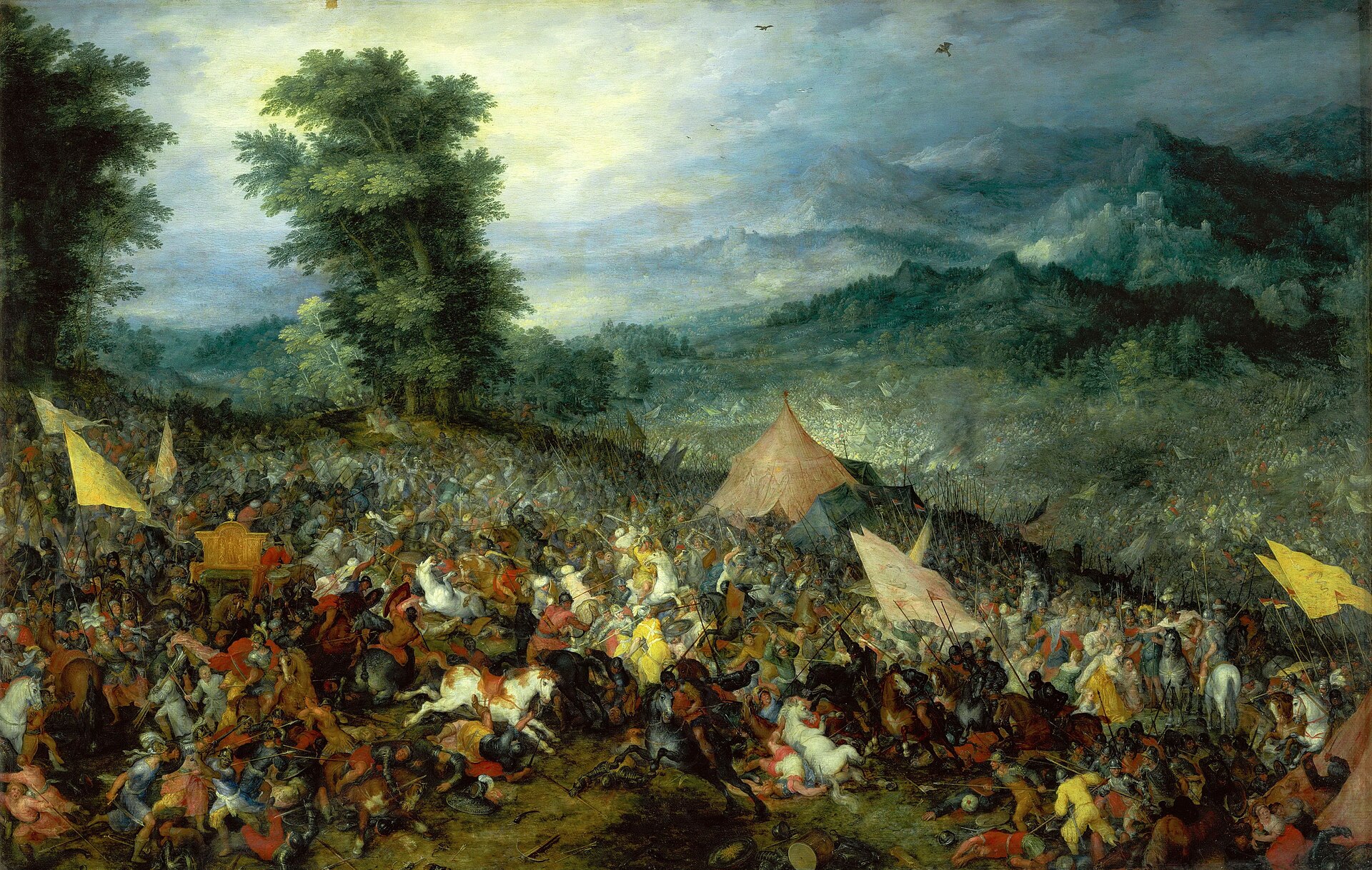
By 331 BC, Darius III had already lost once. Two years earlier at Issus, his army had been broken by Alexander the Great, and in the chaos his wife, mother, and two daughters — Stateira II and Drypetis — had been captured. Darius retreated to Babylon to rebuild his forces, while Alexander turned south, besieging Tyre for seven brutal months and then Gaza, before marching unopposed into Egypt, where the Persian satrap Mazaces surrendered without a fight.
While Alexander consolidated his gains, Darius tried diplomacy instead of war. Ancient historians describe as many as three rounds of negotiation. Darius first offered 10,000 talents as ransom for his family; later he offered land west of the Halys river and even co-equal kingship. In his most generous bid, he offered all territory west of the Euphrates, one of his daughters in marriage, and 30,000 talents of silver. According to Diodorus, Alexander's general Parmenion urged him to accept, saying he would take the offer if he were Alexander. Alexander's reported reply was blunt: so would he, if he were Parmenion. He refused every offer, insisting there could be only one king of Asia, and demanded Darius meet him in battle.
With negotiations exhausted, Darius prepared for a final confrontation. In the late spring or early summer of 331 BC, Alexander marched from Egypt northeast through Syria toward the Tigris River. He crossed the Euphrates near Thapsacus in July or August, where Darius's officer Mazaeus, guarding the crossing with 3,000 cavalry, fled rather than fight. Alexander reached the Tigris in late September, pressing on through Mesopotamia toward the enemy.
The two armies finally met near a village called Gaugamela, on the banks of the river Bumodus, north of Arbela — modern Erbil, in Iraqi Kurdistan. The site took its name, meaning 'the Camel's House,' from a nearby hill shaped like a camel's hump. Darius had chosen the open plain deliberately, hoping its flat ground would let his much larger army and scythed chariots overwhelm the smaller Macedonian force.
Despite being vastly outnumbered, Alexander's army prevailed through superior tactics and the clever use of light infantry. The battle, fought under the banner of the League of Corinth, proved decisive. Darius's massive host broke, and the king himself fled the field rather than be captured a second time.
More from History

The Morning Bingham Climbed to Machu Picchu
On a cold July morning in 1911, an American historian scrambled up a jungle-choked ridge above the Urubamba River — and by afternoon, a forgotten Inca citadel would belong to the world.

The Last Half-Hour of the Hindenburg
It was already half a day late, and the public had been told to keep away — but at seven o'clock that evening, the Hindenburg finally turned toward its mooring mast for the last time.

The Last Hours of Pompeii: August 24, 79 AD
By noon it was just another hot day beside the Bay of Naples. By evening, an entire mountain had rewritten the fate of thousands.

The Longest Walk: Mandela's Last Steps to Freedom
After 27 years behind bars, a 71-year-old man had to relearn how to walk out of a prison gate — into a waiting world of cameras, crowds, and a country holding its breath.

The Document Lincoln Signed on the First Day of 1863
On a single January morning, a president's pen would change the legal status of more than three million people — if the ink held and his hand did not shake.

The Day of the Dream: August 28, 1963
Two hundred and fifty thousand people converged on the National Mall that morning — by nightfall, one voice from the steps of the Lincoln Memorial would echo for generations.