Hastings 1066: The Arrow That Remade England
A king who had just crushed one invasion marched south to face another — and by dusk, a kingdom had changed hands forever.
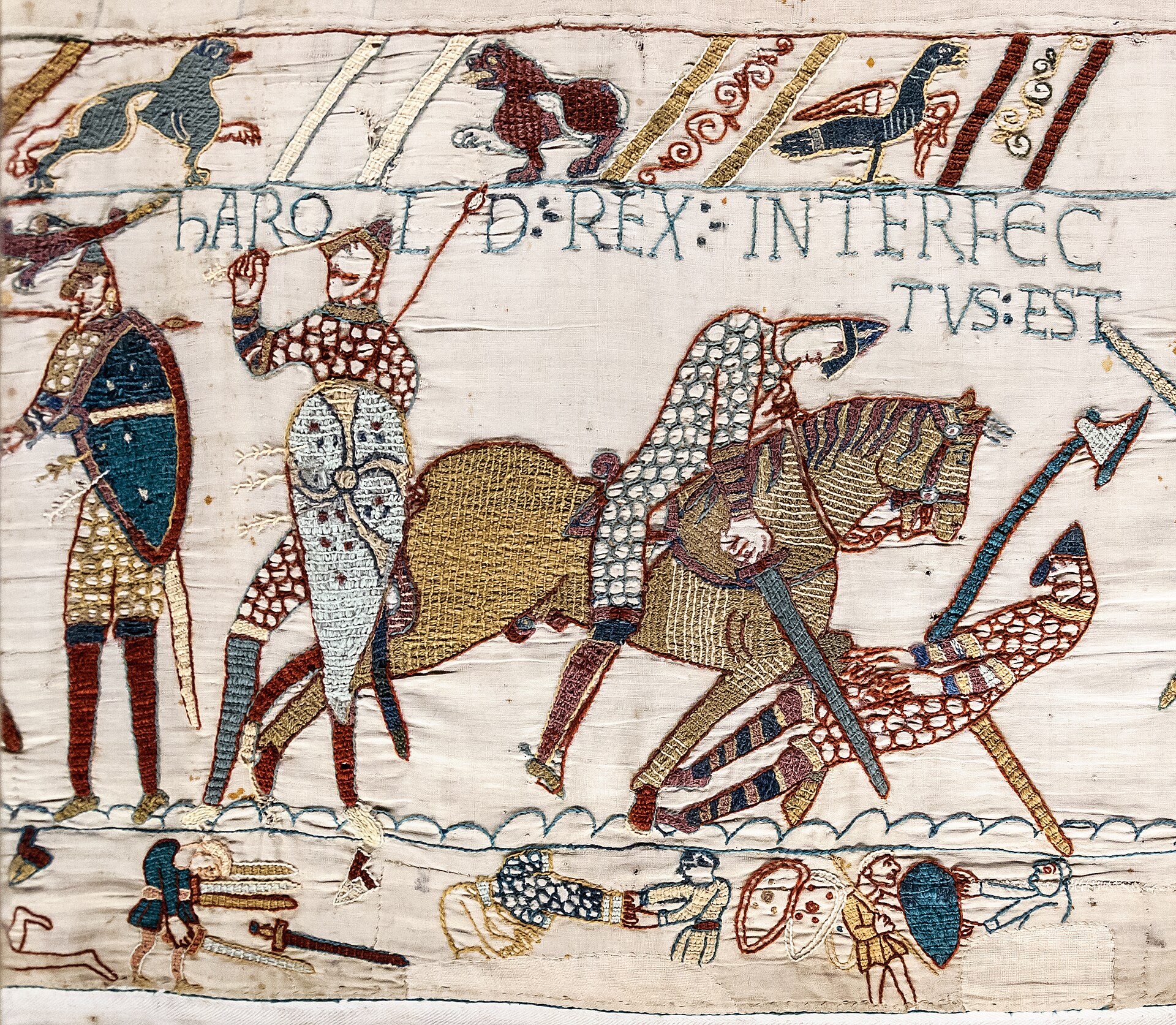
On 14 October 1066, two armies met on a low ridge some seven miles northwest of the town later named Hastings, in what is today East Sussex. On one side stood the Anglo-Saxon King Harold Godwinson, freshly victorious in the north. On the other stood William, Duke of Normandy, who had crossed the Channel to claim a crown he believed was his by promise. By nightfall, the battle would decide the fate of England for centuries.
The crisis began with a death. King Edward the Confessor died childless on 5 January 1066, leaving no clear heir. Harold, Earl of Wessex and the wealthiest man in England after the king, was elected by the Witenagemot and crowned by Ealdred, Archbishop of York — though Norman propaganda later insisted the uncanonical Stigand had performed the rite. Two rivals immediately contested Harold's crown: Duke William, who claimed Edward had promised him the throne and that Harold had sworn to support this; and Harald Hardrada, King of Norway (also known as Harold III of Norway), who based his claim on an old pact between his predecessor Magnus the Good and the earlier English king Harthacnut.
Harold's own brother, Tostig Godwinson, added to the chaos. Exiled and resentful, Tostig raided southeastern England early in 1066, then moved north into East Anglia and Lincolnshire before being driven off by Earls Edwin and Morcar. He withdrew to Scotland and spent the summer gathering fresh forces — forces he would later lend to Hardrada's invasion.
In early September, Hardrada landed in northern England with a fleet of more than 300 ships and perhaps 15,000 men, joined by Tostig. On 20 September, at the Battle of Fulford, they defeated a hastily assembled English army under Edwin and Morcar and occupied York. But Harold moved fast: on 25 September, at Stamford Bridge, he crushed the Norwegian force, killing both Hardrada and his own brother Tostig. With his northern rivals dead, only William remained.
While Harold's army was still recovering from Stamford Bridge, William landed his invasion force at Pevensey on 28 September 1066, establishing a beachhead in the south. Harold had no time to rest — he marched south swiftly, gathering troops as he went, hoping to catch William by surprise.
More from History

The Morning Bingham Climbed to Machu Picchu
On a cold July morning in 1911, an American historian scrambled up a jungle-choked ridge above the Urubamba River — and by afternoon, a forgotten Inca citadel would belong to the world.

The Last Half-Hour of the Hindenburg
It was already half a day late, and the public had been told to keep away — but at seven o'clock that evening, the Hindenburg finally turned toward its mooring mast for the last time.

The Last Hours of Pompeii: August 24, 79 AD
By noon it was just another hot day beside the Bay of Naples. By evening, an entire mountain had rewritten the fate of thousands.

The Longest Walk: Mandela's Last Steps to Freedom
After 27 years behind bars, a 71-year-old man had to relearn how to walk out of a prison gate — into a waiting world of cameras, crowds, and a country holding its breath.

The Document Lincoln Signed on the First Day of 1863
On a single January morning, a president's pen would change the legal status of more than three million people — if the ink held and his hand did not shake.

The Day of the Dream: August 28, 1963
Two hundred and fifty thousand people converged on the National Mall that morning — by nightfall, one voice from the steps of the Lincoln Memorial would echo for generations.