Kursk: The City Where History's Largest Tank Battle Was Fought
Long before it became shorthand for the biggest armored clash the world has ever seen, Kursk was a hilltop fortress guarding Russia from Tatar raiders — a place whose geography would matter twice, centuries apart.
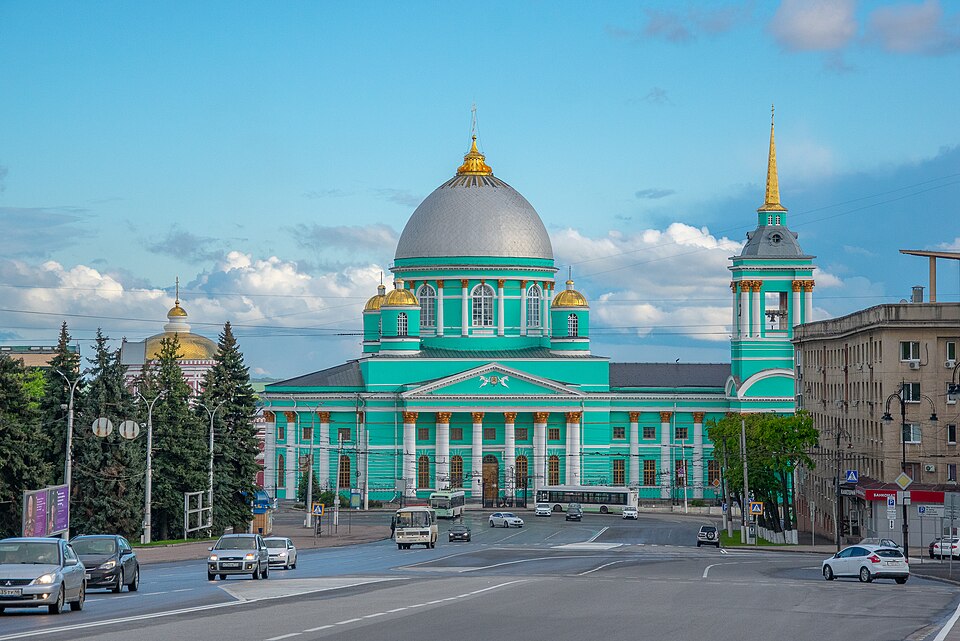
Kursk sits where three rivers meet — the Kur, the Tuskar, and the Seym — a confluence that shaped the city's fate long before the twentieth century gave it lasting fame. First recorded in 1032 as part of Kievan Rus', Kursk is the oldest city in its oblast, a settlement that watched empires rise and fall around it while its own hills and rivers stayed constant.
By the 13th century, Kursk had become the seat of its own small principality. It later fell under Lithuanian control during the late medieval period before Moscow absorbed it in the early modern era. Through all these transitions, Kursk's position atop a hill, guarded on three sides by water and approached by forest thickets to the north, made it a natural stronghold — the kind of place worth fighting over and building up.
That defensive value became explicit in 1603, when a new fortress rose under governors Ivan Polev and Nelyub Ogaryov. Kursk sat near the crossing point where Crimean Tatars traditionally forded the Seym river on their slave-raiding expeditions into Russia, and the Muravsky Trail, their main road, ran just east of the city. Though it wasn't formally part of the Belgorod Protection Line, Kursk became one of the most vital fortresses in southern Russia. By 1616, its garrison numbered 1,600 people.
The city's growth was constrained by its own dramatic terrain. By 1782, Kursk's buildings clung to the heights of two hills and spilled into the Kur River valley, with streets so steep that travel was uphill almost everywhere. Six ravines cut through the Nagornaya district, and heavy rains regularly eroded the hillsides into gullies. Despite this, by the 1880s Kursk had grown into a substantial settlement with 14 churches — not counting the churches of the Znamensky Monastery — most of them built of stone around the years 1730 to 1786, a contrast to the wooden houses that made up most of the city in 1782.
Governance and layout reflected the era's obsession with order. Under governor Alexander Bekleshov, the city was divided into four parts, each managed by a private bailiff, all in service of complete accounting and control of residents. Surveyors and architects — Ivan Bashilov, Ivan Shoshin, Vasily Yakovlev, Lavrenty Kalinovsky — redrew Kursk into rectangular blocks along two main streets, Bolshaya Moskovskaya and Kherson, even as the city's rugged relief resisted their tidy plans.
More from History

The Morning Bingham Climbed to Machu Picchu
On a cold July morning in 1911, an American historian scrambled up a jungle-choked ridge above the Urubamba River — and by afternoon, a forgotten Inca citadel would belong to the world.

The Last Half-Hour of the Hindenburg
It was already half a day late, and the public had been told to keep away — but at seven o'clock that evening, the Hindenburg finally turned toward its mooring mast for the last time.

The Last Hours of Pompeii: August 24, 79 AD
By noon it was just another hot day beside the Bay of Naples. By evening, an entire mountain had rewritten the fate of thousands.

The Longest Walk: Mandela's Last Steps to Freedom
After 27 years behind bars, a 71-year-old man had to relearn how to walk out of a prison gate — into a waiting world of cameras, crowds, and a country holding its breath.

The Document Lincoln Signed on the First Day of 1863
On a single January morning, a president's pen would change the legal status of more than three million people — if the ink held and his hand did not shake.

The Day of the Dream: August 28, 1963
Two hundred and fifty thousand people converged on the National Mall that morning — by nightfall, one voice from the steps of the Lincoln Memorial would echo for generations.