Nansen: The Ship That Let the Ice Carry It
A boy who broke his neck jumping skis at ten grew up to let a ship freeze on purpose — and drift toward the top of the world.
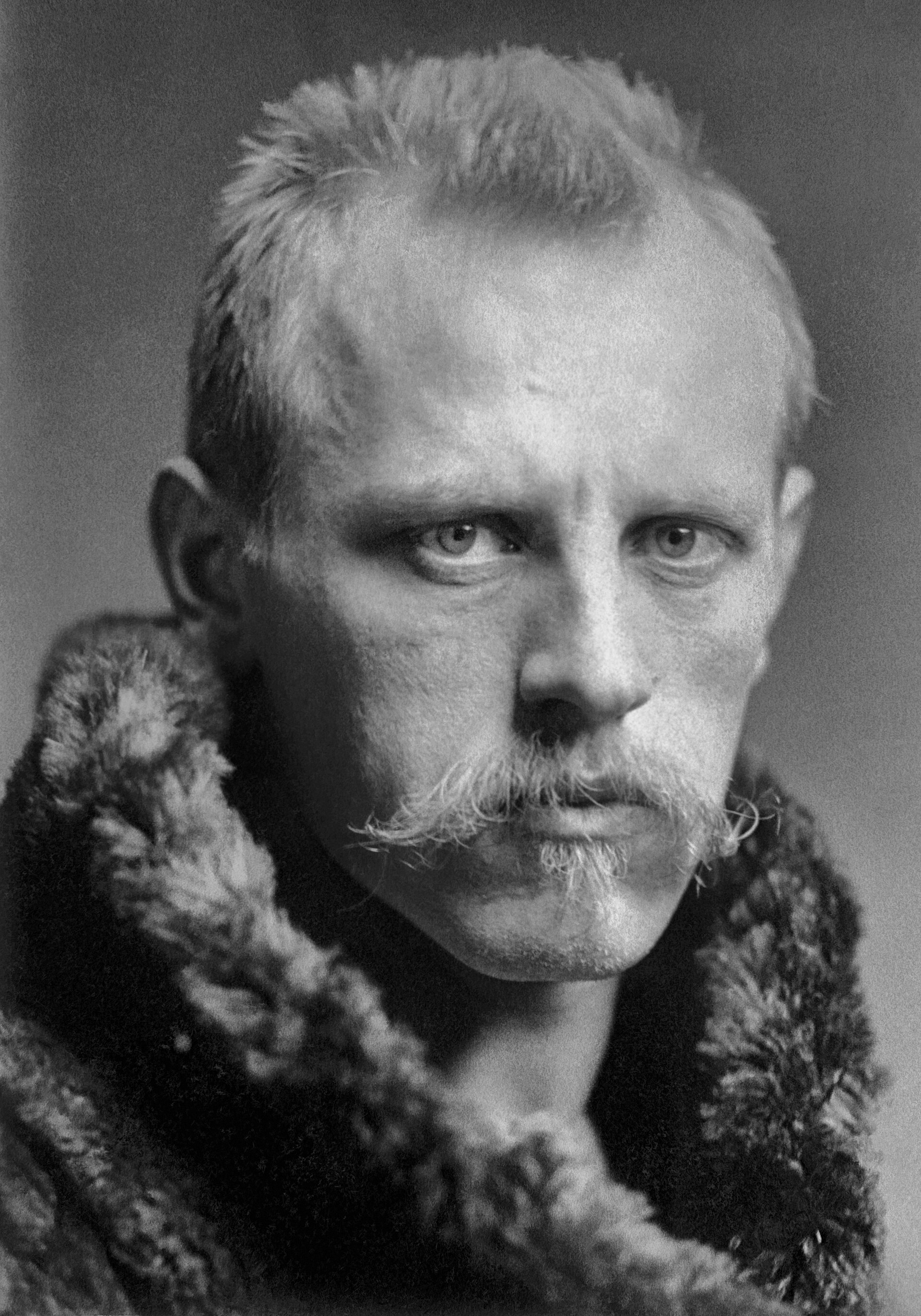
On a small estate called Store Frøen, a few kilometres north of Christiania, a boy named Fridtjof Wedel-Jarlsberg Nansen was learning to ski before he could properly walk — improvised skis strapped to his feet at age two. By ten he was already reckless: he defied his parents to try the ski jump at nearby Huseby, sailed through the air, and buried himself waist-deep in snow on landing. The other boys thought he had broken his neck. He hadn't, and the fall did nothing to dim his appetite for danger or distance.
His family carried old currents of ambition. The Nansens had come from Denmark generations earlier; one ancestor, Hans Nansen, had explored the White Sea and later became Copenhagen's borgmester. Fridtjof's own line included magistrates and politicians who had helped shape Norway after its 1814 separation from Denmark. His father, Baldur Nansen, was a quiet lawyer; his mother, Adelaide, came from the Wedel-Jarlsberg family, linked to Herman Wedel-Jarlsberg, a framer of the Norwegian constitution. When Adelaide died suddenly in 1877, Baldur sold Store Frøen and moved with his sons to the city — but the wilderness had already done its work on Fridtjof.
By eighteen he had broken the world one-mile skating record; a year later he won the national cross-country skiing championship, a title he would reclaim eleven more times. He studied zoology at the Royal Frederick University in Christiania and worked as a curator at the University Museum of Bergen, where his research on the nervous systems of marine creatures earned him a doctorate and contributed to the emerging neuron doctrine — work later echoed in Santiago Ramón y Cajal's 1906 Nobel Prize.
But it was the ice that made him famous. In 1888 Nansen led the first crossing of the Greenland interior on skis, a feat that stunned the polar world. He followed it with something even bolder: the Fram expedition of 1893–1896, in which he deliberately let his ship freeze into the Arctic pack ice, gambling that its currents would carry the vessel toward the Pole. The Fram drifted for years, and Nansen, unwilling to simply wait, set out across the ice with a companion, reaching a record northern latitude of 86°14′ — farther north than anyone before him.
More from Explorations

Humboldt: The Man Who Measured the World
A Prussian noble's son, once mocked as a sickly child, would climb a volcano to a world-record height and rewrite how humanity understood nature itself.

The Man Who Named Canada
A Breton mariner planted a wooden cross on a foreign shore and claimed a kingdom he did not understand — then spent a winter frozen into its river, praying a stranger's remedy would save his men.

Sixty Ships Into the Unknown: Hanno's Voyage Down the African Coast
A Carthaginian fleet of sixty ships and thousands of settlers vanished past the Pillars of Hercules to found cities on an unmapped coast — and came home with the skins of hairy, hostile 'gorillas' as proof of how far they had gone.

HMS Challenger: The Voyage That Charted the Deep
A stripped-down warship, its guns torn out to make room for microscopes, set sail from Portsmouth to answer a question no one had ever properly asked: what lies at the bottom of the sea?

Scott's Last Expedition: The Letters Written at the End of the World
Five men reached the bottom of the world only to find a Norwegian flag already planted there. What followed was not glory, but a slow, frozen unraveling that the world would remember for a century.

Marco Polo: In the Court of Kublai Khan
A fifteen-year-old boy meets the father he barely knew — and is soon swept toward the richest court on Earth. Twenty-four years later, he returns home with tales so vast that Venice simply calls him 'Mister Millions'.