Nellie Bly: The Woman Who Outraced Fiction
She faked madness to expose a horror, then raced a fictional Englishman around the real world — and won.
Elizabeth Jane Cochran was born on May 5, 1864, in Cochran's Mills, Pennsylvania, the thirteenth daughter of mill owner and postmaster Michael Cochran, who had fifteen children in all across two marriages. When her father died in 1870, six-year-old Elizabeth's family fell into financial hardship. In 1879 she enrolled at Indiana Normal School but was forced to drop out after just one term for lack of funds, and in 1880 her mother moved the family to Allegheny City, near Pittsburgh.
Her path into journalism began with fury. In 1885, a Pittsburgh Dispatch column titled 'What Girls Are Good For' declared that women existed mainly to bear children and keep house. Cochran fired back an anonymous letter signed 'Lonely Orphan Girl'. Editor George Madden was struck by her passion and, after tracking her down, offered her writing work. Her first piece, 'The Girl Puzzle', argued that not every woman would marry and that women needed better jobs. Her second, 'Mad Marriages', criticized divorce laws and was published under a new byline: Nellie Bly, a name borrowed from a Stephen Foster song, misspelled by an editor into the version that stuck.
Bly threw herself into undercover reporting on working women, even taking a job in a copper cable factory to expose harsh conditions. Factory owners complained, and she was shunted to the women's pages to write about fashion and gardening. Restless at just 21, she resolved to 'do something no girl has done before' and traveled to Mexico as a foreign correspondent for nearly six months, later publishing her dispatches as Six Months in Mexico. There she protested the imprisonment of a journalist critical of dictator Porfirio Díaz's government, until Mexican authorities threatened her with arrest and she fled home, publicly denouncing Díaz as a tyrant.
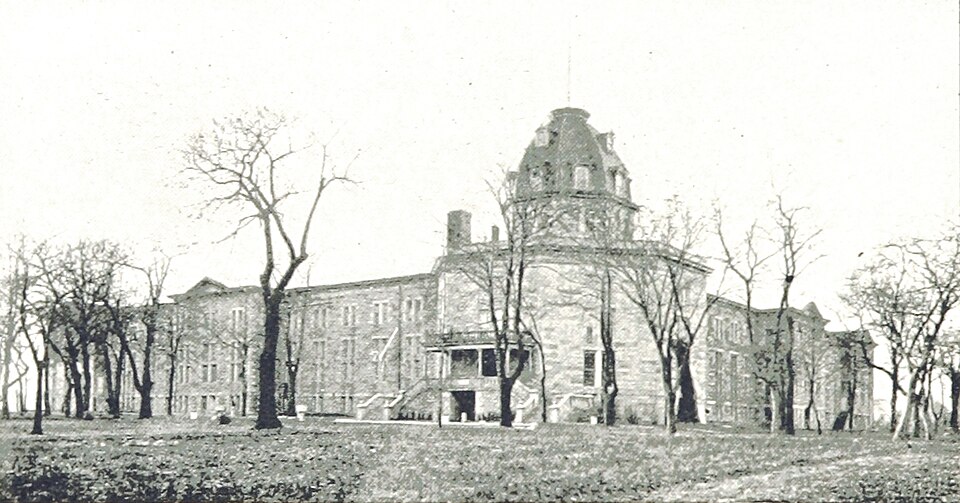
In 1887, tired of being confined to theater and society reporting, Bly left Pittsburgh for New York City. Four months of rejection followed before she talked her way into Joseph Pulitzer's New York World and accepted an audacious assignment: feign insanity to get committed to the Women's Lunatic Asylum on Blackwell's Island and report on conditions from within.
Getting committed took real theater. Bly checked into a boarding house, stayed up all night cultivating a wide-eyed stare, and accused fellow boarders of madness until police were summoned. Examined by an officer, a judge, and a doctor, she was sent first to Bellevue Hospital, then by boat to Blackwell's Island.
More from Explorations

Humboldt: The Man Who Measured the World
A Prussian noble's son, once mocked as a sickly child, would climb a volcano to a world-record height and rewrite how humanity understood nature itself.

The Man Who Named Canada
A Breton mariner planted a wooden cross on a foreign shore and claimed a kingdom he did not understand — then spent a winter frozen into its river, praying a stranger's remedy would save his men.

Sixty Ships Into the Unknown: Hanno's Voyage Down the African Coast
A Carthaginian fleet of sixty ships and thousands of settlers vanished past the Pillars of Hercules to found cities on an unmapped coast — and came home with the skins of hairy, hostile 'gorillas' as proof of how far they had gone.

HMS Challenger: The Voyage That Charted the Deep
A stripped-down warship, its guns torn out to make room for microscopes, set sail from Portsmouth to answer a question no one had ever properly asked: what lies at the bottom of the sea?

Scott's Last Expedition: The Letters Written at the End of the World
Five men reached the bottom of the world only to find a Norwegian flag already planted there. What followed was not glory, but a slow, frozen unraveling that the world would remember for a century.

Marco Polo: In the Court of Kublai Khan
A fifteen-year-old boy meets the father he barely knew — and is soon swept toward the richest court on Earth. Twenty-four years later, he returns home with tales so vast that Venice simply calls him 'Mister Millions'.