Nuremberg: The Hour Humanity Held a Trial
In a bombed-out German city, the men who had once ruled an empire of terror sat in a dock, waiting to hear whether the world could still call itself civilized. What happened next rewrote the rules of justice for good.
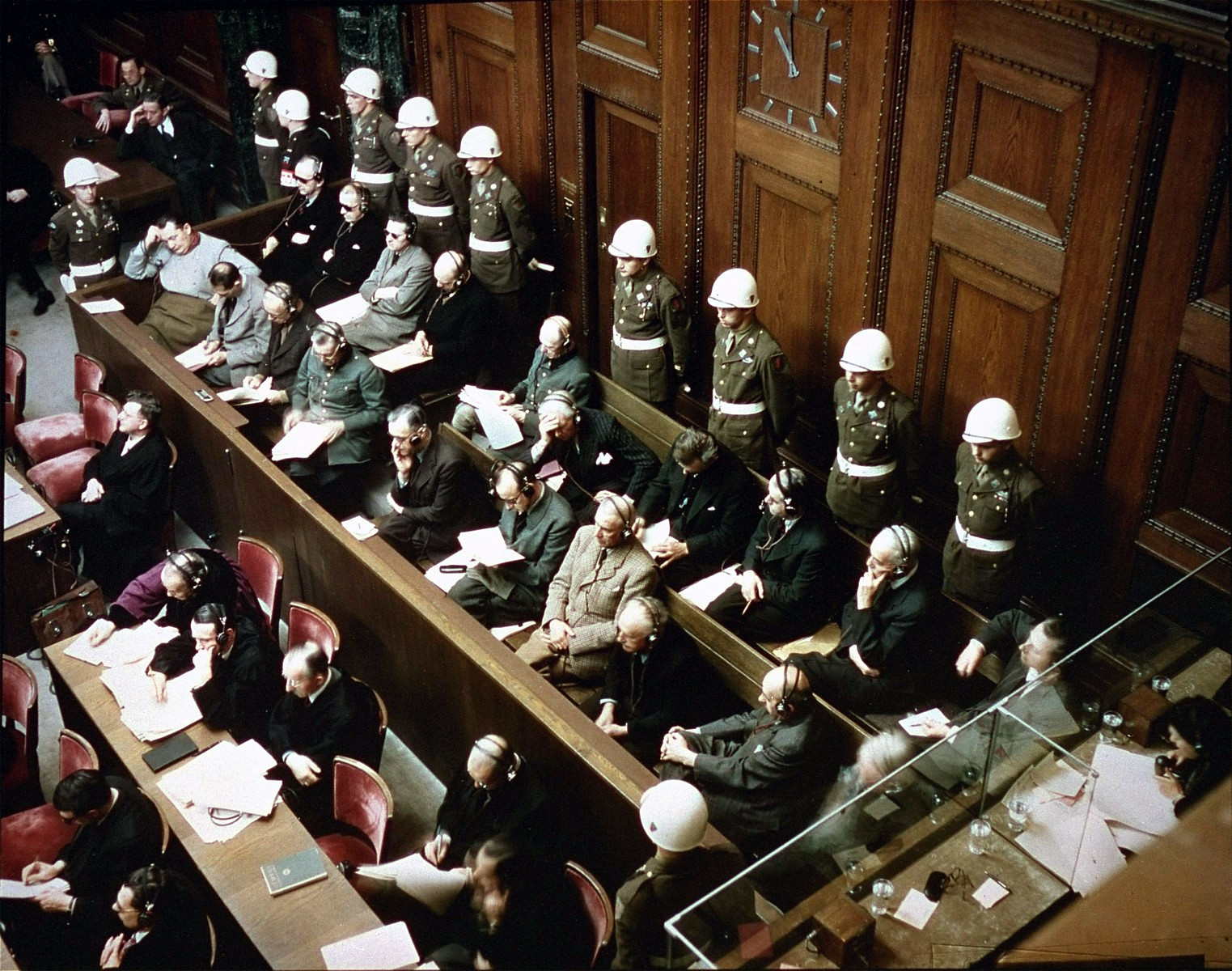
Between 1939 and 1945, Nazi Germany had swept across Europe, invading Poland, Denmark, Norway, the Netherlands, Belgium, Luxembourg, France, Yugoslavia, Greece, and the Soviet Union. The devastation was almost incomprehensible: in the Soviet Union alone, 27 million people died, most of them civilians, a seventh of the entire prewar population. When the guns finally fell silent, the victors faced a question with no settled answer — what do you do with the architects of such catastrophe?
The answers on offer were wildly different. The Soviet Union favored a show trial with a predetermined verdict, useful both for propaganda and for building a case for reparations to rebuild its shattered economy. The United Kingdom, scarred by the failures of war crimes prosecutions after the First World War, preferred simply executing the Nazi leadership without trial. It was the United States that pushed hardest for a genuine legal proceeding — one that would be seen as legitimate, promote the reform of Germany, and demonstrate the superiority of a system built on law rather than vengeance.
The path there had begun years earlier. In early 1942, nine governments-in-exile from occupied Europe demanded an international court for German crimes, but Britain and America balked, wary of repeating the post-WWI failures. A commission convened in London in 1943 struggled over the very scope of what a 'war crime' meant. Then, on 1 November 1943, the Soviet Union, Britain, and the United States issued the Moscow Declaration, vowing to pursue Nazi leaders 'to the uttermost ends of the earth' so that justice might be done.
A Soviet jurist named Aron Trainin gave the effort its sharpest legal weapon: the concept of 'crimes against peace' — the waging of aggressive war itself as a punishable act. His ideas spread westward and took hold. Still, as late as the Yalta Conference in February 1945, the Allies had not agreed on a method. It was only on 2 May 1945, at the San Francisco Conference drafting the UN Charter, that US President Harry Truman announced the formation of an international military tribunal. Germany surrendered six days later.
From 26 June to 2 August 1945, negotiators from France, the Soviet Union, Britain, and the United States met in London to hammer out the tribunal's charter. Even at that late stage, whether any trial would happen at all remained uncertain. American negotiator Robert H. Jackson, a Supreme Court justice, threatened to walk away from the whole enterprise unless aggressive war itself was prosecuted as a crime — since it had been the very rationale for America's entry into the war.
More from History

The Morning Bingham Climbed to Machu Picchu
On a cold July morning in 1911, an American historian scrambled up a jungle-choked ridge above the Urubamba River — and by afternoon, a forgotten Inca citadel would belong to the world.

The Last Half-Hour of the Hindenburg
It was already half a day late, and the public had been told to keep away — but at seven o'clock that evening, the Hindenburg finally turned toward its mooring mast for the last time.

The Last Hours of Pompeii: August 24, 79 AD
By noon it was just another hot day beside the Bay of Naples. By evening, an entire mountain had rewritten the fate of thousands.

The Longest Walk: Mandela's Last Steps to Freedom
After 27 years behind bars, a 71-year-old man had to relearn how to walk out of a prison gate — into a waiting world of cameras, crowds, and a country holding its breath.

The Document Lincoln Signed on the First Day of 1863
On a single January morning, a president's pen would change the legal status of more than three million people — if the ink held and his hand did not shake.

The Day of the Dream: August 28, 1963
Two hundred and fifty thousand people converged on the National Mall that morning — by nightfall, one voice from the steps of the Lincoln Memorial would echo for generations.