Pearl Harbor: A Harbor of History and Tragedy
On a seemingly ordinary December morning in 1941, a sudden and devastating attack changed the course of history. Pearl Harbor, once a quiet Hawaiian inlet, became the epicenter of a global conflict.
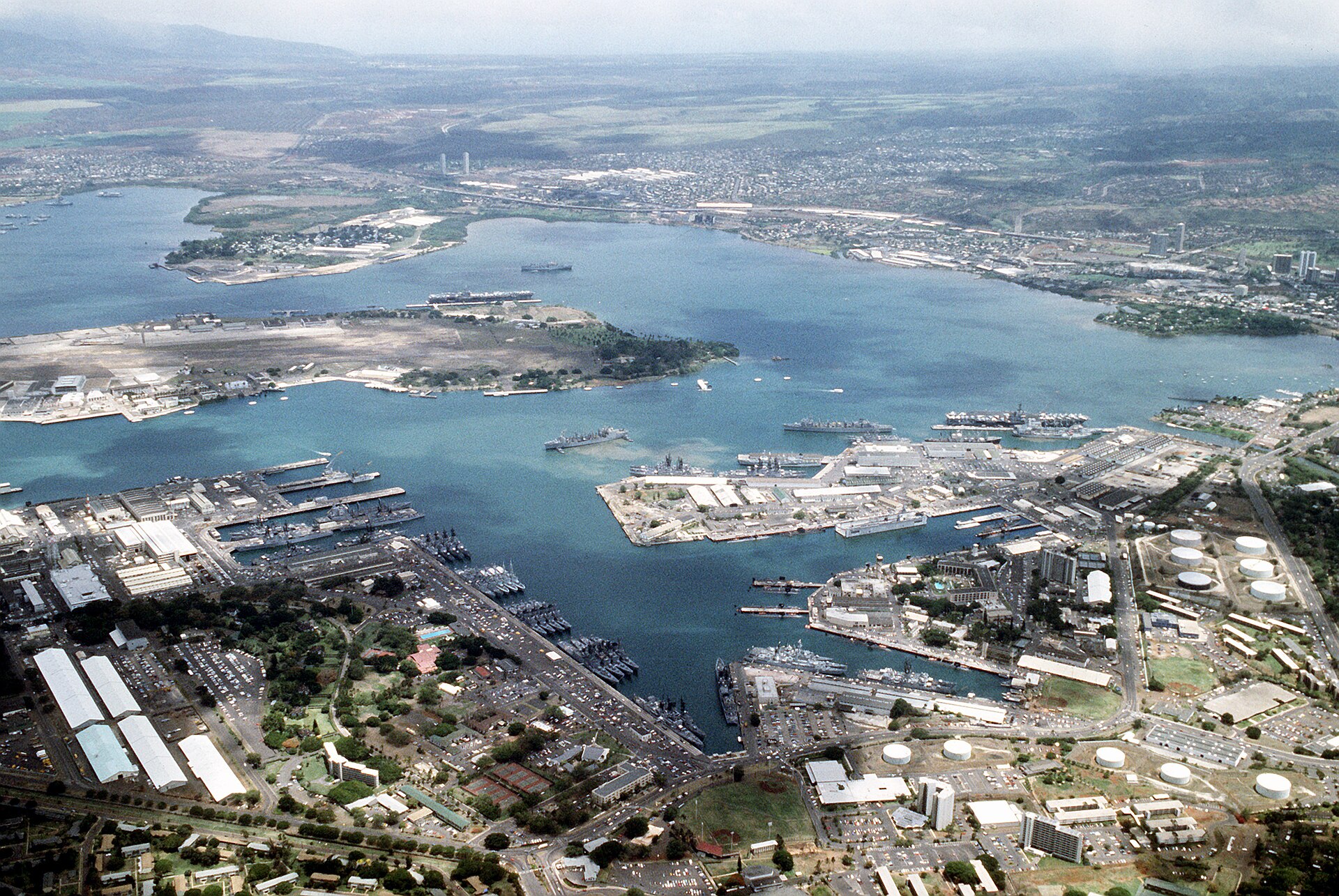
Pearl Harbor, a lagoon on the island of Oahu, has long been a place of significance for the United States. Known to the Hawaiians as Wai Momi or Puʻuloa, it was believed to be the home of the shark goddess, Kaʻahupahau. The area's natural features made it a strategic location for maritime activity, though its shallow entrance limited its use for large ships in the early 19th century.
The United States' growing interest in the Pacific brought American ships and merchants to Honolulu, where the harbor's potential was recognized. By the 1840s, American missionaries and traders had established a strong presence, and the idea of a naval base in Hawaii gained traction. In 1865, the formation of the North Pacific Squadron marked a turning point, as the U.S. began to see Pearl Harbor as a key location for its expanding influence in the Pacific.
As the 19th century progressed, the United States and Hawaii entered into a series of agreements that would shape the future of the harbor. The Reciprocity Treaty of 1875 granted the U.S. exclusive rights to use Pearl Harbor for coaling and repair, setting the stage for a more permanent American presence. This treaty was later supplemented and ratified, solidifying the U.S. role in the region.
The harbor's strategic value was further enhanced by the Spanish-American War of 1898, which increased the U.S. military's need for a strong Pacific presence. After the overthrow of the Hawaiian Kingdom, the United States established a naval base in 1899, transforming Pearl Harbor into a critical hub for American operations in the Pacific.
On December 7, 1941, the harbor was attacked by the Imperial Japanese Navy, an event that would forever change the course of history. The surprise assault, carried out by Japanese aircraft and midget submarines, devastated the U.S. Pacific Fleet and led to the United States' entry into World War II. The attack exposed the lack of preparedness for air defense and left a lasting impact on American military strategy.
More from History

The Morning Bingham Climbed to Machu Picchu
On a cold July morning in 1911, an American historian scrambled up a jungle-choked ridge above the Urubamba River — and by afternoon, a forgotten Inca citadel would belong to the world.

The Last Half-Hour of the Hindenburg
It was already half a day late, and the public had been told to keep away — but at seven o'clock that evening, the Hindenburg finally turned toward its mooring mast for the last time.

The Last Hours of Pompeii: August 24, 79 AD
By noon it was just another hot day beside the Bay of Naples. By evening, an entire mountain had rewritten the fate of thousands.

The Longest Walk: Mandela's Last Steps to Freedom
After 27 years behind bars, a 71-year-old man had to relearn how to walk out of a prison gate — into a waiting world of cameras, crowds, and a country holding its breath.

The Document Lincoln Signed on the First Day of 1863
On a single January morning, a president's pen would change the legal status of more than three million people — if the ink held and his hand did not shake.

The Day of the Dream: August 28, 1963
Two hundred and fifty thousand people converged on the National Mall that morning — by nightfall, one voice from the steps of the Lincoln Memorial would echo for generations.